153
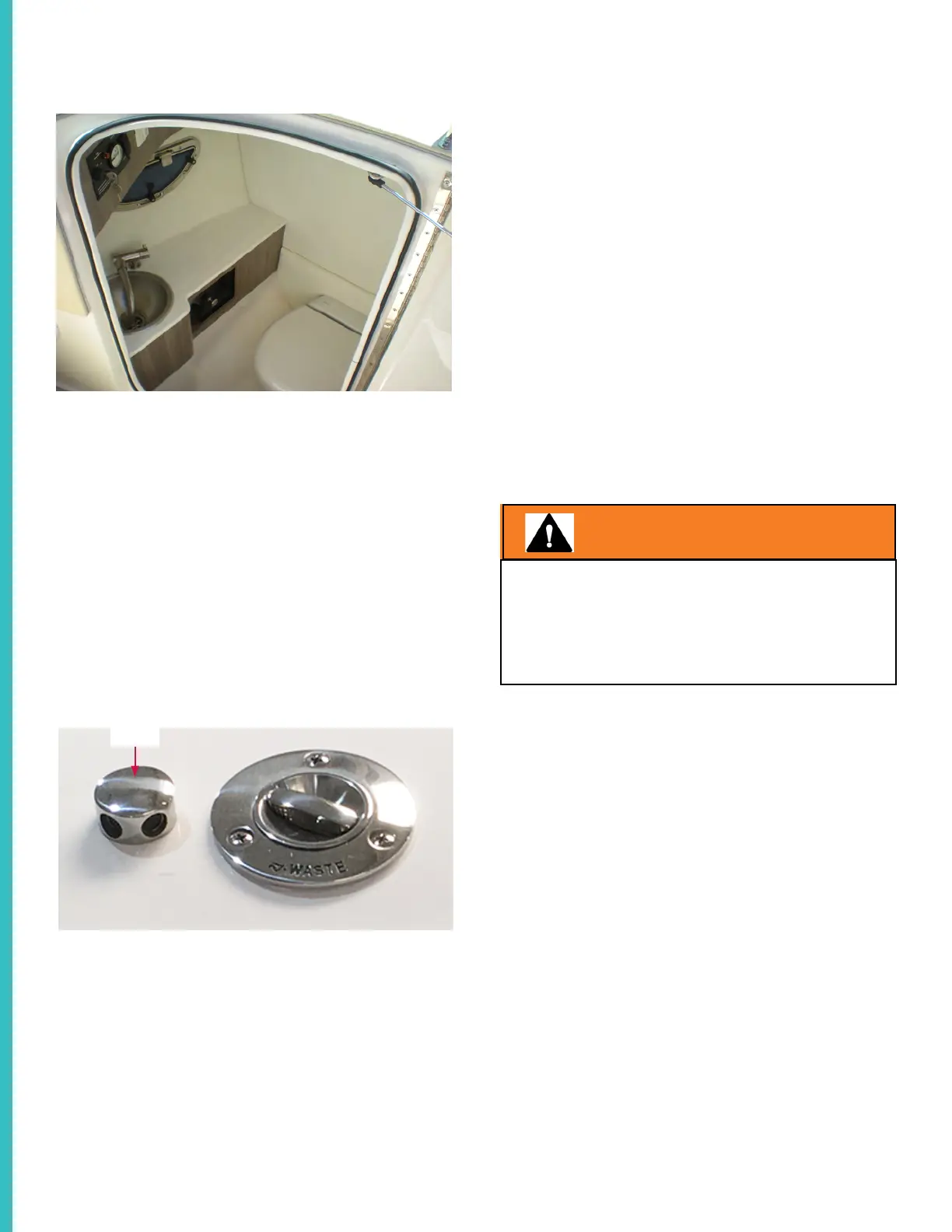
Toilet- Electric (Typical)
Introduction
If installed the electric toilet (head) uses turbine
technology to produce a clog-resistant, powerful
flush. It integrates an efficient small footprint re-
sulting in the same features of larger units.
T
he toilet draws clean water from the fresh wa-
ter tank through a solenoid to fill the bowl. A wall
roc
ker type switch operates toilet flushing cycle.
As an option a deck mounted pump-out fitting is
used and is labeled “waste”. When the holding
tank is full as indicated by the wall rocker switch
a marina or pump out station can attach a hose
to the waste fitting. When activated a pump will
evacuate waste waste from the holding tank.
WARNING
ALWAYS CHECK WITH LOCAL, STATE AND
COUNTRY WASTE DUMPING REGULATIONS/
AUTHORITIES
BEFORE ATTEMPTING TO PUMP WASTE
OVERBOARD!
TYPICAL ELECTRIC TOILET W/MACERATOR
If installed a macerator system featuring an over-
board discharge pump uses an impeller to grind
up waste and send it to the holding t
ank or through
the hull bottom via a seacock fitting during the over
-
board discharge process. Note the seacock must
be in the “open” position to use the overboard dis-
charge feature. It is recommended to secure the
seacoc
k in a closed position after an overboard
discharge cycle. You might want to keep a pack
of zip ties in the bilge tied to the seacock for this
purpose. With the seacock secured closed it adds
an extral layer of protection for following discharge
regulations.
The macerator pump is integrated behind the toilet
lower base. The pump is replaceable.
The toilet (head) electrical system is connected to
the house battery system thus using a 12 volt
DC power supply. The head is protected by a 30
amp resettable breaker on the D.C. distribution
panel located at the battery management panel.
If installed the macerator (overboard discharge
pump) is protected by a 10 amp resettable breaker
on the D.C. distribution panel located at the bat
-
tery management panel.
TYPICAL PUMP-OUT WASTE FITTING/VENT
VENT



 To Next Page