• Turn the radio OFF immediately if there is any reason to suspect that inteerence is taking place.
• Do not car the radio in a chest pocket or near the implantation site, and car or use the radio on the
opposite side of the body from the implantable device to minimize the potential for inteerence.
Hearing Aids: Some digital wireless radios may inteere with some hearing aids. In the event of such
inteerence, you may want to consult your hearing aid manufacturer to discuss alternatives.
Other Medical Devices: If you use any other personal medical device, consult the manufacturer of your device
to determine if it is adequately shielded from RF energy. Your physician may be able to assist you in obtaining
this information.
•Turn o your radio prior to entering any area with a potentially hazardous or explosive atmosphere. Only
radio types that are especially qualied should be used in such areas as “Intrinsically Safe”.
Note: the areas with potentially explosive atmosphere referred to above include blasting caps, blasting areas,
inammable gas, dust paicles, metallic powders, grain powders, fueling areas such as below decks on boats,
fuel or chemical transfer or storage facilities, areas where the air contains chemicals or paicles (such as
grain, dust or metal powders) and any other area where you would normally be advised to turn o your
vehicle engine. Areas with potentially explosive atmospheres are often – but not always posted.
•Do not use any radio that has a damaged antenna. If a damaged antenna comes into contact with the skin
when the radio is in use, a burn can result.
•Turn o your radio before removing or installing accessories.
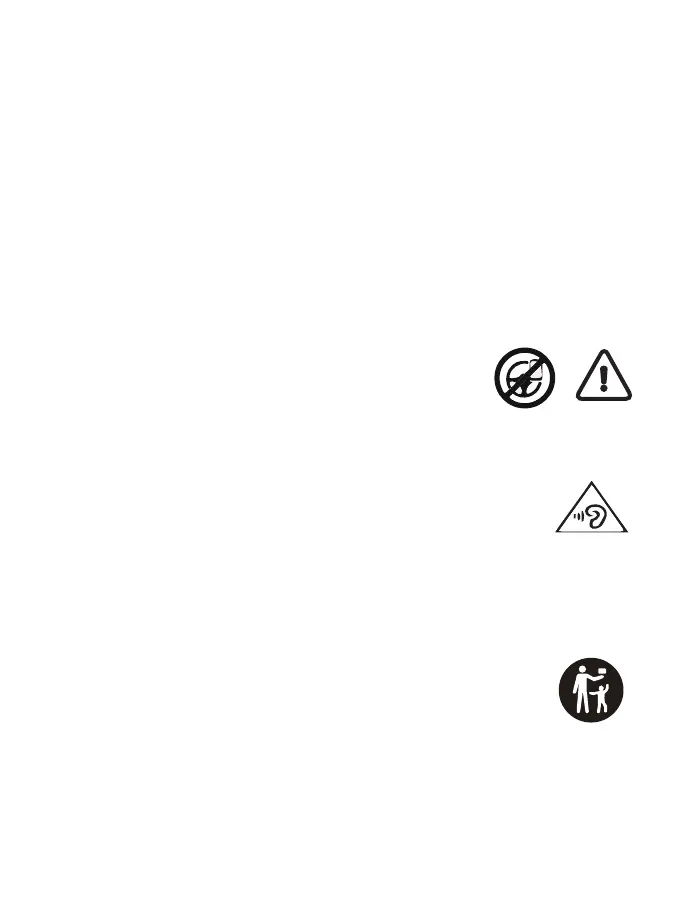
•Always check the laws and regulations on the use of radios in the areas where
you drive. Use of Communication Devices, for example, mobile radio, may not be
allowed.
• Give full attention to driving and to the road.
• Use hands-free operation, if available.
• Pull o the road and park before making or answering a call, if driving conditions or regulations so require.
• Do not place a poable radio in the area over an air bag or in the airbag deployment area. The radio may
be propelled with great force and cause serious inju to occupants of the vehicle when the airbag inates.
• Use the lowest volume necessa to do your job. Turn up the volume only if you are in noisy
surroundings.
• Limit the amount of time you use headsets or earpieces at high volume.
• When using the radio without a headset or earpiece, do not place the radio's speaker
directly against your ear.
• Use carefully with the earphone maybe possible excessive sound pressure from earphones and
headphones can cause hearing loss.
CAUTION: Exposure to loud noises from any source for extended periods of time may temporarily or
permanently aect your hearing. The louder the radio's volume, the less time is required before your hearing
could be aected. Hearing damage from loud noise is sometimes undetectable at rst and can have a
cumulative eect.
•WARNING: KEEP NEW OR OLD USED BATTERIES OUT OF REACH OF CHILDREN.
•In the event of a batte leaking, do not allow the liquid to come into contact with the skin
or eyes. If contact has been made, wash the aected area with copious amounts of water and
seek medical advice immediately.
•Since batteries are sensitive to high temperatures when storing them, keep them in a cool and d place.
The recommended temperature should be between +10 ℃and +25℃and never exceed +30℃. Batteries should
therefore not be stored next to radiators or boilers nor in direct sunlight. Extremes of humidity (below 35%
and above 95% relative humidity for sustained periods should be avoided since they are detrimental to both
batteries and packing. Although the storage life of batteries at room temperature is good, storage is improved
at lower temperatures provided special precautions are taken. Also, accelerated warming is harmful.
01 02 03 04 05 06
07 08 09 10 11 12 13 14 15 16
17 18 19 20 21
22 23 24


 To Next Page
 Loading...