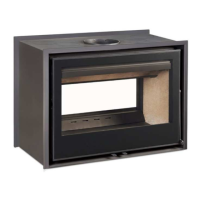
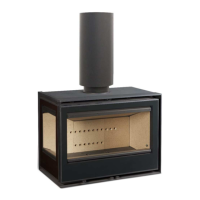
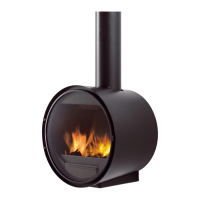
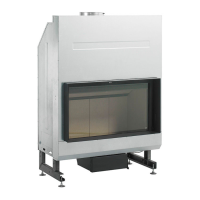
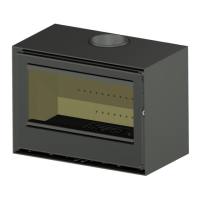
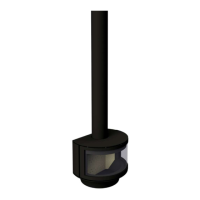
This document describes the ROCAL INSERT Frontal, a solid fuel insertable fireplace designed for efficient heating. The manual covers various models, including ARc 50V, ARc 65, ARc 70, ARc 70A, ARc 70C, ARc 80, ARc 100R, and ARc 100, with optional "Plus 150" or "Plus 180" configurations.
Function Description
The ROCAL INSERT Frontal is a solid fuel combustion appliance designed to provide heating. It features a sealed steel combustion chamber treated with Senotherm 600°C paint, lined internally with vermiculite plates, and encased in a galvanized steel convection casing. The unit includes an ember grill and a cast iron smoke pipe connection piece. An electric ventilation system is integrated to circulate heated air, drawing air from the lower grilles and expelling it through the front and/or upper diffusers. This forced air circulation enhances heat distribution and overall heating efficiency. The appliance is designed for intermittent combustion and is not to be used as an incinerator.
Important Technical Specifications
The technical specifications vary slightly across models and configurations, but common parameters include:
- Draught (minimum - maximum): Typically 11-13 Pa.
- Fuel Consumption: Ranges from 2 kg/h (ARc 50V) to 3.19 kg/h (ARc 100 +Plus 180).
- Smoke Mass Flow Rate: Ranges from 5.4 g/s (ARc 50V) to 9.9 g/s (ARc 100R, ARc 100).
- Efficiency: Varies from 77% to 86.3%, with "Plus" models generally having higher efficiency (e.g., ARc 50V at 77.16% vs. ARc 50V +Plus 150 at 86.3%).
- Nominal Output: Ranges from 6.3 kW (ARc 50V) to 12.1 kW (ARc 100 +Plus 180).
- Power Range: Typically 5.5-9.5 kW, 4-9 kW, 5.5-10 kW, 6.5-11.5 kW, or 7.5-12.5 kW depending on the model.
- CO Concentration (at 13% O2): Ranges from 0.048% to 0.099%.
- NOx Concentration (at 13% O2): Ranges from 91 mg/Nm³ to 107 mg/Nm³.
- OGC Concentration (at 13% O2): Ranges from 49 mg/Nm³ to 66 mg/Nm³.
- Particle Concentration (at 13% O2): Ranges from 12 mg/Nm³ to 24 mg/Nm³.
- Net Weight: Varies significantly, from 92 kg (ARc 65) to 169 kg (ARc 100R +Plus 180).
- Maximum Authorized Load (fuel): 2.5 kg to 5 kg.
- Reload Height: 175 mm to 200 mm.
- Logs Length: 330 mm to 600 mm.
- Minimum Flue Height: 4000 mm for all models.
- Flue Duct Diameter: 150 mm or 180 mm.
- External Air Inlet Diameter: 100 mm for all models.
- Air Outlet Diameter: 120 mm for all models.
- Safety Distances: 150 mm (back), 150 mm (sides), 1000 mm (frontal).
- Fireplace Room Ventilation (entry - exit): 450 cm² for all models.
- Fan Airflow (unit): 135 m³/h.
- Fan Output (unit): 20 W.
- Average Temperature of Smoke: Ranges from 196.8°C to 322°C.
- Fuel Type: Natural wood (12-20% humidity, two years under cover).
- Electrical Connection: Silicone hose 3*wire of 1.5 mm².
- Turbine Configurations: Models are equipped with either two or four helical turbines, depending on the specific model and "Plus" configuration.
Usage Features
The appliance is designed for user-friendly operation with several control mechanisms:
- Fuel: Only natural wood logs are authorized. Resinous woods are not recommended. The maximum authorized load, log size, and reload height must be respected.
- Combustion Control:
- Primary Register: Controls air intake from the base of the fire (through the fire grate and rear vermiculite). Primarily used for lighting and aiding combustion. Adjustment is possible to manage draught.
- Secondary Register: Controls air entering the combustion chamber from the top, used for adjusting combustion intensity.
- Tertiary/Safety Air: A fixed air supply through the rear vermiculite, under the deflector, to prevent deflagrations and improve combustion.
- Lighting: Use suitable materials like firelighters, paper, and dry, thin branches. Avoid gasoline, solvents, or alcohol. Keep registers open and the door adjusted during initial lighting to prevent condensation. Once hot, close the door and adjust primary and secondary registers to control fire intensity.
- Refueling: Reload when the flame has died down and only embers remain. Do not exceed the maximum authorized load. Open the door slowly to prevent smoke leakage.
- Electrical Ventilation System: This system should be permanently connected to the electrical grid when the appliance is in use. The control switch offers three positions:
- Position 0: Automatic slow speed. Turbines start and stop automatically via the thermostat.
- Position I: Automatic fast speed. Turbines start and stop automatically via the thermostat.
- Position II: Manual fast speed. Manual operation without automatic shutdown.
- Adverse Weather Conditions: In case of sudden pressure drops or smoke reflux into the duct, close combustion air registers and allow the fire to extinguish.
- Safety: Do not touch or manipulate any part of the appliance without a protective glove while in operation. Ensure no materials (especially paint spray) are left inside the combustion chamber before lighting. Maintain specified safety distances from flammable elements.
Maintenance Features
Regular and proper maintenance is crucial for optimal performance and safety:
- General Maintenance: Periodic and complete checks of the appliance, ceramic rope joints, ducts, and installation are recommended. Some distributors offer maintenance contracts.
- Mechanism Check: After extended periods of inactivity, ensure all mechanisms (registers, door, external air inlet) are unlocked and functional.
- Spare Parts: Use only original or manufacturer-recommended spare parts.
- Cleaning:
- Glass: Clean the glass when the appliance is off, using the provided dry cloth or similar. Avoid common cleaning liquids or products that could corrode metal parts or ceramic joints.
- Ash Box: Empty the ash box only when the appliance is completely off and ashes do not contain burning coals. Deposit ashes in a metal bucket.
- Flue Liner: Clean the flue liner at least once per season. A professional review is mandatory.
- Paint: The heat-resistant paint (Senotherm 600°C) may emit a slight odor during initial use. Periodically check the paint condition and touch up with "Rocal heatproof spray paint" if necessary. Paint damage can occur due to temperatures exceeding 600°C, high fuel humidity, use of non-recommended fuels, humid/saline environments, or contact with chemical cleaning products or water.
- Vermiculite Parts: Internal vermiculite parts should not be impacted during refueling. Cracks in these parts, if properly seated, do not affect operation or pose a risk and are not covered by warranty.
- Electrical System: If the power cable is damaged, it must be replaced by the manufacturer's service department or qualified personnel. If an external speed controller is used, the internal switch must be set to position I.

 Need help?
 General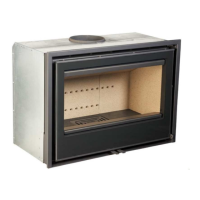

 To Next Page