EasyManua.ls Logo

Rogers KNW Series - User Manual

Default Icon
49 pages
Print Icon
To Next Page IconTo Next Page
Loading...
C:\Users\acg\AppData\Local\Microsoft\Windows\INetCache\Content.Outlook\QUQH0O0M\GPKD-
1550-H CAT Diesel Instruction Manual.doc
APRIL2020
AIR-COOLED
ROTARY SCREW
AIR COMPRESSORS
OIL-FREE TWO-STAGE
MODEL
GPKD-1550-H
SERIAL
1806119004 1806119033
INSTRUCTION MANUAL
GPKD-1550-H
CATERPILLAR C18 TIER 4 FINAL – 1550 CFM
KOBELCO is the international trademark found on all products of Kobe Steel, Ltd.
The information in this manual is
current as of its publication date
and applies to compressor serial
numbers 1806119004 through
1806119033.

Questions and Answers

Summary

Safety Precautions

General Description

Compressor

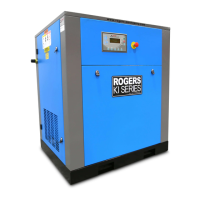
The Rogers KNW Series air compressor is a heavy duty, two-stage, rotary screw design that provides completely oil-free compressed air.

Compressed Air Flow

Details the flow of compressed air through the two-stage system, including intercooling and moisture separation.

Cooling Air Flow

Details the flow of cooling air through the compressor unit, including intercooler, aftercooler, and engine radiator.

Oil Flow for Lubrication

Explains the flow of lubricating oil for bearings, gears, and the lubrication system.

Capacity Control System

Describes the capacity control system, including the CCV and 4-way solenoid valve for regulating air flow.

Monitoring and Limiting Devices

Lists and describes sensors and devices used for monitoring compressor parameters and triggering alerts or shutdowns.

Alerts and Alarms

Explains alert and alarm conditions, their indications (pilot lights, buzzer, HMI messages), and operational impact.

Component Locations

Illustrates and labels the location of external components on the compressor unit from rear and side views.

Installation

Inspection

Details the procedure for inspecting the compressor unit upon receipt for any damage and initiating claims if necessary.

Handling

Provides instructions for handling the compressor unit using forklifts or overhead cranes, including safety precautions.

Foundation

Specifies requirements for mounting the compressor on a flat, level floor capable of supporting its weight.

Location

Recommends installation in a well-ventilated area, protected from contaminants, freezing, and direct sunlight.

Cooling Air

Emphasizes the need for sufficient ventilation to cool the compressor and prevent recirculation of warm air.

Compressor Air Outlet Piping

Describes the compressor's internal check valve and pressure control via PLC, and the importance of proper outlet piping.

Air Receiver

Details the proper sizing, location, and connection of the air receiver for optimal system performance and safety.

Wiring

Outlines owner responsibilities for safe electrical installation, compliance with codes, and details on power connections and inverter use.

Start-Up

Pre-start Checks

Lists essential checks before starting the compressor, including battery disconnect, loose items, fluid levels, electrical connections, and guards.

Initial Start-up

Details the initial startup sequence involving the auxiliary oil pump, engine start, and achieving operational parameters.

Operating Instructions

Starting the Compressor

Explains how to start the compressor using the key-switch, the PLC sequence, and conditions for enabling load control.

Stopping the Compressor

Details the procedure for shutting down the compressor via the key-switch, including cooldown and post-run sequences.

Automatic Stop

Describes standby mode, automatic shutdown based on load, and conditions for automatic restart.

Electrical Controls

Compressor Control Panel

Describes the HMI touchscreen interface, pilot lights, push buttons, key-switch, and additional monitoring devices.

HMI Maintenance

Provides guidance on cleaning, care, and replacement of the Human-Machine Interface (HMI) touchscreen display.

Programmable Logic Controller

Identifies the PLC model used and its function in monitoring and controlling compressor operations.

Maintenance

Daily

Outlines daily checks including operating parameters, drain valves, capacity control valve, pilot lights, fluid levels, and air cleaner indicator.

Weekly

Covers weekly inspections of the cabinet interior, condensate drains, fuel tank, air/oil filters, DEF filter, and battery.

Every 250 Service Hours

Includes inspecting engine belts, obtaining oil samples, and checking/cleaning engine grounding studs.

Monthly

Involves reviewing event lists, inspecting control air filter, oil sump breather, and emailing daily records.

Every 500 Service Hours or 3 Months

Covers checking battery electrolyte, coolant, changing engine oil/filters, and inspecting hoses/belts.

Every 2000 Service Hours

Requires replacement of the engine fumes disposal filter element.

Yearly

Includes draining sump, replacing oil filter, inspecting discharge check valve, and replacing CCV components.

Every 2500 Service Hours

Involves checking engine valve lash and valve actuators.

Every 3000 Service Hours or 3 Years

Requires changing the engine coolant.

Every 4000 Service Hours

Includes inspecting engine mounts.

Every 5000 Service Hours

Covers cleaning ARD spark plug, replacing DEF filter/injector, and cleaning Diesel particulate filter.

Every 6000 Service Hours or 3 Years

Involves adding engine coolant extender (ELC).

Every 10,000 Service Hours

Requires replacement of DEF manifold filters.

Every 12,000 Service Hours or 6 Years

Includes changing the coolant.

Lubrication Oil

Details compressor oil requirements (ISO VG 68 turbine oil) and Cat DEO-ULS recommendations for the engine.

Filters

Covers servicing procedures for inlet air filters (compressor/engine) and the compressor oil filter.

Inlet Air Filter (Compressor and Engine)

Details inspection of the service indicator and replacement of inlet air filters for compressor and engine.

Compressor Oil Filter

Explains how to service the compressor oil filter based on the pressure differential switch and recommends annual replacement.

Sump Breather

Instructs to inspect the sump breather element monthly and replace if saturated.

Control Air Filter

Recommends inspecting the control air filter element monthly and replacing annually or if saturated.

Engine Oil Filter

Specifies that the engine oil filter should be changed with the engine oil every 500 hours of service.

DEF Manifold Filter

Identifies the DEF manifold filter as being located inside the DEF tank at the pump's suction port.

Diesel Exhaust Fluid Filter

Locates the Diesel Exhaust Fluid filter as a secondary filter on the exhaust aftertreatment system.

Fumes Disposal Filter Element

Describes the location of the fumes disposal filter element for the open crankcase ventilation system.

Fuel System Primary;Secondary Filter (Water Separator) Element

Explains the function of the fuel system primary/secondary filter and when to change it, especially if water contamination occurs.

Standby and Stored Units

Standby Units

Requires running back-up/stand-by compressors weekly to prevent condensation and reach full operating temperature.

Short-term Storage

Details procedures for storage intervals of one month or less, including running the unit and draining fluids.

Long-term Storage

Provides detailed steps for long-term storage, including adding VCI oil, preparing the engine, and protecting components from corrosion.

Typical Operating Conditions

Operating Temperatures and Pressures

Explains how factors affect conditions and recommends recording data for diagnosis and trend analysis.

Troubleshooting

Compressor

Provides a table of common compressor conditions, possible causes, and suggested remedies for mechanical faults.

PLC

Lists common PLC conditions (lights, screen) and their possible causes and suggested remedies.

Summary

Safety Precautions

General Description

Compressor

The Rogers KNW Series air compressor is a heavy duty, two-stage, rotary screw design that provides completely oil-free compressed air.

Compressed Air Flow

Details the flow of compressed air through the two-stage system, including intercooling and moisture separation.

Cooling Air Flow

Details the flow of cooling air through the compressor unit, including intercooler, aftercooler, and engine radiator.

Oil Flow for Lubrication

Explains the flow of lubricating oil for bearings, gears, and the lubrication system.

Capacity Control System

Describes the capacity control system, including the CCV and 4-way solenoid valve for regulating air flow.

Monitoring and Limiting Devices

Lists and describes sensors and devices used for monitoring compressor parameters and triggering alerts or shutdowns.

Alerts and Alarms

Explains alert and alarm conditions, their indications (pilot lights, buzzer, HMI messages), and operational impact.

Component Locations

Illustrates and labels the location of external components on the compressor unit from rear and side views.

Installation

Inspection

Details the procedure for inspecting the compressor unit upon receipt for any damage and initiating claims if necessary.

Handling

Provides instructions for handling the compressor unit using forklifts or overhead cranes, including safety precautions.

Foundation

Specifies requirements for mounting the compressor on a flat, level floor capable of supporting its weight.

Location

Recommends installation in a well-ventilated area, protected from contaminants, freezing, and direct sunlight.

Cooling Air

Emphasizes the need for sufficient ventilation to cool the compressor and prevent recirculation of warm air.

Compressor Air Outlet Piping

Describes the compressor's internal check valve and pressure control via PLC, and the importance of proper outlet piping.

Air Receiver

Details the proper sizing, location, and connection of the air receiver for optimal system performance and safety.

Wiring

Outlines owner responsibilities for safe electrical installation, compliance with codes, and details on power connections and inverter use.

Start-Up

Pre-start Checks

Lists essential checks before starting the compressor, including battery disconnect, loose items, fluid levels, electrical connections, and guards.

Initial Start-up

Details the initial startup sequence involving the auxiliary oil pump, engine start, and achieving operational parameters.

Operating Instructions

Starting the Compressor

Explains how to start the compressor using the key-switch, the PLC sequence, and conditions for enabling load control.

Stopping the Compressor

Details the procedure for shutting down the compressor via the key-switch, including cooldown and post-run sequences.

Automatic Stop

Describes standby mode, automatic shutdown based on load, and conditions for automatic restart.

Electrical Controls

Compressor Control Panel

Describes the HMI touchscreen interface, pilot lights, push buttons, key-switch, and additional monitoring devices.

HMI Maintenance

Provides guidance on cleaning, care, and replacement of the Human-Machine Interface (HMI) touchscreen display.

Programmable Logic Controller

Identifies the PLC model used and its function in monitoring and controlling compressor operations.

Maintenance

Daily

Outlines daily checks including operating parameters, drain valves, capacity control valve, pilot lights, fluid levels, and air cleaner indicator.

Weekly

Covers weekly inspections of the cabinet interior, condensate drains, fuel tank, air/oil filters, DEF filter, and battery.

Every 250 Service Hours

Includes inspecting engine belts, obtaining oil samples, and checking/cleaning engine grounding studs.

Monthly

Involves reviewing event lists, inspecting control air filter, oil sump breather, and emailing daily records.

Every 500 Service Hours or 3 Months

Covers checking battery electrolyte, coolant, changing engine oil/filters, and inspecting hoses/belts.

Every 2000 Service Hours

Requires replacement of the engine fumes disposal filter element.

Yearly

Includes draining sump, replacing oil filter, inspecting discharge check valve, and replacing CCV components.

Every 2500 Service Hours

Involves checking engine valve lash and valve actuators.

Every 3000 Service Hours or 3 Years

Requires changing the engine coolant.

Every 4000 Service Hours

Includes inspecting engine mounts.

Every 5000 Service Hours

Covers cleaning ARD spark plug, replacing DEF filter/injector, and cleaning Diesel particulate filter.

Every 6000 Service Hours or 3 Years

Involves adding engine coolant extender (ELC).

Every 10,000 Service Hours

Requires replacement of DEF manifold filters.

Every 12,000 Service Hours or 6 Years

Includes changing the coolant.

Lubrication Oil

Details compressor oil requirements (ISO VG 68 turbine oil) and Cat DEO-ULS recommendations for the engine.

Filters

Covers servicing procedures for inlet air filters (compressor/engine) and the compressor oil filter.

Inlet Air Filter (Compressor and Engine)

Details inspection of the service indicator and replacement of inlet air filters for compressor and engine.

Compressor Oil Filter

Explains how to service the compressor oil filter based on the pressure differential switch and recommends annual replacement.

Sump Breather

Instructs to inspect the sump breather element monthly and replace if saturated.

Control Air Filter

Recommends inspecting the control air filter element monthly and replacing annually or if saturated.

Engine Oil Filter

Specifies that the engine oil filter should be changed with the engine oil every 500 hours of service.

DEF Manifold Filter

Identifies the DEF manifold filter as being located inside the DEF tank at the pump's suction port.

Diesel Exhaust Fluid Filter

Locates the Diesel Exhaust Fluid filter as a secondary filter on the exhaust aftertreatment system.

Fumes Disposal Filter Element

Describes the location of the fumes disposal filter element for the open crankcase ventilation system.

Fuel System Primary;Secondary Filter (Water Separator) Element

Explains the function of the fuel system primary/secondary filter and when to change it, especially if water contamination occurs.

Standby and Stored Units

Standby Units

Requires running back-up/stand-by compressors weekly to prevent condensation and reach full operating temperature.

Short-term Storage

Details procedures for storage intervals of one month or less, including running the unit and draining fluids.

Long-term Storage

Provides detailed steps for long-term storage, including adding VCI oil, preparing the engine, and protecting components from corrosion.

Typical Operating Conditions

Operating Temperatures and Pressures

Explains how factors affect conditions and recommends recording data for diagnosis and trend analysis.

Troubleshooting

Compressor

Provides a table of common compressor conditions, possible causes, and suggested remedies for mechanical faults.

PLC

Lists common PLC conditions (lights, screen) and their possible causes and suggested remedies.

Rogers KNW Series Specifications

General IconGeneral
BrandRogers
ModelKNW Series
CategoryAir Compressor
LanguageEnglish

Related product manuals