11- Wheels and tyres:
Check the wheel nuts and tyre pressures regularly
Inflation
Proper inflation of tyres allows optimum grip, comfort and performance. Also the
tyres will last longer and the surfaces will be preserved.
We strongly discourage:
- An under-inflation, which distorts the carcass and may cause a tyre failure.
- The over-inflation which reduces the area of contact with the ground
resulting in a loss of adhesion. In addition the casing is more sensitive to
shocks.
Assembly
Mount the tyres only on the rims they are designed for.
Use rims clean and in good condition, working with clean surfaces.
Use the appropriate tools for the tyres and rims.
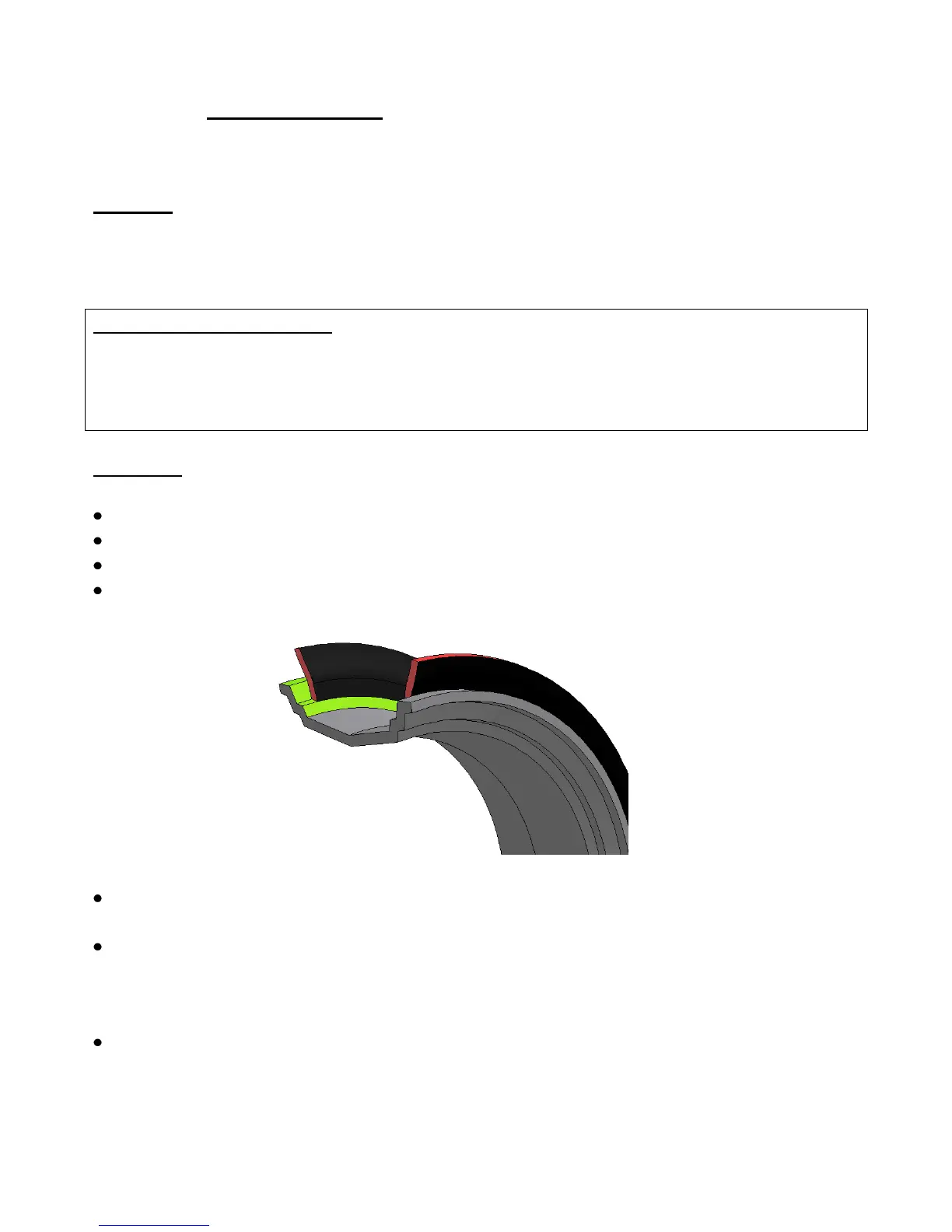
To facilitate assembly and disassembly, lubricate the seating (green) and the
beads of the casing (black) with a suitable product as shown in the sketch below.
With a new tyre, use a new inner tube. Use an inner tube corresponding to the
size of the tyre.
After mounting a tyre, ensure the correct centering of the tyre on the rim: if this is
not the case, inflate, deflate and inflate again until the centering is good. Always
use the maximum pressure for positioning the beads on the rim seat 2.5bars (35
psi). Then adjust the pressure to use or to store.
When transporting the equipment by road, rail or boat, you must inflate the tyres
to 2.5 bar (35 psi) to avoid damage from the mooring systems.


 To Next Page