MODEL SOLU COMP II SECTION 8.0
TROUBLESHOOTING
8.3 TROUBLESHOOTING WHEN NO ERROR MESSAGE IS SHOWING — DO
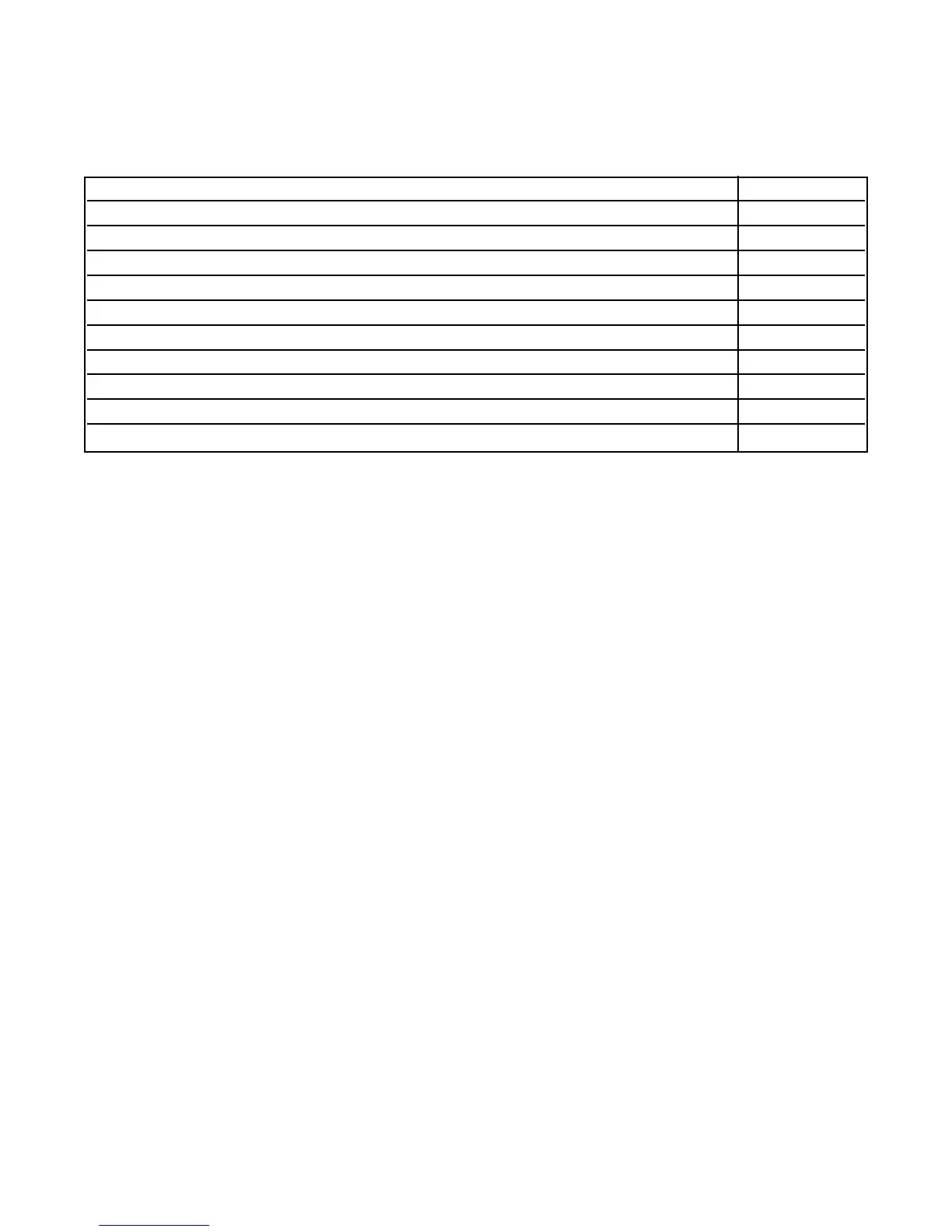
Problem See Section
New temperature during calibration more than 2-3°C different from the live reading 8.3.1
Zero current was accepted, but current is greater than the value in the table in Section 6.3.2 8.3.2
Possible error warning during sensor zero 8.3.2
Sensor cannot be zeroed; sensor zero current is too high 8.3.2
Sensor cannot be zeroed; zero reading is not stable 8.3.3
Sensor can be calibrated, but current is outside the range in the table in Section 6.3.3 8.3.4
Possible error warning during air calibration 8.3.4
Possible error warning during in process calibration 8.3.5
Process readings are erratic 8.3.6
Readings drift 8.3.7
8.3.1 Difference Between Solu Comp II and Standard Thermometer is Greater Than 3°C.
A. Is the standard thermometer, RTD, or thermistor accurate? General purpose liquid-in-glass thermometers,
particularly ones that have been mistreated, can have surprisingly large errors.
B. Is the temperature element in the pH sensor completely submerged in the test liquid?
C. Is the standard temperature sensor submerged to the correct level?
D. Review Section 6.2.
8.3.2 Sensor Cannot be Zeroed: High Zero Current
A. Is the sensor properly wired to the analyzer? See section 3.2.
B. Is the membrane completely covered with zero solution and are air bubbles not trapped against the mem-
brane? Swirl and tap the sensor to release air bubbles.
C. Is the zero solution fresh and properly made? Zero the sensor in a solution of 5% sodium sulfite in water.
Prepare the solution immediately before use. It has a shelf life of only a few days.
D. If the sensor is being zeroed with nitrogen gas, verify that the nitrogen is oxygen-free and the flow is adequate
to prevent back-diffusion of air into the chamber.
E. The major contributor to the zero current is dissolved oxygen in the electrolyte solution. A long zeroing period
usually means that an air bubble is trapped in the electrolyte. To ensure the 499ADO or 499A TrDO sensor
contains no air bubbles, carefully follow the procedure in the sensor manual for filling the sensor. If the elec-
trolyte solution has just been replaced, allow several hours for the zero current to stabilize. On rare occasions,
the sensor may require as long as overnight to zero.
F. Check the membrane for damage and replace the membrane if necessary.
56


 To Next Page