Be sure to use only the specified hydraulic fluid
(see “Lubricants, fluids and capacities” at the
start of this Chapter) since mixing different
types of fluid can cause damage to the system.
Warning: Brake hydraulic fluid
can harm your eyes and damage
painted surfaces, so use
extreme caution when handling
and pouring it. Wash off spills immediately
with plenty of water. Do not use fluid that
has been standing open for some time, as
it absorbs moisture from the air. Excess
moisture can cause corrosion and a
dangerous loss of braking effectiveness.
23 When adding fluid, it is a good idea to
inspect the reservoir for contamination. The
system should be drained and refilled if
deposits, dirt particles or contamination are
seen in the fluid.
24 After filling the reservoir to the correct
level, make sure that the cap is refitted
securely, to avoid leaks and the entry of
foreign matter.
25 If the reservoir requires repeated
replenishing to maintain the correct level, this
is an indication of an hydraulic leak
somewhere in the system, which should be
investigated immediately.
Power steering fluid
26 See Section 5 of this Chapter.
4 Tyre and tyre pressure
checks
1
1 Periodic inspection of the tyres may spare
you from the inconvenience of being stranded
with a flat tyre. It can also provide you with
vital information regarding possible problems
in the steering and suspension systems
before major damage occurs.
2 The current tyres are equipped with tread
wear indicator (TWI) bands, which will appear
when the tread depth reaches approximately
1.6 mm. Most tyres have a mark around the
tyre at regular intervals to indicate the location
of the tread wear indicators, the mark being
TWI, an arrow, or the tyre manufacturer’s
symbol. Tread wear can also be monitored
with a simple inexpensive device known as a
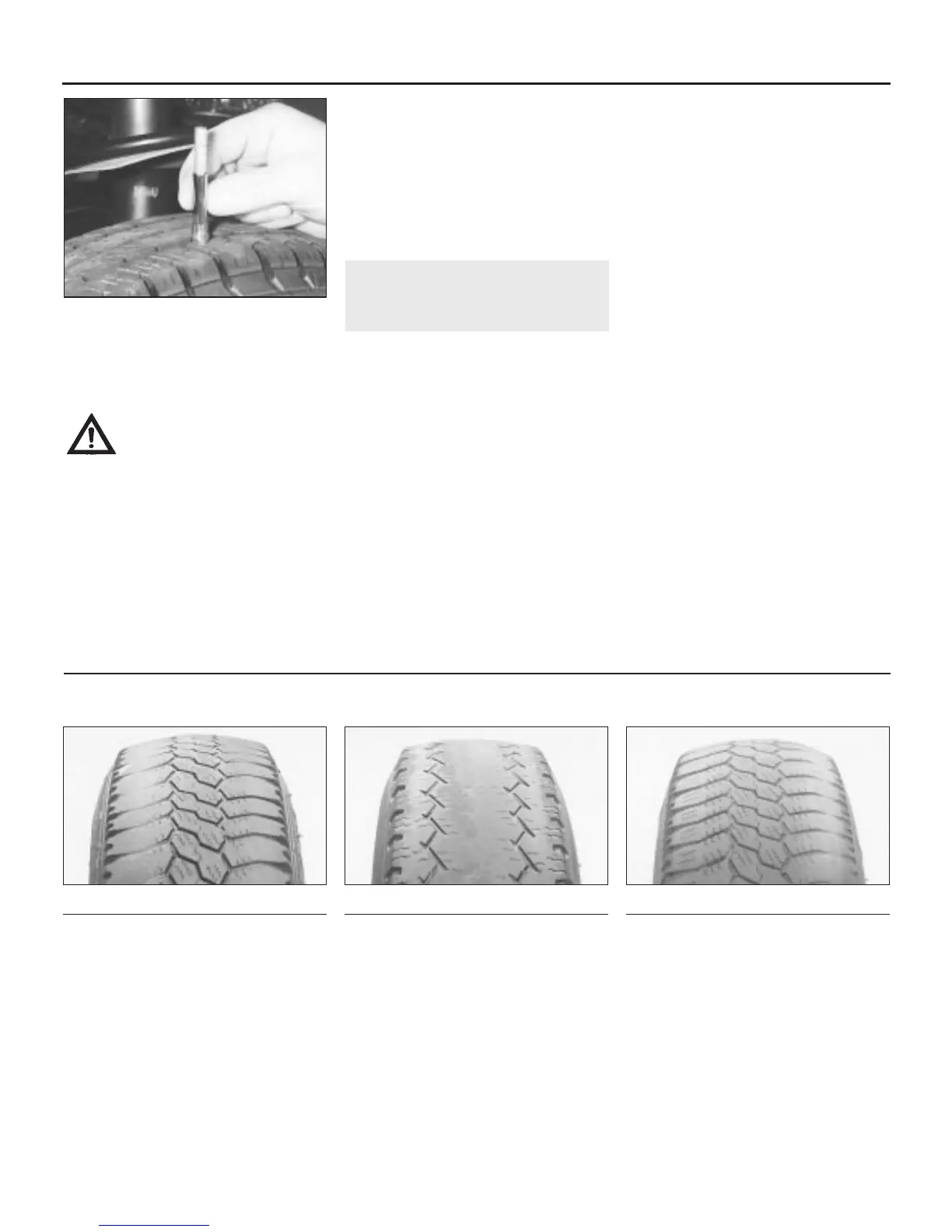
tread depth indicator gauge (see illustration).
3 Ensure that tyre pressures are checked
regularly and maintained correctly (see the
Specifications at the beginning of this Chapter
for pressures). Checking should be carried out
with the tyres cold, and not immediately after
the vehicle has been in use. If the pressures
are checked with the tyres hot, an apparently-
high reading will be obtained, owing to heat
expansion. Under no circumstances should an
attempt be made to reduce the pressures to
the quoted cold reading in this instance, or
effective under-inflation will result. Most
garage forecourts have a pressure line which
combines a gauge to check and adjust the
tyre pressures, but they may vary in accuracy,
due to general misuse and abuse. It therefore
pays to carry a good-quality tyre pressure
gauge in the vehicle, to make the checks
required and ensure pressure accuracy.
4 Note any abnormal tread wear (see
illustration). Tread pattern irregularities such
as feathering, flat spots, and more wear on
one side than the other, are indications of
front wheel alignment and/or balance
problems. If any of these conditions are
noted, they should be rectified as soon as
possible.
5 Under-inflation will cause overheating of the
tyre, owing to excessive flexing of the casing,
and the tread will not sit correctly on the road
surface. This will cause a consequent loss of
adhesion and excessive wear, as well as the
danger of sudden tyre failure due to heat
build-up.
6 Over-inflation will cause rapid wear of the
centre part of the tyre tread, coupled with
reduced adhesion, harder ride, and the
danger of damage occurring in the tyre
casing.
7 Regularly check the tyres for damage in the
form of cuts or bulges, especially in the
sidewalls. Remove any nails or stones
1•10 Weekly Checks
4.2 Checking the tyre tread depth with a
depth gauge
1380 Rover 800 Series Remake
Tyre tread wear patterns
Shoulder Wear
Underinflation (wear on both sides)
Under-inflation will cause overheating of the
tyre, because the tyre will flex too much, and
the tread will not sit correctly on the road
surface. This will cause a loss of grip and
excessive wear, not to mention the danger of
sudden tyre failure due to heat build-up.
Check and adjust pressures
Incorrect wheel camber (wear on one side)
Repair or renew suspension parts
Hard cornering
Reduce speed!
Centre Wear
Overinflation
Over-inflation will cause rapid wear of the
centre part of the tyre tread, coupled with
reduced grip, harsher ride, and the danger of
shock damage occurring in the tyre casing.
Check and adjust pressures
If you sometimes have to inflate your car’s
tyres to the higher pressures specified for
maximum load or sustained high speed, don’t
forget to reduce the pressures to normal
afterwards.
Uneven Wear
Front tyres may wear unevenly as a result of
wheel misalignment. Most tyre dealers and
garages can check and adjust the wheel
alignment (or "tracking") for a modest charge.
Incorrect camber or castor
Repair or renew suspension parts
Malfunctioning suspension
Repair or renew suspension parts
Unbalanced wheel
Balance tyres
Incorrect toe setting
Adjust front wheel alignment
Note: The feathered edge of the tread which
typifies toe wear is best checked by feel.


 To Next Page
 Loading...