Locks & alarm
13
Your vehicle is fitted with a sophisticated
electronic anti-theft alarm system. In order to
ensure maximum security, you are advised to
gain a full understanding of the system by
thoroughly reading this section of the
handbook.
LOCKING THE VEHICLE AND ARMING THE
ALARM
You have been supplied with two
handset/keys (numbered 1 and 2). While both
are identical in operation, they transmit two
different sets of information (see ’Key
activated memory seats’). Replacement
handsets are only available from a Land Rover
dealer. Up to two further handsets (3 and 4)
can also be obtained.
There are four methods for securing your
vehicle:
1. ’Superlocking’ using the handset -
(recommended high security method).
2. ’Superlocking’ using the key.
3. Locking using the handset.
4. Locking using the key.
FOR MAXIMUM SECURITY, ALWAYS
’SUPERLOCK’ THE VEHICLE USING THE
HANDSET
(except when the vehicle is to be locked with
passengers or animals inside).
IMPORTANT INFORMATION
Emergency keys
In addition to the two handsets, you have
also been supplied with two separate
keys. These keys perform the same
functions as the key part of the handset
and are intended for emergency use only.
DO NOT keep the keys inside the vehicle.
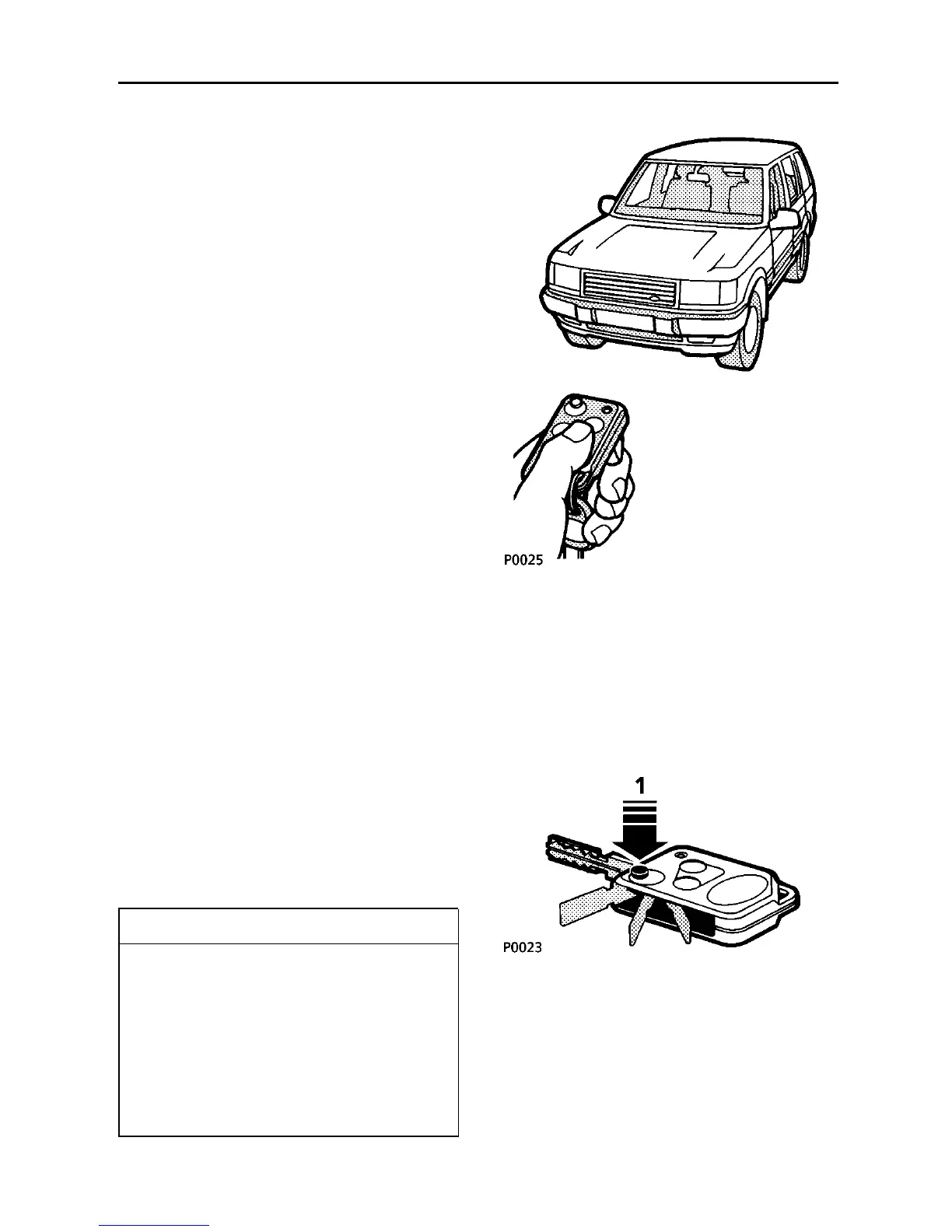
The handset
The radio remote handset has three buttons
(described below). By pressing the
appropriate button, the handset can be used
either as a conventional key, or as a remote
handset to either lock or ’superlock’ the
vehicle.
1. Key release button.
• Press to release the key, which can then
be used as a conventional key to operate
the starter switch, glovebox and door
locks.



 To Next Page