This document describes a Russell Hobbs slow cooker, a kitchen appliance designed for gentle, long-duration cooking. The device is primarily used for preparing meals that benefit from extended cooking times, such as stews, soups, and casseroles, by maintaining a consistent, low temperature.
Function Description
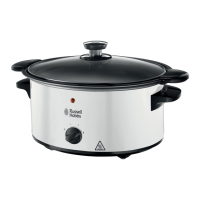
The slow cooker operates with a simple 4-position control switch:
- 0 (off): Turns the appliance off.
- 1 (low): Used for traditional "slow cooking." This setting requires preheating the cookpot in the slow cooker at setting 2 for at least 20 minutes before cooking. It's important not to use this setting to heat food up, as it may not reach temperatures sufficient to kill bacteria.
- 2 (high): Used for "fast cooking," effectively turning the slow cooker into an electric stewpot. When using this setting, it's crucial to monitor the food to prevent it from drying out. If food appears dry, hot water should be added (never cold water, as this could crack the cookpot).
- SS (warm): This setting is exclusively for keeping food warm after it has been cooked to readiness in the slow cooker.
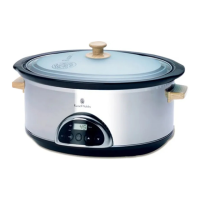
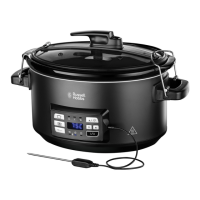
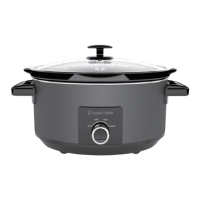
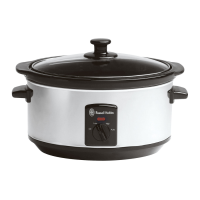
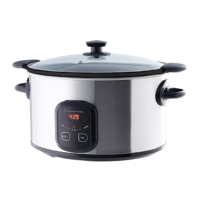
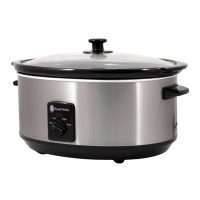
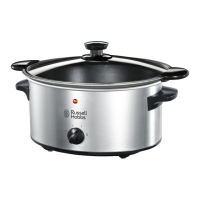
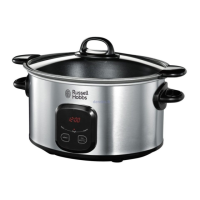
The appliance consists of a main body with a control knob and a light indicator, a removable cookpot, and a lid with a knob. The light illuminates when the appliance is in operation.
Usage Features
The slow cooker offers several benefits, including health, economy, and convenience:
- Health: The gentle cooking action helps reduce damage to vitamins and preserves more nutrients and flavors in food.
- Economy: Long, slow cooking can tenderize tougher, cheaper cuts of meat, making them more palatable. It also uses significantly less power compared to a small ring on an average hob.
- Convenience: Ingredients can be prepared the night before and placed in the slow cooker in the morning, allowing for a ready meal upon returning home.
General Usage Guidelines:
- Thawing: Frozen food must be completely thawed before being added to the cookpot.
- Browning/Sautéing: Meat should be browned and vegetables sautéed in a separate pan before being transferred to the cookpot. The cookpot itself should not be used for these initial cooking steps.
- Preheating: Always preheat the cookpot in the slow cooker at setting 2 for at least 20 minutes before cooking at setting 1 (low).
- Dried Beans/Peas: Dried peas and beans should be soaked for 8 hours (or overnight) before cooking. Dried beans, especially red kidney beans, must be boiled for at least 10 minutes in cooking liquid before being added to the slow cooker, as they are poisonous if eaten raw or undercooked. Lentils do not require soaking.
- Vegetables: Root vegetables, tubers, and bulbs (carrots, potatoes, onions) take longer to cook than meat. They should be cut into thin slices (about 5mm or 1/2 inch) and gently sautéed for 2-3 minutes before being added. All vegetables, including dried ones, must be fully immersed in the cooking liquid.
- Rice: When cooking with rice, use at least 150ml (1/4pt) of cooking liquid for every 100g (4oz) of rice. "Easy-cook" rice is recommended for best results.
- Pasta: Pasta is generally not suitable for slow cooking as it becomes too soft. If a recipe requires pasta, it should be stirred in 30-40 minutes before the end of the cooking time.
- Liquid Volume: Slow cooking retains more juices, which can increase the volume of cooking liquid and thin sauces. Sauces should initially be thicker than normal.
- Filling Level: The cookpot should not be more than three-quarters full after all ingredients are added to allow for expansion and prevent hot water from spitting or overflowing.
- Placement: The slow cooker should be placed on a stable, level, heat-resistant surface, with at least 50mm (2 inches) of space around it for ventilation. It should not be covered or have anything placed on top of it.
- Serving: It is recommended to ladle food directly from the slow cooker into serving dishes. The cookpot, when full, is hot and heavy, so caution is advised if lifting it with oven gloves.
- Gravy/Sauce Adjustment: If the sauce is too thin, the lid can be removed, a teaspoon of flour stirred in, and the appliance cooked at setting 2, stirring until the sauce thickens.
Maintenance Features
Proper care and maintenance ensure the longevity and safe operation of the slow cooker:
- Unplugging: Always switch off (setting 0) and unplug the slow cooker before moving or cleaning it.
- Cooling: Allow the appliance to cool down before cleaning.
- Cookpot and Lid: Remove the lid and cookpot using oven gloves and place them on a heatproof surface.
- Cleaning Immediately: To prevent food debris from baking onto the cookpot, it is best to remove all food as soon as cooking is finished and fill the cookpot with warm water if not washing immediately.
- Washing: The lid and cookpot can be washed in hot soapy water using a cloth or sponge, then rinsed and dried thoroughly. Scouring pads should not be used.
- Dishwasher Use: The cookpot and lid are dishwasher safe, but the harsh environment of a dishwasher may affect their surface finishes. Any cosmetic damage will not impact functionality.
- Cookpot Exterior: Do not soak the exterior of the cookpot in water. The base is porous and can absorb water, which may expand and crack the cookpot when heated.
- Main Body: The main body of the slow cooker should never be immersed in water or any other liquid. It should not be placed in a dishwasher.
- External Surfaces: All other internal and external surfaces of the appliance should be wiped with a damp cloth. A little washing-up liquid can be used if necessary.
- Drying: Thoroughly dry all surfaces before re-using or storing the slow cooker.
- Crazing: Over time, the glaze on the cookpot may develop "crazing" (a network of small cracks). This is superficial and does not affect the functionality of the cooker.
- Abrasive Cleaners: Do not use harsh or abrasive cleaners or solvents on any part of the appliance.
Safety Precautions:
- Children: This appliance can be used by children aged 8 and above, and persons with reduced physical, sensory, or mental capabilities, or lack of experience, if they are supervised and instructed on safe use and understand the hazards. Children should not play with the appliance. Cleaning and user maintenance should only be performed by children over 8 years old and under supervision. Keep the appliance and cable out of reach of children under 8 years.
- Cable Damage: If the cable is damaged, it must be replaced by the manufacturer, its service agent, or similarly qualified personnel to avoid hazards.
- Immersion: Do not immerse the appliance in liquid.
- Hot Surfaces: The surfaces of the appliance will get hot during use.
- Cookpot Handling: Do not place a hot cookpot on a cold surface or into cold water, as this may cause it to crack. Do not use the cookpot with any other appliance.
- Accessories: Only use accessories or attachments supplied by the manufacturer.
- Intended Use: Do not use the appliance for any purpose other than those described in the instructions.
- Malfunctions: Do not operate the appliance if it is damaged or malfunctions.

 Need help?
 General




 To Next Page