EasyManua.ls Logo

Ryobi RPW150-G - User Manual

Ryobi RPW150-G
28 pages
Print Icon
To Next Page IconTo Next Page
Loading...
RBC36X26E
RBC36X26E
ORIGINAL INSTRUCTIONS
Pressure Washer
RPW150-G
Question and Answer IconNeed help?

Do you have a question about the Ryobi RPW150-G and is the answer not in the manual?

Summary

Intended Use and General Safety

Product Application

Defines the product's purpose for home use and cleaning various surfaces.

Safety Warnings and Cautions

Covers crucial safety advice, including handling, supervision, and environmental precautions.

Electrical and Additional Safety

Electrical Safety Guidelines

Addresses safe use of plugs, weather-proof extension cords, and keeping cords away from hazards.

Operational Safety Precautions

Details safety measures during operation, including handling, distance, and user alertness.

Overload Protection Mechanism

Explains the thermal sensor's role in preventing unit overload by shutting down power.

Transportation and Storage Safety

Advises on safe handling and storage practices considering product weight.

Maintenance and Residual Risks

Maintenance Guidelines

Instructs on using original parts, servicing, and regular inspection for safe operation.

Identifying Residual Hazards

Lists residual risks such as high-pressure jets, kickback, noise, and aerosol inhalation.

Minimizing Vibration Effects

Provides methods to reduce vibration effects, like staying warm and taking breaks.

Product Symbols Explained

Details the meaning of symbols displayed on the product itself.

Symbols in Manual and Signal Words

Manual Symbol Explanations

Details the meaning of symbols used within the instruction manual for clarity.

Risk Signal Word Definitions

Defines DANGER, WARNING, and CAUTION to communicate risk levels.

Troubleshooting Common Issues

Machine Not Starting Problems

Addresses problems like not starting, defective sockets, or extension cable issues.

Pressure and Motor Operation Issues

Covers fluctuating pressure, pump air suction, motor buzzes, and voltage issues.

Machine Stopping and Pulsating

Troubleshoots issues where the machine stops unexpectedly or pulsates.

Water Flow and Connection Problems

Addresses no water output, frozen components, and inlet supply issues.

Unpacking and Contents

Package Contents Illustration

Visual guide showing all parts included in the pressure washer package.

Know Your Product

Product Component Identification

Diagram and list identifying all parts and components of the pressure washer.

Getting Started - Initial Setup

Safety Gear and Initial Connections

Covers wearing safety gear and connecting the high-pressure hose and trigger gun.

Attaching Wands and Accessories

Details attaching spray wands, nozzles, and other accessories to the unit.

Getting Started - Final Setup

Water Supply and Power Connection

Guides on connecting the water source and the electrical power outlet.

Surface Cleaner Attachment and Checks

Explains attaching the surface cleaner and performing final checks before operation.

Operation - Basic Use

Nozzle Selection and Pattern Adjustment

Covers choosing the right nozzle and adjusting the spray pattern for different tasks.

Trigger Gun and Lock Operation

Details how to use the trigger gun and engage the safety lock feature.

Operation - Starting and Shutting Down

Priming the Pump and Starting

Guides on releasing air from the system and starting the pressure washer.

Using Surface Cleaner and Shutting Off

Explains using the surface cleaner and the proper procedure for turning off the unit.

Operation - Adjustments

Pressure and Flow Rate Settings

Details how to adjust the pressure and flow rate for optimal cleaning.

Detergent Use and Rinsing

Covers adding detergent and rinsing surfaces after cleaning.

Operation - Accessory Attachment

Connecting Cleaning Accessories

Instructions for connecting the surface cleaner, spray lance, and turbo nozzle.

Nozzle Type Selection Guide

Guidance on selecting the appropriate nozzle for specific cleaning needs.

Operation - Surface Cleaner and Detergent

Surface Cleaner Operation

Step-by-step guide on maneuvering the surface cleaner for effective cleaning.

Detergent Tank Filling

Instructions for filling the detergent tank and ensuring water supply connection.

Operation - Settings Control

Adjusting Detergent Flow and Pressure

Explains how to adjust detergent flow and pressure settings.

Spray Wand and Pattern Control

Details attaching the spray wand and selecting the desired spray pattern.

Operation - Trigger Activation

Engaging High-Pressure Spray

Instructions on how to operate the trigger to activate the spray.

Maintenance Procedures

Cleaning Inlet Filter and Nozzle

Guides on cleaning essential components like the inlet filter and nozzle.

General Cleaning Safety

Warns against spraying water directly onto the unit or electrical parts.

Storage Preparation

Disconnecting Supplies and Pressure Release

Steps for disconnecting water, power, and releasing system pressure.

Detaching Hoses and Accessories

Instructions on how to detach the high-pressure hose and accessories.

Storage Procedures

Draining Water and Storing Components

Covers draining water from the unit and storing accessories.

Securing for Storage

Details engaging the trigger lock and storing the unit safely.

Final Storage Location

Placing Unit in Storage Area

Guidance on positioning the pressure washer in its designated storage space.

Product Specifications

Technical Data Overview

Presents detailed technical specifications and performance data for the pressure washer.

Summary

Intended Use and General Safety

Product Application

Defines the product's purpose for home use and cleaning various surfaces.

Safety Warnings and Cautions

Covers crucial safety advice, including handling, supervision, and environmental precautions.

Electrical and Additional Safety

Electrical Safety Guidelines

Addresses safe use of plugs, weather-proof extension cords, and keeping cords away from hazards.

Operational Safety Precautions

Details safety measures during operation, including handling, distance, and user alertness.

Overload Protection Mechanism

Explains the thermal sensor's role in preventing unit overload by shutting down power.

Transportation and Storage Safety

Advises on safe handling and storage practices considering product weight.

Maintenance and Residual Risks

Maintenance Guidelines

Instructs on using original parts, servicing, and regular inspection for safe operation.

Identifying Residual Hazards

Lists residual risks such as high-pressure jets, kickback, noise, and aerosol inhalation.

Minimizing Vibration Effects

Provides methods to reduce vibration effects, like staying warm and taking breaks.

Product Symbols Explained

Details the meaning of symbols displayed on the product itself.

Symbols in Manual and Signal Words

Manual Symbol Explanations

Details the meaning of symbols used within the instruction manual for clarity.

Risk Signal Word Definitions

Defines DANGER, WARNING, and CAUTION to communicate risk levels.

Troubleshooting Common Issues

Machine Not Starting Problems

Addresses problems like not starting, defective sockets, or extension cable issues.

Pressure and Motor Operation Issues

Covers fluctuating pressure, pump air suction, motor buzzes, and voltage issues.

Machine Stopping and Pulsating

Troubleshoots issues where the machine stops unexpectedly or pulsates.

Water Flow and Connection Problems

Addresses no water output, frozen components, and inlet supply issues.

Unpacking and Contents

Package Contents Illustration

Visual guide showing all parts included in the pressure washer package.

Know Your Product

Product Component Identification

Diagram and list identifying all parts and components of the pressure washer.

Getting Started - Initial Setup

Safety Gear and Initial Connections

Covers wearing safety gear and connecting the high-pressure hose and trigger gun.

Attaching Wands and Accessories

Details attaching spray wands, nozzles, and other accessories to the unit.

Getting Started - Final Setup

Water Supply and Power Connection

Guides on connecting the water source and the electrical power outlet.

Surface Cleaner Attachment and Checks

Explains attaching the surface cleaner and performing final checks before operation.

Operation - Basic Use

Nozzle Selection and Pattern Adjustment

Covers choosing the right nozzle and adjusting the spray pattern for different tasks.

Trigger Gun and Lock Operation

Details how to use the trigger gun and engage the safety lock feature.

Operation - Starting and Shutting Down

Priming the Pump and Starting

Guides on releasing air from the system and starting the pressure washer.

Using Surface Cleaner and Shutting Off

Explains using the surface cleaner and the proper procedure for turning off the unit.

Operation - Adjustments

Pressure and Flow Rate Settings

Details how to adjust the pressure and flow rate for optimal cleaning.

Detergent Use and Rinsing

Covers adding detergent and rinsing surfaces after cleaning.

Operation - Accessory Attachment

Connecting Cleaning Accessories

Instructions for connecting the surface cleaner, spray lance, and turbo nozzle.

Nozzle Type Selection Guide

Guidance on selecting the appropriate nozzle for specific cleaning needs.

Operation - Surface Cleaner and Detergent

Surface Cleaner Operation

Step-by-step guide on maneuvering the surface cleaner for effective cleaning.

Detergent Tank Filling

Instructions for filling the detergent tank and ensuring water supply connection.

Operation - Settings Control

Adjusting Detergent Flow and Pressure

Explains how to adjust detergent flow and pressure settings.

Spray Wand and Pattern Control

Details attaching the spray wand and selecting the desired spray pattern.

Operation - Trigger Activation

Engaging High-Pressure Spray

Instructions on how to operate the trigger to activate the spray.

Maintenance Procedures

Cleaning Inlet Filter and Nozzle

Guides on cleaning essential components like the inlet filter and nozzle.

General Cleaning Safety

Warns against spraying water directly onto the unit or electrical parts.

Storage Preparation

Disconnecting Supplies and Pressure Release

Steps for disconnecting water, power, and releasing system pressure.

Detaching Hoses and Accessories

Instructions on how to detach the high-pressure hose and accessories.

Storage Procedures

Draining Water and Storing Components

Covers draining water from the unit and storing accessories.

Securing for Storage

Details engaging the trigger lock and storing the unit safely.

Final Storage Location

Placing Unit in Storage Area

Guidance on positioning the pressure washer in its designated storage space.

Product Specifications

Technical Data Overview

Presents detailed technical specifications and performance data for the pressure washer.

Overview

This document is an original instruction manual for the RYOBI RPW150-G Pressure Washer. It provides essential information for assembling, operating, and maintaining the product, emphasizing safety and proper usage.

Function Description

The RYOBI RPW150-G Pressure Washer is designed for outdoor, home, or domestic use. Its primary function is to clean various surfaces and objects by removing stubborn dirt using clean water, with or without cleaning detergent. This includes machines, vehicles, buildings, floors, tools, facades, terraces, and concrete walkways. The product requires two-handed operation for safety and should be used in dry, well-illuminated conditions. It is specifically designed for use with a neutral cleaning agent supplied or recommended by the manufacturer.

Important Technical Specifications

The pressure washer model is RPW150-G.

  • Rated voltage: 220 - 240V
  • Frequency: 50 Hz
  • Power: 2000W
  • Hose length: 8m
  • Dilution ratio: 10%
  • Maximum pressure: 15MPa (150bar/2200psi)
  • Rated pressure: 11MPa (110bar/1600psi)
  • Degree of protection: IPX5
  • Rated flow: 6.67 L/min
  • Max. flow: 7.2 L/min
  • Max. inlet water pressure: 0.7 MPa
  • Detergent tank capacity: 1.2L
  • Power cord length: 5m
  • Sound pressure level (LpA) (in accordance with EN 60335-2-79): 81.3 dB (Uncertainty: 1.7 dB)
  • Guaranteed sound power level (LWA) (in accordance with EN 60335-2-79): 97 dB (Uncertainty: 1.7 dB)
  • Vibration value (in accordance with EN 60335-2-79): <2.5 ms²
  • Weight: 12.3 kg

The product is a Class II tool with double insulation. It is not suitable for connection to drinking water mains without a backflow preventer. Electrical power should be supplied with a residual current device (RCD) with a tripping current of no more than 30mA.

Usage Features

The pressure washer incorporates several safety and operational features:

  • On/off switch: Prevents unintentional operation.
  • Trigger handle lock: Locks the trigger to prevent unintentional opening of the high-pressure jet.
  • Total stop switch: Prevents the permissible working pressure from being exceeded. When the trigger gun lever is released, the pressure switch turns off the pump and stops the high-pressure jet. Pulling the lever restarts the pump.
  • Overload protection: A thermal sensor protects the product from overheating, automatically shutting down power. Operation can resume after a 15-minute cool-down period.
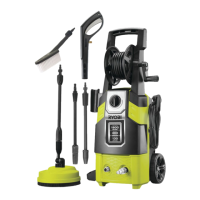
  • Accessories: The product includes a trigger gun, hose reel handle, power cord holder, power cord, soap tank, water inlet port with coupler and filter, surface cleaner wand and housing, spray nozzle wand, spray nozzle, turbo nozzle, turbo nozzle wand, on/off switch, trigger handle holder, high-pressure hose, high-pressure hose reel, and a handle.
  • Nozzle types: The manual illustrates the use of a spray nozzle and a turbo nozzle, as well as a surface cleaner. The spray nozzle allows for adjustment of the spray pattern from a concentrated jet to a wider fan.
  • Detergent application: The product has a soap tank for applying cleaning detergents.
  • Water supply: Requires connection to a water supply using a garden hose with a maximum length of 15m and a minimum diameter of 12mm (1/2 in.). It's crucial to release air from the hose and pump before starting the product.
  • Safety precautions: Users must wear complete personal protective equipment, including boots, safety gloves, safety helmets with visors, and hearing protection. High-impact visors with liquid splash protection are recommended. The jet should never be directed at people, animals, live electrical equipment, or the product itself. Flammable liquids should not be sprayed.
  • Overload protection: If the product overheats, it will automatically shut down. Disconnect from power, wait 15 minutes for it to cool, then reconnect.

Maintenance Features

Regular maintenance is crucial for safe and efficient operation:

  • Replacement parts: Only original manufacturer's replacement parts, accessories, and attachments should be used to avoid injury, poor performance, and voiding the warranty.
  • Servicing: Servicing should be performed by a qualified service technician at an authorized service center using original replacement parts.
  • Pre-operation checks: Before each use, inspect for damage to important parts like safety devices, high-pressure hoses, or the trigger gun. Ensure all connections are secure and hoses are unwound properly to prevent twisting or kinking.
  • Cleaning: The product should be cleaned of all foreign materials.
  • Storage: Before storing or transporting, stop the product, disconnect from the power supply and water supply, and allow it to cool down. Remove water from all hoses and the pump, and empty the detergent tank. Store in a cool, frost-free, dry, and well-ventilated place, inaccessible to children, and away from corrosive agents. Do not store outdoors. For transportation, secure the product to prevent movement or damage.
  • Regular inspection: Inspect and maintain the high-pressure cleaner for safe operation regularly, with Ryobi recommending inspections every 6 months.
  • Fastener checks: Check all nuts, bolts, and screws at frequent intervals for proper tightness. Damaged parts should be repaired or replaced by an authorized service center.
  • Troubleshooting: The manual provides a troubleshooting guide for common issues such as the machine not starting, fluctuating pressure, motor buzzing, machine stopping, machine pulsating, and no water coming out. Solutions include checking power connections, water supply, cleaning nozzles and filters, and replacing worn parts.

Ryobi RPW150-G Specifications

General IconGeneral
BrandRyobi
ModelRPW150-G
CategoryPressure Washer
LanguageEnglish

Related product manuals