5958
GB GB
Special insulated bags can be bought from most supermarkets
and hardware shops.These keep frozen food cold for longer.
Thawing frozen food
For some foods, thawing before cooking is unnecessary
Vegetables and pasta can be added directly to boiling water or
steam cooked Frozen sauces and soups can be put into a
saucepan and heated gently until thawed.
Freezing fresh food
Ensure that your freezing operations are carried out under the
most hygienic conditions as freezing alone does not improve the
food� Never put hot or even warm foodstuffs into the
freezer� Prior to freezing the food, food should always be
covered tightly with foil, plastic film, placed in plastic bags or
stored in airtight containers� This will prevent food from
dehydrating and to prevent any strong odors of some foods
transferring to milder ones�
To freeze raw meat, wrap in plastic bags or in airtight containers
and place on the lowest shelf to avoid cross contamination�
Do not allow raw meat to corne into contact with cooked foods�
For safety, only store raw meat for two or three days Fruit and
vegetables should be thoroughly cleaned and placed in the
crisper�
Milk and other liquids should be sealed with lids and placed in
the bottle shelf in the door� NOTE: The ambient temperature of
the freshly stored food and how often the door is opened affect
the temperature in the refrigerator� If required, change the
thermostat temperature settings�
Storing frozen food
Ail frozen food you purchase should be placed in the freezer as
soon as possible to avoid them from defrosting and spoiling�
Ail storage recommendations printed on the packaging of frozen
food by the manufacturer should always be followed�
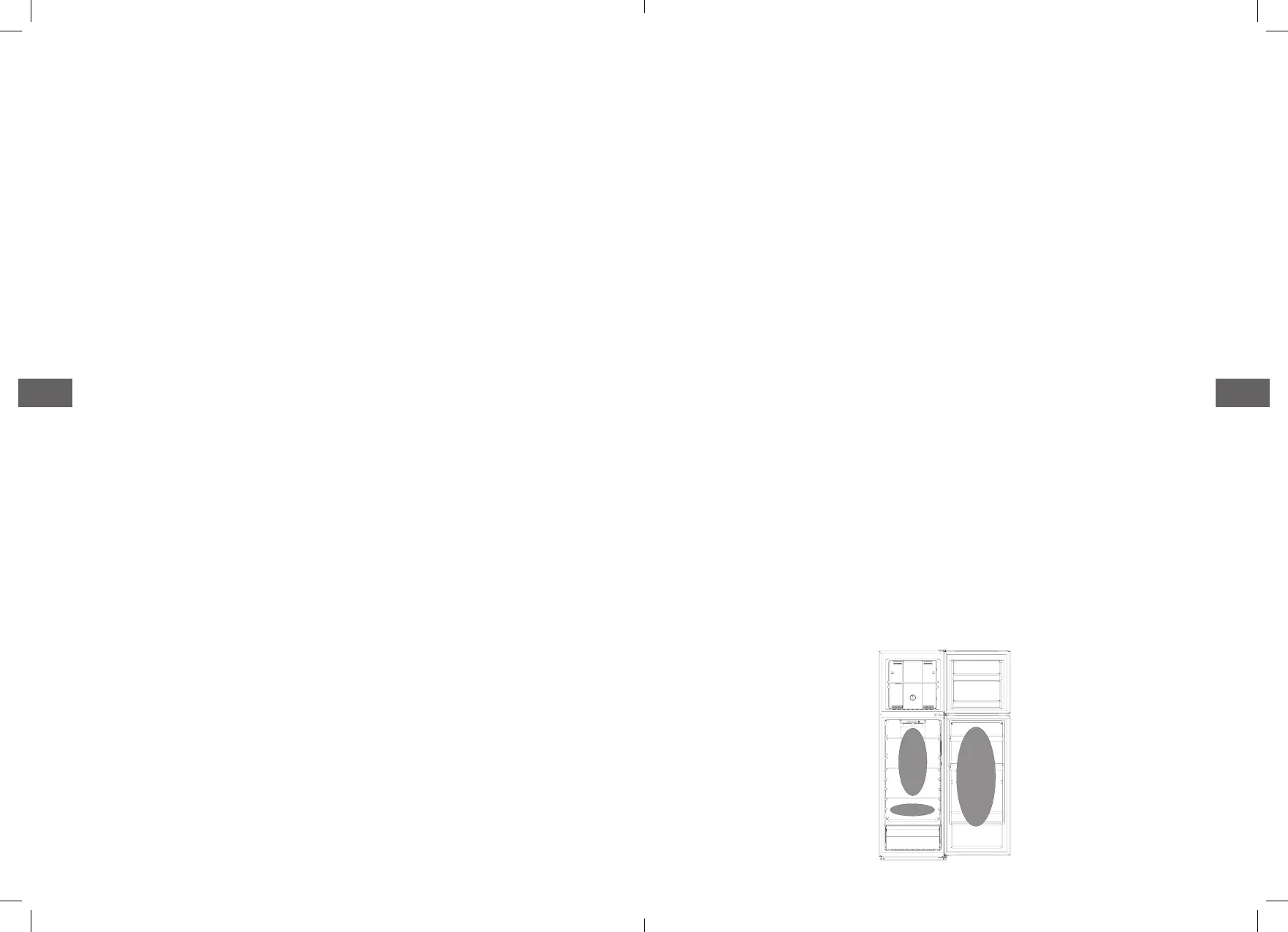
Storing food in fridge Cool area
This is where to store foods which will keep longer if they are kept
cool� Milk, eggs, yogurt, fruit juices, hard cheeses e�g� Cheddar�
Opened jars and bottles of salad dressings, sauces and jams� fats,
e.g. Butter, margarine, cooking fats and lard.
Coldest area: 0°C to 5°C
This is where foods which must be cold to keep them safe should
be kept:
– Raw and uncooked foods should always be wrapped�
– Pre-cooked chilled foods, e�g� Ready meals, meat pies, soft
cheeses�
– Pre-cooked meats e�g� Ham,
– Prepared salads (including pre-packed mixed green salads,
rice, potato salad etc�)�
– Desserts, e�g� Fromage frais, home-prepared food and
leftovers or cream cakes�
COOL
COOL
COOLEST


 To Next Page