16 Revision 33 October 2022
• Surface mounted posts should be manufactured to the correct height for the
location the use of detachable height adjusters is not permitted.
4.5 Steel Plate Foundation
It is becoming increasingly common to install a conventional safety barrier
across a structure in front of an existing parapet. This inevitably leads to
conflict between anchorage positions and the reinforcement within the
structure. There can also be an issue where ducts have been cast into the
bridge and sit on the line of the VRS at minimum setback and working width.
There are limited options to overcome these issues.
1. Cut through the reinforcing. Possibly compromising the structure.
2
.
Fill any ducts with concrete. Not guaranteed to be successful.
3. Introduce a secondary foundation which can be anchored to the bridge
and is able to receive the VRS post at its prescribed location.
In many instances the only acceptable option will be the 3rd solution.
This involves fixing a steel plate to the structure (See drawing MR-GA-026)
anchored by 4 number M20 A4-80 internally threaded stainless steel
anchorages resin bonded. The position of these anchorages can be
adjusted to avoid damage to reinforcement and or ducts.
The plate should be positioned so that the VRS post which is fixed to the 4
threaded M20 holes is in the correct position. Once this is done any of the
multiple anchorage holes can be used to secure the plate foundation to the
structure. In this way damage to the structure is avoided.
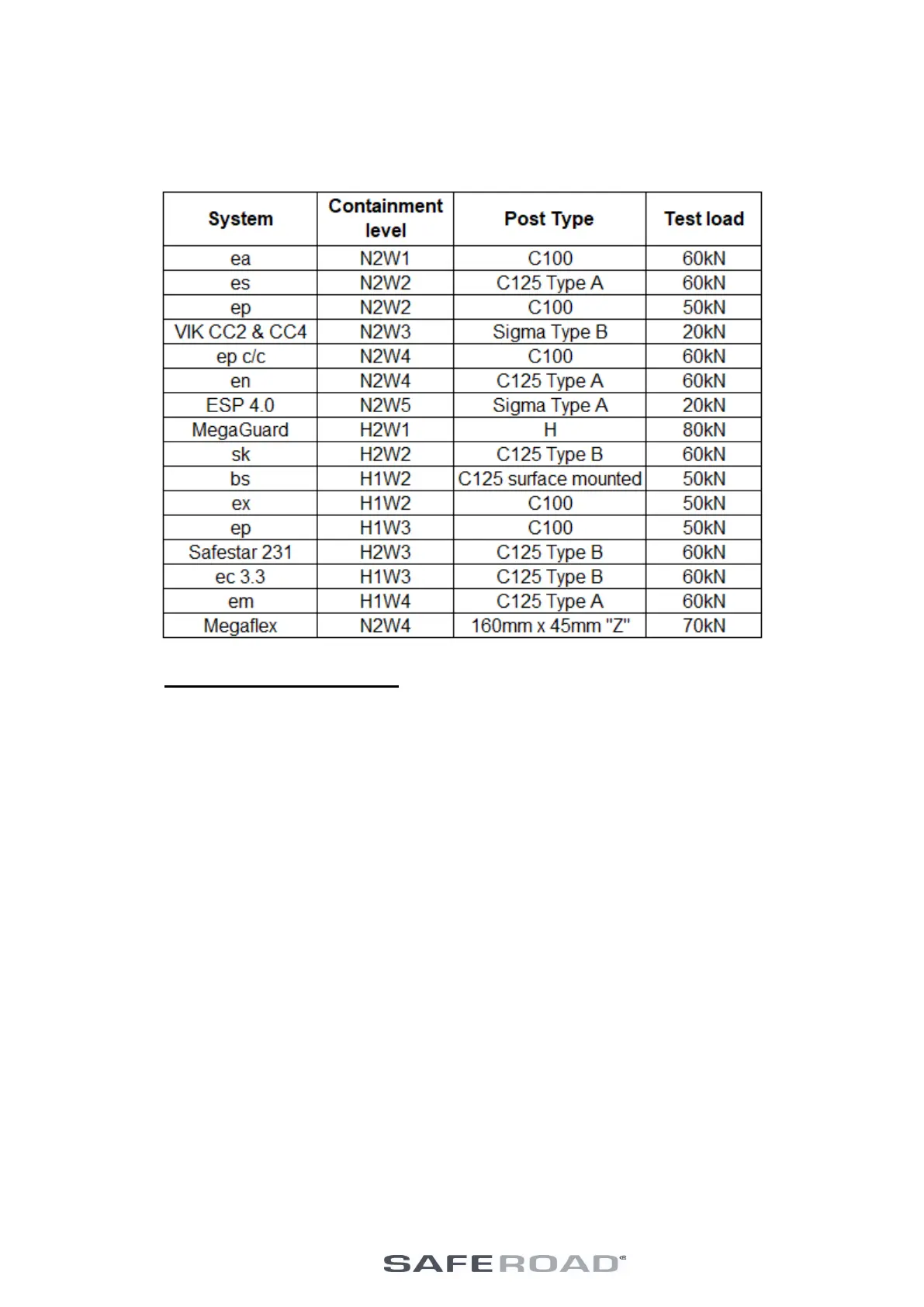
The adequacy of the foundation plate should be confirmed by performing
a
p
ull out test equal to that applicable to the system which will be installed and



 To Next Page