Propeller ~
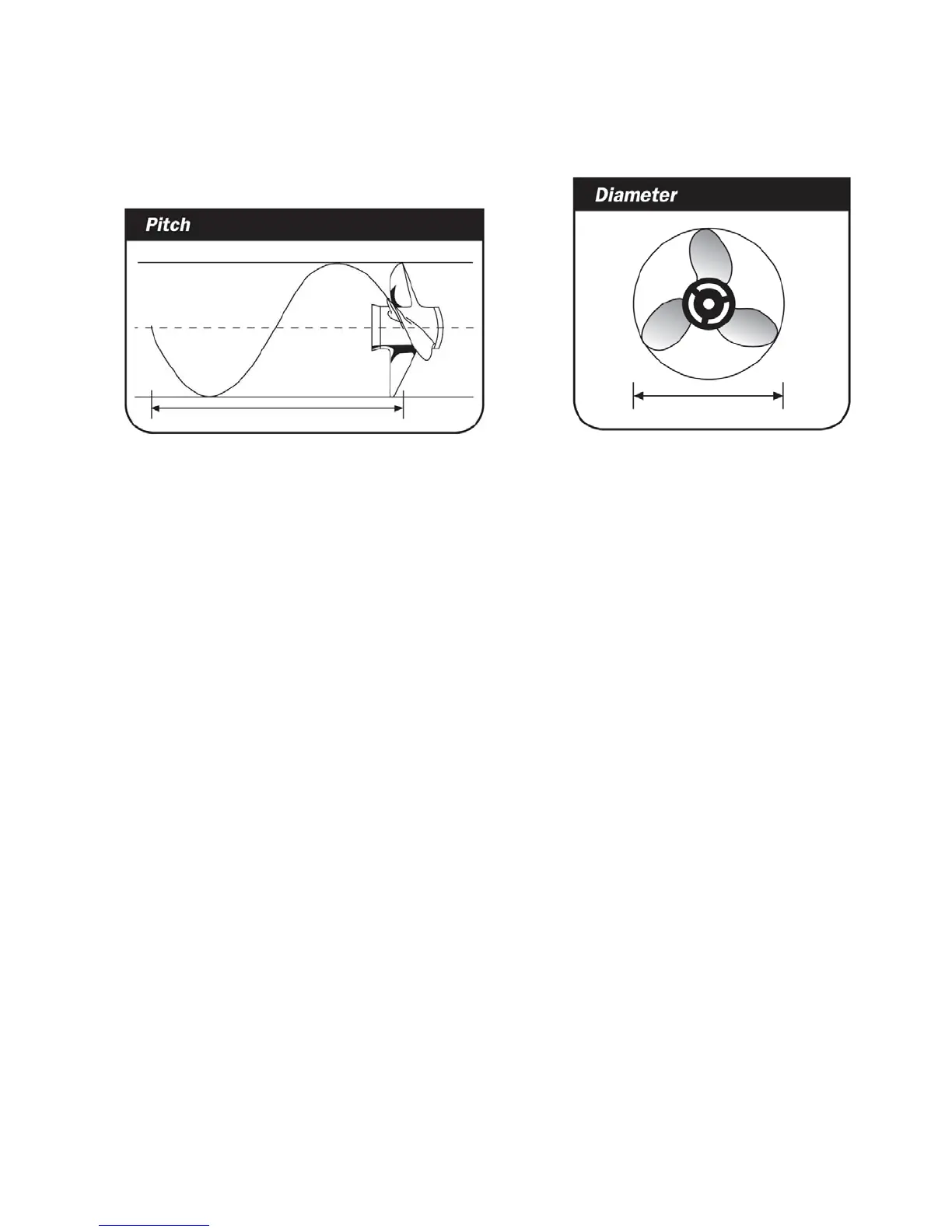
Propellers have two basic characteristics, 1) diameter and 2) pitch. Diameter applies to the circle inscribed by the blade
tips, measured in inches. Pitch is the theoretical distance (measured in inches) a propeller travels when it has rotated one
complete revolution. For example, a propeller with a 21 inch pitch, when rotated 360 degrees advances 21 inches through
the water. Because of the essential phenomenon of blade angle attack and slippage, a propeller cannot advance further
than about 90 percent of the pitch number, though 80 to 85 percent is quite common.
DANGER
Persons in the water can be seriously injured, or killed if struck by a rotating propeller. Operate the motor only when an
operator is seated securely at the controls. Turn the motor off when swimmers are entering or leaving the boat or in the
water near the stern.
Replace Damaged Propellers ~
Propellers should be free from major nicks, excessive pitting and any distortions that alter the original design.
Operating your boat with a damaged propeller may cause the following:
1. Reduce top speed.
2. Introduce undesirable handling characteristics
3. Reduce fuel economy.
4. Create unpleasant vibrations leading to increased sound level. Excessive vibrations hasten wear to rotating
and reciprocating engine components, which may cause costly damage.
Ventilation ~
While often called cavitation, ventilation is really a different effect. At times when a boat enters or leaves a sharp turn, the
propeller seems to slip and lose thrust and the engine may over rev. This problem is normally caused by air or aerated
water entering the propeller. This can be rectified by one or more of the following:
1. Replace a damaged or incorrect propeller.
2. Set outboard at a lesser trim angle (trim unit inward).
3. Use a cupped propeller if one is not already in use.
4. Contact your dealer to check the motor height.
11 of 36


 To Next Page