8 of 36
Necessary Maintenance ~
1. Hose inside boat after use with a substantial quantity of fresh water.
2. Leave boat permanently tilted to drain after use.
3. The flotation material is susceptible to degradation upon contact with petrol.
4. Flotation material should be checked regularly to assess its condition. (example of Necessary Maintenance
label)
HANDY TIP
Carry plenty of rope that is properly sized for your boat. We suggest at least two 10m lengths of 10mm rope.
HANDY TIP
When commissioning a new boat, do not plan an extensive trip until you are sure all equipment is functioning properly and
you are familiar with the boat’s operation.
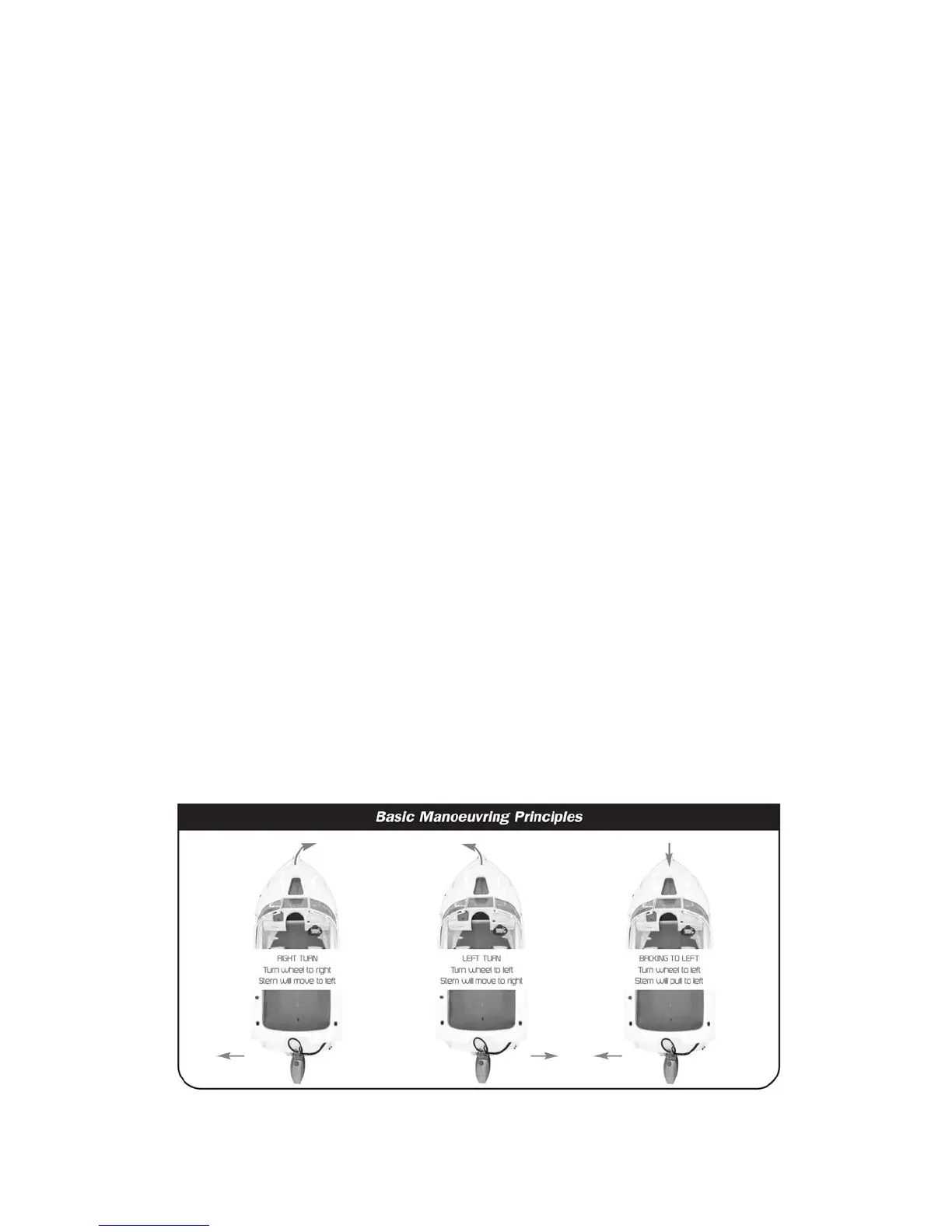
MANOEVERING ~
Basic Manoeuvring ~
Remember all boats steer by the stern (the feeling is much like steering your car in reverse). For example, when turning
the steering wheel to the left, the stern of the boat will swing to the right as the boat goes into a left turn. This is
particularly important to remember when docking, or in close quarters with other boats.
There are no brakes on a boat. Stopping is accomplished by allowing the boat to slow down (under 10 km/p/h) and putting
the engine in reverse. Gently increasing reverse power allows you to stop the boat in a very short distance. A boat does
not respond to steering in reverse nearly as well as it does when going forward, so do not expect to accomplish tight
turning manoeuvres when backing up.
Once you are away from the dock, devote some time to learning how to manoeuvre:
• Practice docking by using an imaginary dock.
• Practice stopping and reversing.
• When operating in close quarters or docking, all manoeuvring should be done at idle speed.
• Proceed with caution in congested areas.
• Gradually increase your speed. Familiarise yourself with the boat before attempting any full throttle operation.


 To Next Page