be mounted away from the downriggers as monitoring is not required after
installation. Disconnect your cannonball snap and feed the downrigger cable
through the contact sleeve. Connect the contact sleeve wire lead to the
downrigger boom with cable ties, leaving the last several inches of sleeve wire
and sleeve loose so that the sleeve doesn't interfere with the spooling of the wire.
Clean your plug and socket regularly with an emery cloth and spray electrical
connections periodically with a moisture displacing lubricating spray.
Turn on your Black Box. The initial reading is the boat's charge. After 10
seconds, the reading will change to reflect the charge exerted on the downrigger
line. This usually reads about .050 volts. The dial can then be tuned to the
desired level to suit your target fish.
Fish Recommended
Species Voltage
Chinook (King) Salmon .600 volts
Coho (Silver) Salmon .650 volts
Sockeye Salmon .750 volts
Kokanee Salmon .650 volts
Halibut .450 volts
Laketrout (Mackinaw) .650 volts
Rainbow & Brown Trout .650 volts
Cutthroat Trout .650 volts
Black Bass .750 volts
Shark .400 volts
Striped Bass .650 volts
Sturgeon .500 volts
Catfish .500 volts
Operating Your Black Box
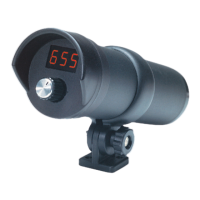
There are two models of Black Box. They operate slightly differently and have
different start up sequences.
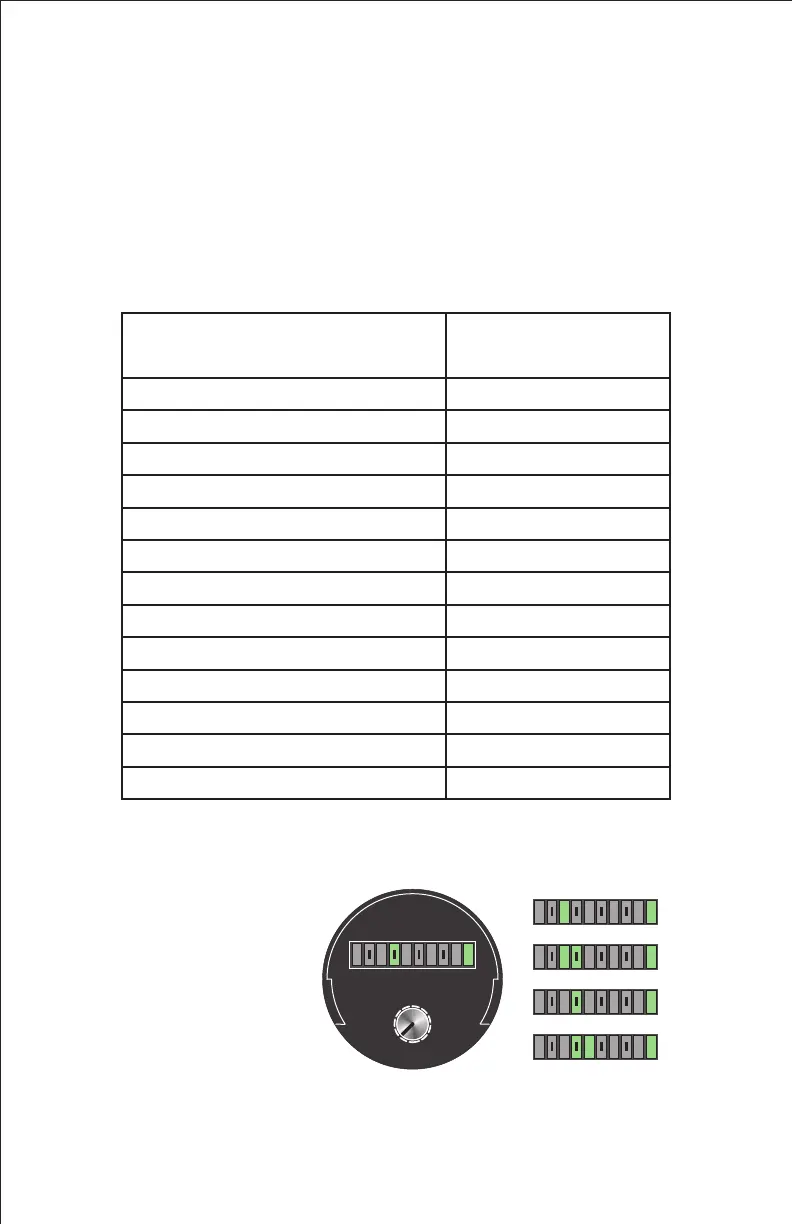
Light Bar Model
Connect the power to the Black
Box. Be sure the Black Box
switch is turned to the off
position (all the way counter
clockwise). Be sure the metal
contact sleeve is in place on
the downrigger wire and
connected to the Black Box.
Drop the downrigger to fishing depth or at least a few feet under the surface.
With the knob still in the off position, read the green marker on the Black Box to
get the line's natural voltage. If the natural voltage is not what you want, turn the
Page 5
5
5
5
5
5
7
7
7
7
7
8
8
8
8
8
9
9
9
9
9
O
N
O
N
O
N
O
N
O
N
6
6
6
6
6
.600 Volt
.625 Volt
.650 Volt
.675 Volt


 To Next Page