EasyManua.ls Logo

SEAL Image 410 - User Manual

Default Icon
36 pages
Print Icon
To Next Page IconTo Next Page
Loading...
Image
®
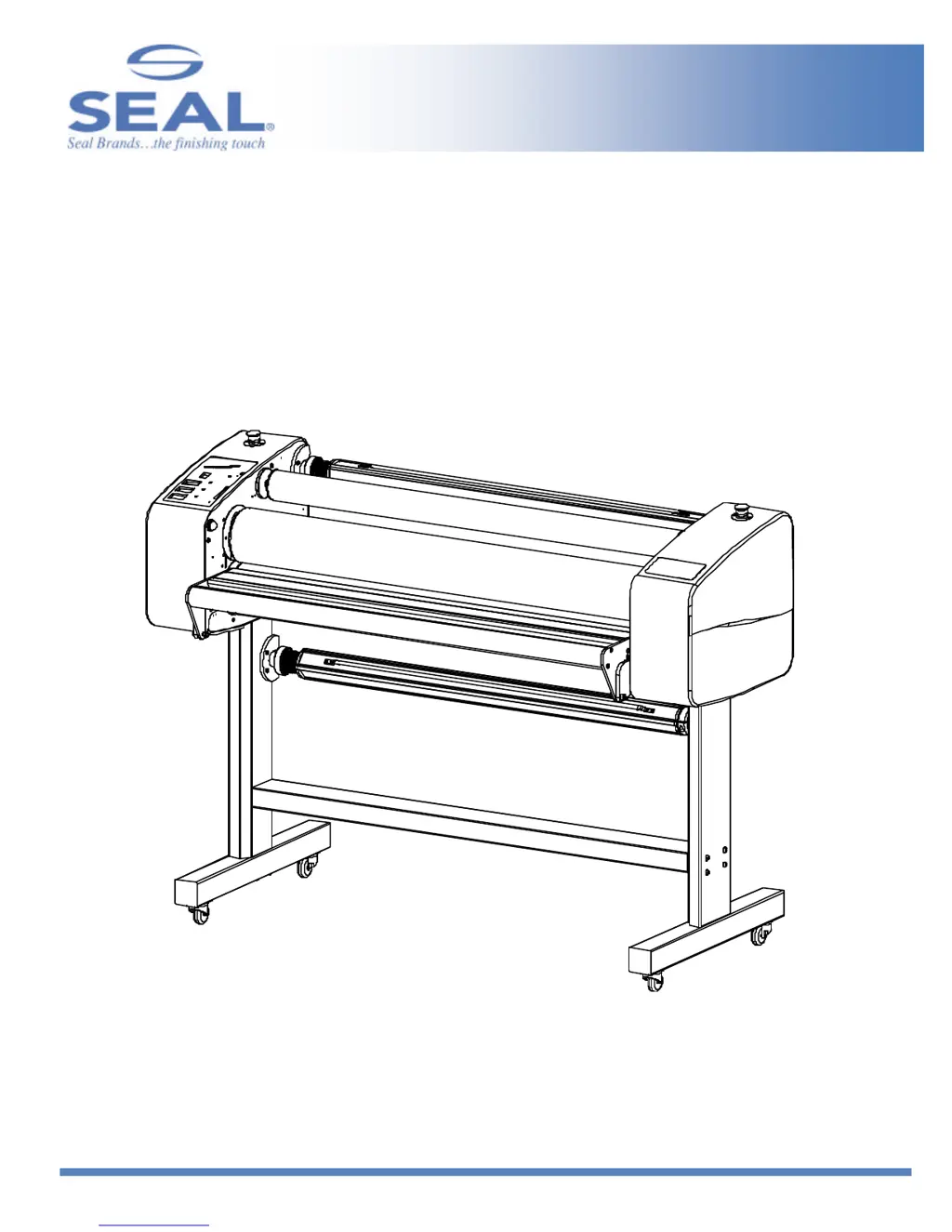
410 Laminator
Owners Manual
Image
®
410 Laminator
Owner’s
Operation
Manual

Questions and Answers

  • H
    Heather AguilarJul 30, 2025
    Why is the film cloudy or mottled when using my SEAL Image 410 Laminator?
    • L
      Leslie VaughnJul 30, 2025
      If the film appears cloudy or mottled when using your SEAL Laminator, try increasing the roller temperature or decreasing the motor speed. If you are using thicker films, it may be necessary to increase the roller pressure to compensate for the increased film layer thickness.
  • K
    kingdonaldAug 5, 2025
    What to do if my SEAL Image 410 will not turn on?
    • Y
      Yesenia BrownAug 5, 2025
      If your SEAL Laminator isn't turning on, begin by checking if the power cable is securely plugged into the mains wall outlet. Then, verify the Main Power Stand-by Button is activated, indicated by a lit LED. Ensure that the Emergency Stop buttons haven't been triggered; rotate them to reset. Also, confirm that the Power Disconnect Switch is in the ON position, as setting it to OFF will shut down the laminator. If these steps don't resolve the issue, unplug the laminator and inspect the circuit breakers under the left side plate and the fuse in the power supply. This last step should only be performed by authorized personnel.
  • R
    ruthbarberAug 9, 2025
    Why is the film output rippled or wavy (boat-waking) on my SEAL Image 410?
    • S
      Shawn BrewerAug 9, 2025
      A rippled or wavy film output on your SEAL Laminator can occur if the laminator wasn't webbed correctly. Also, improper film tension can be a cause, since most encapsulating films need a minimal amount of brake tension. If you are processing photo materials or heat-sensitive prints, try running the laminator at a higher speed. Low speeds increase heat exposure, which can lead to waving.
  • K
    Katherine HallAug 14, 2025
    What to do if the SEAL Image 410 Laminator is not heating up or shows erratic temperature readings?
    • P
      Patricia HillAug 15, 2025
      If your SEAL Laminator is not heating up properly or displays erratic temperature readings, first ensure that the Heater Button is pressed ON, and the corresponding LED is lit. Next, check the circuit breakers on the underside of the left side plate. When first heating up, make sure the rollers are together (with both Nip settings set at ‘0’) and turning at a moderate speed. Additionally, apply tension to images or prints as they are fed into the nip; hold cut sheets back by hand.
  • A
    Alexandra GibsonAug 19, 2025
    What to do if images or prints are rippling or jumping as they are fed into the nip of my SEAL Image 410?
    • L
      Linda HoAug 20, 2025
      If images or prints are rippling or jumping as they enter the nip of your SEAL Laminator, first check that the Heater Button is ON and the corresponding LED is lit. Also, inspect the circuit breakers on the underside of the left side plate. Ensure the rollers are together (with both Nip settings at ‘0’) and turning at a moderate speed during initial heating. Applying tension to the images or prints as they're fed into the nip by holding cut sheets back by hand can also help.
  • S
    Sean KaiserAug 25, 2025
    Why won't the motor run on my SEAL Image 410?
    • H
      Henry KennedyAug 25, 2025
      If the motor on your SEAL Laminator isn't running, ensure that the photo-eyes are not blocked. Check that the Motor ON/OFF Button is pressed ON and the corresponding LED is lit. You should also check the motor circuit breaker under the right side plate. If problems persist, unplug the laminator and have authorized personnel check the fuse in the motor control.

Summary

Introduction

Statement of Intended Use

Defines the intended purpose and scope of the laminator's use.

Liability Statement

Outlines legal disclaimers and responsibilities for the user.

Workspace and Electrical Requirements

Connecting Your Laminator

Instructions for safely connecting the laminator to the power supply.

Environment Conditions

Surroundings and Power Supply

Specifies ideal ambient conditions and power requirements for operation.

Unpacking, Setup, and Installation

Accessories Included

Lists the items provided with the laminator.

Unpacking and Leveling Procedures

Step-by-step guide for unpacking and leveling the machine.

Important Safety Safeguards

General Safety Precautions

Covers rotating parts, hot surfaces, and electrical hazards.

Preventative Measures and Servicing

Advice on preventing damage and safe servicing practices.

Safety Features Overview

Power Disconnect and Emergency Stops

Details on power disconnect switch and emergency stop buttons.

Foot Switch, Photo Eyes, and Reverse Button

Explains the function of foot switch, safety eyes, and reverse operation.

Laminator Features and Components

Control Panel and Roller Adjustment

Describes the digital control panel and nip roller height adjustment.

Material Handling and Safety Features

Covers unwind shafts, braking system, and emergency stop buttons.

Control Panel Functions

Nip Adjustment and Program Controls

Details on nip adjustment, power, and program entry functions.

Program Selection and Readout

How to select, view, and manage preset programs.

Motor and Speed Controls

Explains motor on/off, speed adjustment, and readouts.

Roller Temperature Management

Guides on controlling top and bottom roller temperatures.

Preset Programs Guide

Flexible and Pop-Up Display Programs

Settings for encapsulating flexible displays and pop-up displays.

Rigid Display Programs

Settings for rigid indoor, backlit, and general rigid displays.

Specialty and Open Programs

Settings for floor graphics and open/customizable programs.

Checking Laminator Operation

Power, Emergency Stop, and Temperature Checks

Procedures for verifying main power, emergency stops, and temperature controls.

Roller and Motor;Footswitch Checks

Steps to check roller movement and motor/footswitch functionality.

Setup and Operation Procedures

Temperature Settings and Nip Adjustment

How to set temperatures and adjust roller nip for material thickness.

Feeding Images Correctly

Best practices for feeding images into the laminator for optimal results.

Unwind Brake Tension and Material Loading

Setting unwind brake tension and loading material rolls properly.

Webbing Films (No Release Liner)

Webbing Procedure Without Release Liner

Detailed steps for threading films without a release liner.

Webbing Films (With Release Liner)

Webbing Procedure With Release Liner

Detailed steps for threading films with a release liner.

Decaling Process (Heat-Activated)

Media and Laminator Settings

Specifies media types and control panel settings for heat-activated decaling.

Webbing Settings for Decaling

Details web tension and nip settings for this process.

Decaling Process (Pressure-Sensitive)

Media and Laminator Settings

Specifies media types and control panel settings for pressure-sensitive decaling.

Webbing Settings for Decaling

Details web tension and nip settings for this process.

Mounting Decals

Mounting Decals onto Substrate

Procedure for affixing prepared decals onto mounting boards.

One-Step Mounting and Laminating

Media and Laminator Settings

Specifies media types and control panel settings for one-step process.

Webbing Settings and Procedure

Details webbing and procedural steps for combined mounting and laminating.

Encapsulating Process

Media and Laminator Settings

Specifies media types and control panel settings for encapsulating.

Webbing Settings for Encapsulating

Details webbing and procedural steps for encapsulating.

Pre-Coating Boards

Preparation and Coating Procedure

Steps for preparing and coating boards with adhesive.

Applying an Overlaminate

Preparation and Webbing Procedure

Steps for preparing and webbing material for overlaminating.

Process Control Sheet

Cleaning and Maintenance

Cleaning the Laminator Body

Instructions for cleaning the exterior of the laminator.

Cleaning the Laminating Rollers

Detailed guide on cleaning the rollers to maintain output quality.

Periodic Maintenance Schedule

Error Code Reference

Error Code Definitions and Problems

Lists error levels, data, and corresponding problems for troubleshooting.

Troubleshooting Common Issues

Laminator Not Turning On or Running

Solutions for power, motor, and emergency stop issues.

Image Output and Film Issues

Troubleshooting rippling, wavy film, cloudy output, and blinking screen.

Breaker Locations and Technical Service

Breaker Locations

Identifies the location and ratings of all circuit breakers.

Technical Service Contact

Information on how to contact technical support for assistance.

Glossary of Terms

Spare Parts List

Technical Specifications

Mechanical and Process Specifications

Details dimensions, weight, working width, speed, and temperature limits.

Electrical Requirements and Order Codes

Information on power needs, voltage, and product order codes.

Limited Warranty Information

SEAL Image 410 Specifications

General IconGeneral
BrandSEAL
ModelImage 410
CategoryLaminator
LanguageEnglish

Related product manuals