Need help?
Do you have a question about the SENKO SP-MGTP and is the answer not in the manual?
Procedure for turning on the SP-MGTP detector and initiating system test.
Procedure for safely powering down the SP-MGTP detector.
How to perform a pump test to ensure system integrity.
Instructions for replacing the particulate and membrane filters.
Information on using a demand flow regulator with gas cylinders.
Description of the primary display mode showing gas concentrations.
Overview of different display modes available on the device.
Detailed explanations of various display modes and their meanings.
Explanation of how alarms are displayed on the device.
Indication of the battery status using icons and its operational implications.
Configuration options for setting and adjusting alarm parameters.
Procedures for performing zero and span calibration of the detector.
Steps for performing span calibration using standard calibration gas.
Procedure for performing zero calibration in a clean air environment.
Procedures for performing self-tests and bump tests on the detector.
Options for configuring device settings like backlight, LED, buzzer, and vibration.
Details on the environmental and operational conditions for the device.
Recommended storage temperature, humidity, pressure, and shelf life.
Information regarding FCC compliance and other certifications.
Instructions and cautions for charging the device's battery.
Guidelines for using gas cylinders, including checking expiration dates.
Information on charging the battery using the supplied adapter.
Procedure for performing a pump test after tube changes.
Instructions for inspecting and replacing the gas inlet filters.
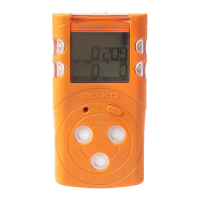
The SP-MGTP is a portable multi-gas detector equipped with a built-in pump, designed to alert users to dangerous gas environments. It simultaneously displays the concentrations of up to six different gases, including oxygen, carbon monoxide, hydrogen sulfide, carbon dioxide, and other toxic and combustible gases, on its LCD screen. The device is designed for ease of operation, providing audible, visible, and vibratory alarms when gas concentrations exceed safe levels. It offers real-time gas concentration readings and can identify maximum and minimum concentrations. Advanced settings can be adjusted using the optional SENKO IR-LINK.
The SP-MGTP operates by continuously monitoring the surrounding atmosphere for various gases. Upon stabilization after power-on, it enters a normal measuring mode, displaying gas concentrations and battery levels. Oxygen levels are shown in %vol, combustible gases in %LEL, and hydrogen sulfide and carbon monoxide in PPM (parts per million). When gas concentrations fluctuate, the device updates values in real-time. If gas levels surpass predefined thresholds for LOW, HIGH, TWA (Time Weighted Average), or STEL (Short Term Exposure Limit) alarms, the corresponding icons on the display will flash, and the device will activate audible, visual, and vibratory alarms. These alarms will cease once concentrations return below the alarm threshold, though the alarm icon will continue to flash until acknowledged by pressing the Enter button.
The device features various display modes accessible by pressing the up or down buttons, allowing users to view minimum and maximum measured values, STEL and TWA values, first and second alarm values, device version, battery level, temperature, date, time, calibration concentration values, last calibration date, remaining days until the next calibration, and remaining days until the next bump test.
The SP-MGTP includes a pump test function to ensure the sampling system is working correctly. If the gas tube is blocked, the device will alarm every second, indicating a potential leak or pump failure. The gas inlet is protected by particulate and membrane filters. If these filters become blocked, the sampling system will fail, triggering a warning alarm every second. Discoloration of the filter is a key indicator that replacement is needed. For calibration or bump tests, a demand flow regulator should be used with the gas cylinder due to the detector's internal pump.
The device supports both zero calibration (fresh air calibration) and span calibration (standard gas calibration). Zero calibration is performed in a clean air environment, free of hazardous gases, and involves selecting the sensor to be calibrated and initiating a 10-second countdown. Span calibration involves connecting the device to a gas cylinder with a demand flow regulator and applying standard gas. The calibration time varies by sensor, typically ranging from 90 to 180 seconds.
The SP-MGTP also includes a self-test and bump test menu. The self-test allows users to check various functions like the LCD, buzzer, LED, backlight (yellow and red), motor, and memory. The bump test verifies the sensor's response to gas concentrations higher than the alarm set point.
 General
| Target Gas | Methane (CH4) |
|---|---|
| Measuring Range | 0-100% LEL |
| Detection Principle | Catalytic combustion |
| Alarm Type | Visual and Audible |
| Battery Type | Rechargeable Li-ion battery |
| Operating Temperature | -20°C to 50°C |
| Humidity Range | 10-95% RH (non-condensing) |


 To Next Page