9
Install urine hose
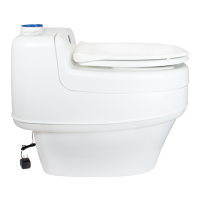
The toiletis delivered with a 2-meter (6,6 ft) urine hose. To connect this to the toilet,use the included
straight joint or the 90-degree joint. Like the installation of the ventilation pipes, it is possible to connect the
urine tube so that no pipe is visible where the toilet is installed. This is achieved by angling the 90-degree
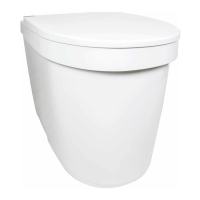
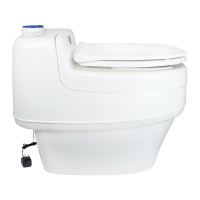
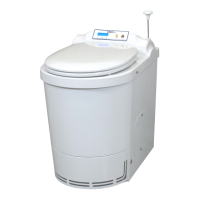
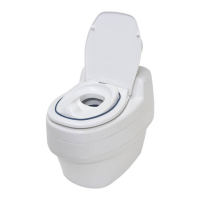
connection downwards or using the straight connection, as shown in the pictures below.
Recommendations for installation of urine hose
As with the ventilation duct, Tiny provides the option of installing the urine hose without any visible pipes/tu-
bes in the bathroom. Below are a few tips that should be followedto maintain a well-functioning urine outlet
over time and all year round.
• If you are goingto go through an insulated wall or a wall with an air gap between the inner and outer wall,
you must use a pipe for the penetration, or lead the hose through a pipe. Pipes are used to reduce the risk
of pests causing damage to the tube.
• If you are going to run the urine a longer distance than the 2 meters (6,6 ft) of the supplied hose, you
should switch to a pipe after the 2 meters (6,6 ft). Since urine contains minerals that can accumulate in pi-
pes/hoses, we recommend that the subsequent pipe have a diameter of at least 40 mm to avoid blockages.
• Make sure that you always have a downward inclination of at least 2 degrees (2 cm per meter or 0,8 inch
per 40 inch) throughout the piping,also make sure that there are no air pockets created by bends in the
hose.
• If the toilet is to be used in winter, outdoor pipes must have a diameter of at least 40 mm (1,6”).
• If the toilet is to be used in winter, we recommend that you insulate outdoor pipes with pipe insulation.
This insulation can be bought in most DIYstores.
• An important rule for longer installations (over 2 meters (6,6ft)) is that the sooner you switch to pipes with
a larger diameter, the lower the risk of blockages in the pipes.
• Do not place pipe joints near electrical appliances or wall sockets. This is to prevent liquid from coming
into contact with electricity in the event of a leak.


 To Next Page