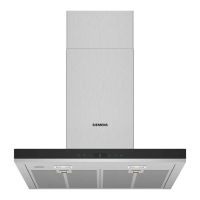
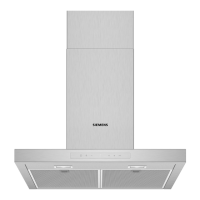
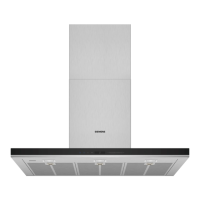
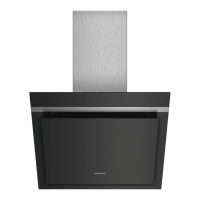
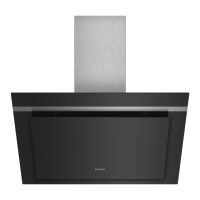
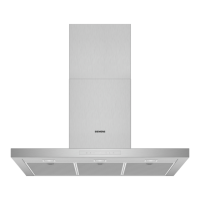
This document provides instructions for the installation and use of a Siemens extractor hood.
Function Description
The Siemens extractor hood is designed for domestic use to extract cooking fumes from the kitchen. It can operate in two primary modes: exhaust air mode and circulating-air mode.
In exhaust air mode, air drawn in is cleaned by grease filters and then conveyed to the exterior via a pipe system. This mode requires proper ventilation and adherence to local building regulations, especially concerning the discharge of exhaust air into existing flues or shafts. It is crucial to ensure adequate fresh air supply in the room if other room air-dependent heat-producing appliances (e.g., gas, oil, wood, or coal-operated heaters) are in use simultaneously to prevent the risk of poisoning from flue gases being drawn back in. A telescopic wall box is recommended if exhaust air is conveyed through an outer wall.
In circulating-air mode, the drawn-in air is cleaned by both grease filters and an activated carbon filter before being returned to the kitchen. For this mode, an activated carbon filter must be installed to bind odors. Accessories for circulating-air mode are available from specialist retailers, customer service, or the online shop. Unrestricted operation is possible in this mode as it does not affect room air pressure.
The appliance features a control panel with buttons for fan settings (1, 2, 3) and lighting (light on/off). The fan speed can be adjusted to the intensity of cooking fumes, with lower speeds consuming less energy. An intensive mode is available for heavy cooking fumes. The lighting can be operated independently of the ventilation.
Important Technical Specifications
- Maximum operating height: 2000 meters above sea level.
- Minimum width of extractor hood: Must correspond at least to the width of the hob.
- Maximum weight of extractor hood: 40 kg.
- Electrical connection: The appliance complies with EC interference suppression regulations. The required connection information is on the rating plate.
- Cable length: Approximately 1.30 m.
- Exhaust duct recommendations:
- Short, straight exhaust air pipes are recommended for optimum performance.
- Inner pipe diameter: 150 mm (recommended), but at least 120 mm.
- Flat ducts: Inner cross-section should correspond to round pipes (e.g., dia. 150 mm ≈ 177 cm², dia. 120 mm ≈ 113 cm²).
- Ducts must be made of non-combustible material.
- Flat ducts should not have sharp deflections.
- Safety clearances: Must be complied with to prevent heat build-up, especially when gas and electric hobs are operated together (the largest specified clearance applies).
- LED lights: Risk group 1, dazzling light. Do not look directly into switched-on LED lights for longer than 100 seconds.
Usage Features
- Energy saving:
- Ensure sufficient air supply during cooking.
- Adjust fan speed to cooking fume intensity; use intensive mode only when necessary.
- Switch off the extractor hood and lighting when no longer required.
- Regularly clean and replace filters to maintain effectiveness and prevent fire risk.
- Operation:
- Switch on the extractor hood at the start of cooking and switch it off several minutes after finishing for effective fume removal.
- Fan settings are activated by pressing buttons 1, 2, or 3. If multiple buttons are pressed, the highest selected fan setting applies.
- Fan settings are switched off individually by pressing buttons 3, 2, and/or 1.
- Lighting is switched on/off using the dedicated button.
- Safety during operation:
- Never operate the appliance without a grease filter.
- Avoid working with naked flames near the appliance (e.g., flambéing).
- Do not install near solid fuel heat-producing appliances unless a closed, non-removable cover is available to prevent flying sparks.
- Never leave hot fat or oil unattended due to rapid ignition risk. Do not use water to extinguish burning oil/fat; switch off the hotplate and use a lid or fire blanket.
- Only operate gas burners with cookware on them to prevent excessive heat build-up and potential damage/fire to the ventilation appliance.
- Avoid operating two gas burners simultaneously on the highest flame for more than 15 minutes, especially large burners (>5 kW).
- Accessible parts become very hot; avoid touching them and keep children at a safe distance.
- Always switch on the appliance while cooking to avoid condensation, which can cause corrosion.
Maintenance Features
- Cleaning and maintenance:
- Allow the appliance to cool down before cleaning to prevent burns.
- Disconnect from mains or switch off circuit breaker before cleaning to prevent electric shock.
- Use a damp cloth for cleaning; do not use high-pressure or steam cleaners.
- Avoid harsh, abrasive, or high-alcohol content cleaning agents, hard scouring pads, or oven spray.
- Clean stainless steel surfaces in the direction of the grain only; do not use stainless steel cleaners on operator controls.
- Do not clean operator controls with a wet cloth to prevent humidity ingress into electronics.
- Remove protective film from all parts before first use to prevent surface damage.
- Wear protective gloves when cleaning components inside the appliance due to sharp edges.
- Metal mesh grease filters:
- Regularly clean the grease filter (recommended every 2 months) to prevent fatty deposits from catching fire.
- Clean the grease filter holder in the appliance with a damp cloth when cleaning the filters.
- Filters can be cleaned by hand or in a dishwasher.
- By hand: Soak in hot soapy water, clean with a brush, rinse thoroughly, and drain on absorbent material. A special degreaser can be ordered for stubborn dirt.
- In dishwasher: Use normal domestic dishwashing detergents. Do not clean heavily soiled filters with cookware. Place filters with plenty of space, avoiding trapping them. Select a temperature of no more than 50 °C. Slight discoloration may occur but does not affect performance.
- When removing, hold the filter level to prevent fat from dripping.
- LED lights: Defective LED lights should only be replaced by the manufacturer, customer service, or a qualified technician.
- Troubleshooting: A dedicated section provides common malfunctions, possible causes, and solutions, advising to check basic issues before contacting after-sales service. Incorrect repairs are dangerous and should only be carried out by trained technicians.



 To Next Page
 General