
 Need help?
Do you have a question about the Siemens LC97BHM50B and is the answer not in the manual?
This document serves as an instruction manual for a Siemens extractor hood, covering both installation and usage. It emphasizes safety, proper operation, and maintenance to ensure the appliance functions effectively and safely within a domestic environment.
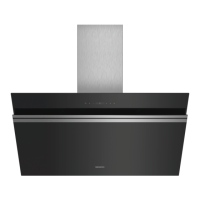
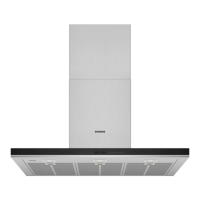
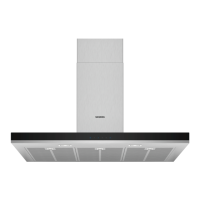
The Siemens extractor hood is designed to remove cooking fumes, odours, and vapours from the kitchen. It operates in two primary modes: exhaust air mode and circulating-air mode.
In exhaust air mode, the air drawn in by the hood is cleaned by grease filters and then expelled to the exterior through a pipe system. This mode requires proper external venting and adherence to local building regulations, especially concerning the discharge of exhaust air into existing flues or shafts. It's crucial to ensure adequate fresh air supply in the room when operating in exhaust air mode, particularly if other room air-dependent heat-producing appliances (such as gas, oil, wood, or coal-operated heaters) are in use. This prevents the creation of a partial vacuum that could draw toxic flue gases back into the living space. Consulting a Master Chimney Sweep is recommended to assess the ventilation setup and suggest appropriate measures.
In circulating-air mode, the drawn-in air is cleaned by both grease filters and an activated carbon filter before being returned to the kitchen. This mode is suitable when external venting is not feasible. For effective odour binding in this mode, an activated carbon filter must be installed. The manual notes that various options for circulating-air mode operation and necessary accessories (like activated carbon filters) are available from specialist retailers, customer service, or the online shop.
The appliance features a fan with multiple settings, including an intensive mode for situations with a large build-up of odours and fumes. It also includes independent lighting to illuminate the cooking area.
The extractor hood is controlled via a panel with intuitive symbols.
The manual advises switching on the extractor hood at the start of cooking and keeping it on for several minutes after cooking is finished to most effectively remove kitchen fumes. It also highlights the importance of adjusting the fan speed to the intensity of cooking fumes and using intensive mode only when necessary to conserve energy.
Regular cleaning and maintenance are crucial for the appliance's efficiency, safety, and longevity.
The manual also provides troubleshooting tips for common issues like the appliance not working or lights not functioning, advising users to check basic connections and fuses before contacting after-sales service. It also emphasizes that repairs should only be carried out by trained service technicians using original spare parts.
 General
| Width | 90 cm |
|---|---|
| Energy Efficiency Class | A |
| Number of Speed Settings | 3 |
| Lighting | LED |
| Filter Type | Metal Grease Filter |
| Colour | Stainless Steel |
| Material | Stainless Steel |
| Type | Chimney |
| Dimensions (H x W x D) | 900 x 500 mm |
| Control Type | Touch |


 To Next Page