EasyManua.ls Logo

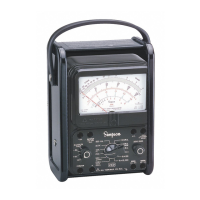
Simpson 260 Series - Overload Circuit Test Procedure; Printed Circuit Board Design; Phenolic Case Construction

Simpson 260 Series
68 pages
Print Icon
To Next Page IconTo Next Page
To Previous Page IconTo Previous Page
Loading...
Introduction
connector
that
is
polarized.
Always
observe
correct
polarity
when
replacing
the
1.5-volt
D
cell.
The
9-volt
battery
must
be
installed
ahd
tested
before
the
Instrument
is
ready
for
use.
Perform
the
overload
test
described
in
Paragraph
1.4
to
ensure
proper
over-
load
circuit
operation
prior
to
using
the
Instrument.
1.4
OVERLOAD
CIRCUIT
TEST:
a.
Set the
range
switch
to
R
X
10,000
POSITION
and
the
func-
tion
switch
to
—DC
POSITION.
b.
Plug
the
black
test
lead
into
the
-COMMON
jack
terminal
and
touch
the
other
end
of
the
test
lead
to
the
+1
volt
input
terminal.
(The
relay
reset
button
should
rise,
indicating
that
the
overload
circuit
is
in
working
condition.)
NOTE:
No
damage
will
occur
to
the
260-7P
as
a
result
of
this
test.
1,5
PRINTED
CIRCUIT
1.5.1
Most
of
the
component
parts
are
mounted
on
a
printed
circuit
board
which
simplifies
assembly
and
maintenance,
thus,
extending
the
useful
life
of
the
Instrument.
16
PHENOLIC
CASE:
e
The
phenolic
case
is
designed
with
heavy
reinforced
walls
for
maximum
durability
and
provides
excellent
protection
for
the
circuit
components.

Related product manuals