EasyManua.ls Logo

Singer 1640 - Needle. Thread and Fabric Chart

Singer 1640
34 pages
Print Icon
To Next Page IconTo Next Page
To Previous Page IconTo Previous Page
Loading...
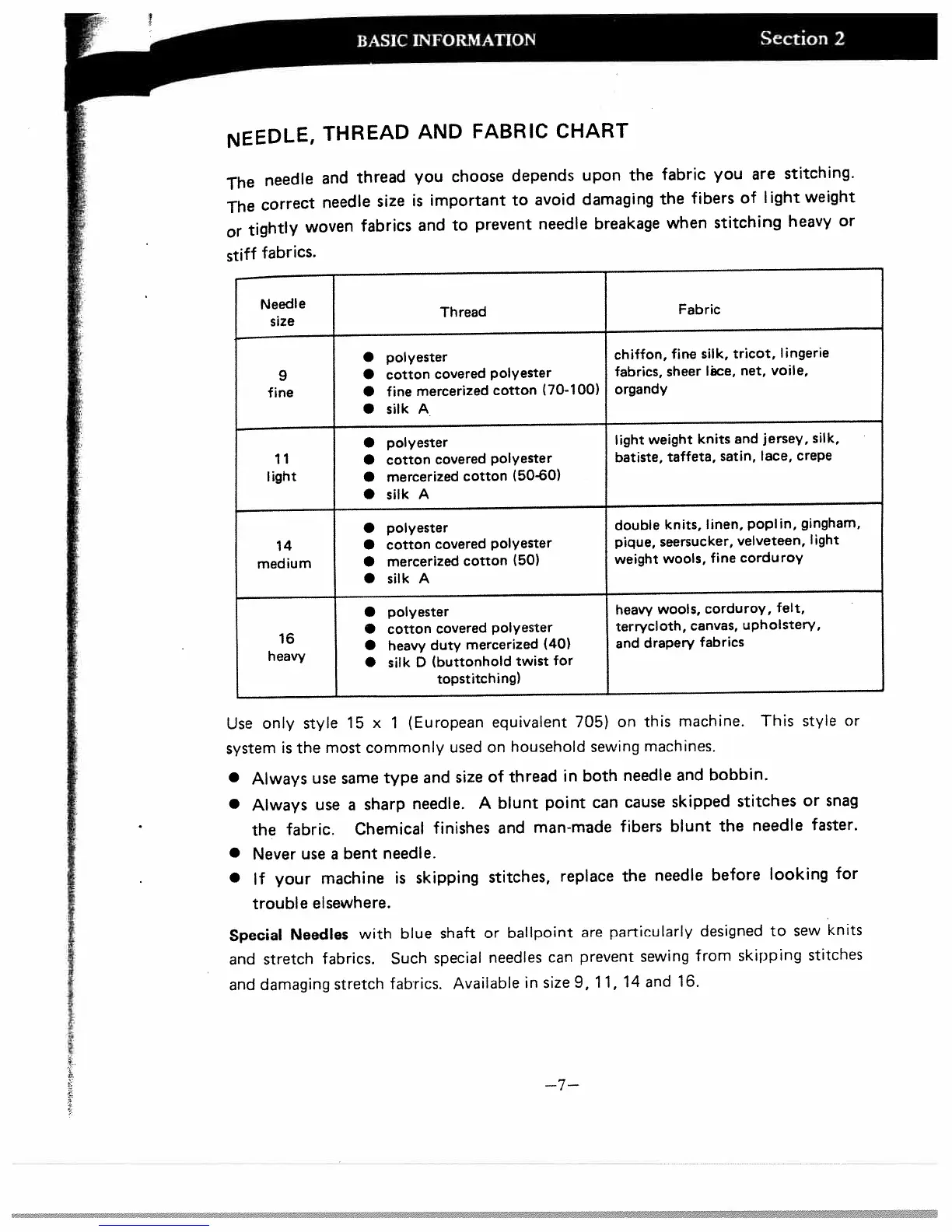
The
needle
and
thread
you choose
depends
upon
the
fabric
you
are
stitching.
The
correct
needle
size
is
important
to
avoid damaging
the
fibers
of
light
weight
or
tightly
woven
fabrics
and
to
prevent
needle
breakage
when
stitching
heavy
or
stiff
fabrics.
Needle
size
Thread
Fabric
polyester
chiffon,
fine
silk,
tricot,
lingerie
9
cotton
covered
polyester
fabrics,
sheer
lace,
net,
voile,
fine
fine
mercerized
cotton
(70-100)
organdy
silk
A
polyester
light
weight
knits
and
jersey,
silk,
1
1
cotton
covered
polyester
batiste,
taffeta,
satin,
lace,
crepe
light
mercerized
cotton
(50-60)
silk
A
polyester
double
knits,
linen,
poplin,
gingham,
14
cotton
covered
polyester
pique,
seersucker,
velveteen,
light
medium
mercerized
cotton
(50)
weight
wools,
fine
corduroy
silk
A
polyester
heavy
wools,
corduroy,
felt,
16
cotton
covered
polyester
terrycloth,
canvas,
upholstery,
h
heavy
duty
mercerized
(40)
and
drapery
fabrics
eavy
silk
D
(buttonhold
twist
for
topstitching)
Use
only style
15
x
1
(European equivalent
705>
on
this
machine.
This
style
or
system
is
the
most
commonly
used
on
household
sewing
machines.
Always
use
same
type
and
size
of
thread
in
both
needle
and
bobbin.
Always
use
a
sharp
needle.
A
blunt
point
can
cause
skipped
stitches
or
snag
the
fabric.
Chemical
finishes
and
man-made
fibers
blunt
the
needle
faster.
Never use
a
bent
needle.
If
your
machine
is
skipping
stitches,
replace
the
needle
before
looking
for
trouble
elsewhere.
Special
Needles
with
blue
shaft
or
ballpoint
are
particularly
designed
to
sew
knits
and
stretch
fabrics.
Such
special
needles
can
prevent
sewing
from
skipping
stitches
and
damaging
stretch
fabrics.
Available
in
size
9,
11,
14
and
16.
NEEDLE,
THREAD
AND
FABRIC
CHART
—7—

Related product manuals