Applications
Zig-Zag Seam Finishes
Seam edges support the garment and should be
given a durable finish if the fabric is likely to
ravel. There are two methods of finishing seams
is such fabrics trimming seam edge or
overedging.
Pattern: Zig-Zag.
Needle Position:.
Stitch Width: ’■
Stitch Length: 1 to 3 to suit fabric.
General Purpose Needle Plate
General Purpose Foot.
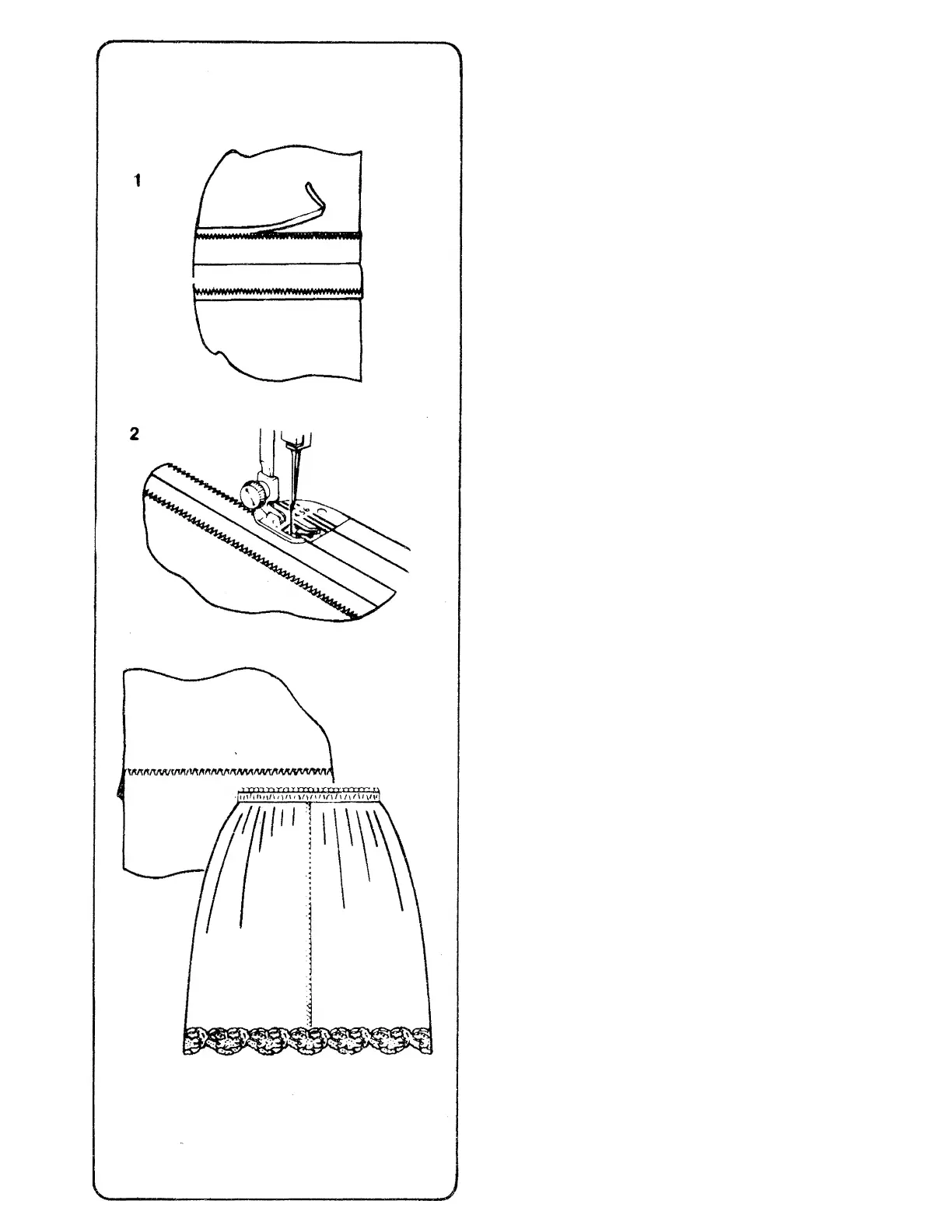
Method 1 — Trimmed Seam Finish
• Adjust stitch width and length to give you
the nrx)st open stitch that will secure the
fabric edge; avoid harsh overstitching.
• Stitch near the edge of seam allowance and
trim seam edges evenly after stitching.
Method 2 - Overedge Seam Finish
• Adjust needle thread tension, stitch width
and stitch length to suit fabric.
• Trim seam edges evenly.
• Place trimmed seam under the foot and
overedge the seam allowance as illustrated.
Lingerie Seams
To make a lingerie seam durable and flexible
use the plain xig-zag stitch at a narrow width
setting. This seam treatment is particularly
suitable for bias seams.
• Straight stitch the seam line on wrong side
of fabric.
9 Press both seam allowances in the same
direction.
• From the right side, topstitch with narrow
zig-zag stitching, letting the needle
alternately enter the seam line and seam
thickness, (Stitch width narrow: stitch
length 1 to 1.5).



 To Next Page