Need help?
Do you have a question about the Sitecom WLX-2100 and is the answer not in the manual?
Details the device's IP65 rating and suitability for outdoor use in various weather conditions.
Explains the PoE power capability and flexibility in device placement.
Covers compatibility with wireless standards and supported security protocols.
Informs about the product's 10-year warranty and activation process.
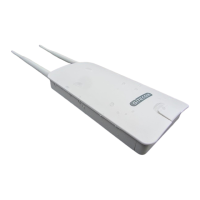
Lists the key capabilities, speeds, and design aspects of the Wi-Fi Range Extender.
Details the physical interfaces, ports, and antennas of the device.
Covers operational modes, wireless standards, and network features.
Offers advice on operating conditions, handling, and environmental considerations for the device.
Details power voltage requirements and connection instructions for the range extender.
Advises on how to handle device issues and the prohibition of self-repair.
Provides guidance on the proper disposal of the range extender according to local regulations.
Guidance on selecting an optimal location for the range extender for best performance.
Step 1: Screw the antennas onto the SMA connectors of the range extender.
Instructions for connecting the range extender using a Windows operating system.
Initiates a scan for available wireless networks to select for extension.
Explains how to save, apply, or revert changes made to the device settings.
Provides a summary of system status, including network and hardware information.
Allows setting a unique name for the range extender, separate from the Wi-Fi network name.
Option to enable or disable TX power function in advanced wireless settings.
Allows selection of a country or region to comply with local regulations.
Enables selection of the device's primary function, like Access Point or Client Router.
Details settings for dynamic IP configuration, including account and domain names.
Allows configuration of the device's local IP address.
Enables setting the subnet mask for the local network.
Option to enable or disable the internal DHCP server for network address assignment.
Defines the beginning of the IP address range for the DHCP server pool.
Sets the end of the IP address range for the DHCP server pool.
Enables configuration of the WINS server IP address.
Enables PPTP VPN connections to pass through the range extender.
Enables L2TP VPN connections to pass through the range extender.
Enables IPsec VPN connections to pass through the range extender.
Explains the structure and purpose of port forwarding rules.
Allows enabling or disabling the DMZ functionality for specific devices.
Specifies the IP address of the device designated as the DMZ host.
Configures settings for connecting the extender to an existing Wi-Fi network.
Covers configuration of security modes like WEP, WPA, and WPA2 for wireless connections.
Details the configuration options for WEP security, including input type and key length.
Configures settings like data rate, transmit power, RTS/CTS, aggregation, and traffic shaping.
Allows changing the administrator username and password for the device interface.
Enables or disables remote management and specifies the management port.
Assigns a VLAN tag to packets for network segmentation and management.
Covers enabling SNMP, setting community names, trap destinations, and SNMPv3 parameters.
Allows backing up the current device configuration to a file.
Enables restoring configuration from a previously saved backup file.
Resets the device configuration to its original factory default settings.
Allows manual entry of date and time or synchronization with a PC.
Enables automatic time setting via NTP server or time zone selection.
Allows enabling and configuring daylight saving time settings.
Enables or disables the syslog function for remote logging.
Specifies the IP address of the remote log server.
Enables or disables the local logging service on the device.
Configures parameters for ping tests, including target IP, packet size, and number of pings.
Sets parameters for traceroute tests, including target address and interval.
Allows configuration of speed test parameters like target address and time period.
Enables TCP SYN cookies protection against SYN flood attacks.
Enables or disables SYN flood attack protection and sets packet limits.
Enables or disables UDP flood attack protection and sets packet limits.
Enables or disables ping attack protection for the device.
 General
| Type | Network repeater |
|---|---|
| WPS push button | No |
| Ethernet LAN data rates | 100 Mbit/s |
| Maximum transfer distance | - m |
| International Protection (IP) code | IP65 |
| Windows operating systems supported | Yes |
| Input current | 0.6 A |
| Power plug type | Type C |
| AC input voltage | 24 V |
| Certification | ROHS, CE, IP65 |
| Mounting type | Wall |
| Product color | White |
| LED indicators | Activity, LAN, Power, WLAN |
| Antennas quantity | 2 |
| Antenna gain level (max) | 5 dBi |
| Bandwidth | 2.4 GHz |
| Wi-Fi band | Single-band (2.4 GHz) |
| Wi-Fi standards | 802.11b, 802.11g, Wi-Fi 4 (802.11n) |
| Cabling technology | 10/100Base-T(X) |
| Security algorithms | 128-bit WEP, 64-bit WEP, WPA, WPA-PSK, WPA2-PSK, WPS |
| Networking standards | IEEE 802.11b, IEEE 802.11g, IEEE 802.11n |
| Power over Ethernet (PoE) ports quantity | 1 |
| Package depth | 235 mm |
| Package width | 310 mm |
| Package height | 75 mm |
| Package weight | 258 g |
| Cables included | LAN (RJ-45) |
| Dimensions (WxDxH) | 100 x 37.5 x 205 mm |
| Storage temperature (T-T) | -30 - 80 °C |
| Operating temperature (T-T) | -20 - 70 °C |
| Sustainability certificates | RoHS |
 Weight and Dimensions
| Depth | 37.5 mm |
|---|---|
| Width | 100 mm |
| Height | 205 mm |

 To Next Page