
 Need help?
Do you have a question about the SKY-WATCHER SynScan EQ6 Pro and is the answer not in the manual?
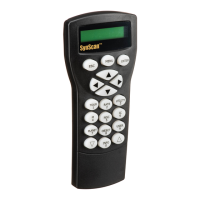
Details the physical components and interfaces of the SynScan hand control, including the LCD screen and buttons.
Provides instructions and port details for connecting the SynScan hand control to various Sky-Watcher telescope mounts.
Explains how to use the directional keys to control telescope mount movements and adjust slewing speeds.
Describes the three operating modes: Full Feature, Easy Tracking, and Standalone, and their usage.
Guides on setting the correct home position for equatorial and alt-azimuth mounts before initialization.
Step-by-step guide to initialize the SynScan hand control, including selecting mode and confirming warnings.
Instructions for inputting geographic coordinates, time zone, and elevation for accurate operation.
Lists available alignment methods (1-Star, 2-Star, 3-Star, Brightest Star) based on mount type.
Detailed steps for aligning an equatorial mount using 1, 2, or 3 stars.
Procedure for aligning alt-azimuth mounts using the brightest star method.
Compares different alignment methods, discussing advantages, preconditions, and star selection rules.
Presents the hierarchical structure of the SynScan hand control's menu system.
Explains how to navigate the SynScan menu using ESC, ENTER, and scroll keys.
Lists and describes the shortcut keys for quick access to common functions and sub-menus.
Steps to find and view information about Messier objects using their index numbers.
Procedure for locating celestial bodies within the Solar System catalog.
Instructions for saving custom celestial object coordinates and recalling them later.
Guides on selecting appropriate tracking speeds (Sidereal, Lunar, Solar) for the mount.
Details how to set backlash compensation values for mount axes to improve pointing accuracy.
Configuration for setting upper and lower altitude limits for alt-azimuth mounts.
Customizing LCD contrast, keypad backlight, and beep volume.
Enabling/disabling the advanced alignment star filter to improve alignment success rate.
Instructions for editing date, time, geographic coordinates, and time zone settings.
Using the hand control to identify celestial objects the telescope is currently pointing at.
Procedure to re-synchronize mount encoders after manual axis movement to restore pointing accuracy.
Using SynScan hand control with planetarium and autoguider applications via PC connection.
Explains the PC Direct Mode for controlling the mount and updating firmware.
Lists the necessary hardware and software prerequisites for updating the SynScan firmware.
Step-by-step guide on how to download and install firmware updates using the SynScan Firmware Loader.
Provides solutions for common issues encountered during the firmware update process.
Instructions for parking the telescope to save alignment and resuming observation sessions.
Guides on using PAE to improve telescope pointing accuracy in specific sky zones.
Method for performing polar alignment using general alignment stars and mount movements.
Explains PEC training and replay for improving tracking accuracy in astrophotography.
Steps to initialize the SynScan hand control with an attached GPS module for location data.
How to access and view GPS-acquired data like time zone, latitude, longitude, and satellite status.
Methods to diagnose the presence and severity of cone error in the telescope-mount system.
Detailed steps to physically adjust the telescope mount to reduce or eliminate cone error.
Instructions for running the built-in self-diagnosis program using loop-test plugs.
 General
| Mount Type | Equatorial |
|---|---|
| GoTo System | Yes |
| Tracking Modes | Sidereal, Solar, Lunar |
| Motor Type | Stepper motors |
| Power Supply | 12V DC |
| Database | 42, 900+ objects |
| Worm Wheel | 180 teeth |
| Slew Speed | Up to 3.4°/sec |
| Power Requirement | 12V DC, 2A |
| Communication Ports | RS-232 |
| Counterweight | 2 x 5.1 kg |
| Hand Controller | SynScan |
| Mount Weight | 16 kg |
| Tripod Weight | 7.5 kg |
| Tripod Height | 85-147 cm |
| Tracking Rates | Sidereal, Solar, Lunar |
| Gear Ratio | 705:1 |
| Alignment Procedures | 2-Star, 3-Star, and Polar Alignment |


 To Next Page