8
SkyTraq Technology, Inc. Preliminary Draft www.skytraq.com.tw
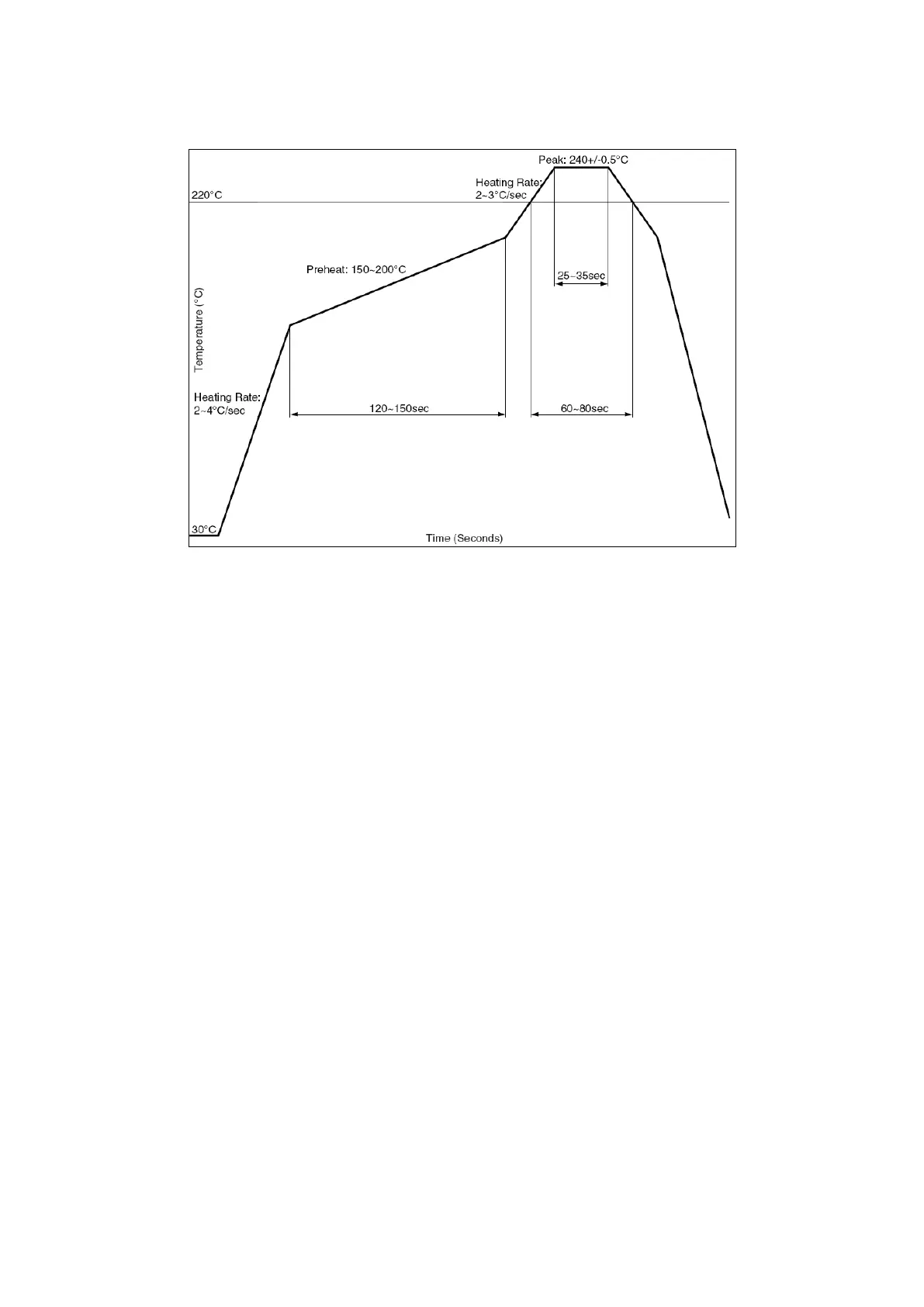
RECOMMANDED REFLOW PROFILE
The reflow profile shown above should not be exceeded, since excessive temperatures or transport times during
reflow can damage the module. Cooling temperature fall rate: max 3°C / sec
ANTENNA CONSIDERATIONS
The PX1120S can work with active antenna or passive antenna.
Passive ceramic patch antenna is low-cost and provides good sensitivity. 50-ohm output larger size ceramic patch
antenna with higher antenna gain can be connected directly to RF input of the module. Usually the ceramic patch
antenna and PX1120S are mounted on opposite side of the PCB to reduce possibility of picking up digital noise. To
improve signal reception performance, use larger ground plane under the patch antenna if possible; larger the ground
plane, larger the overall antenna gain. The center frequency of the ceramic patch antenna changes with ground plane
size. For optimal L1 quad constellation signal reception, the frequency bandwidth of the antenna needs to cover
1559MHz ~ 1605MHz when mounted on the PCB. It is usual to ask the ceramic patch antenna vendor to select or tune
a patch antenna that best matches the customer PCB.
Active antenna is essentially a passive antenna with built-in LNA and a coaxial cable to connect the antenna to the
module. It has the flexibility of being located remotely from the module, but requires antenna power. Active antenna
usually costs more than passive patch antenna, but the performance in low signal environments is usually better.
Active antenna with gain of 10 ~ 20dB and noise figure less than 1.5dB can be used with PX1120S.


 To Next Page