This document is an owner's manual and safety instructions for a Lithium LiFePO4 Deep Cycle Battery manufactured by Smart Battery Technologies in Australia.
Function Description
The device is a Lithium Iron Phosphate (LiFePO4) Deep Cycle Battery. It is a type of lithium-ion (Li-Ion) rechargeable battery designed for reliable power delivery, fast charging, and long-lasting performance in a compact, lightweight package. Lithium ions move from the negative electrode (anode) to the positive electrode (cathode) during discharge and back again when being charged. These batteries are suitable for single, series, or parallel use, provided that only batteries of the same type, model, capacity, and age are connected together. They are not designed for installation in engine bays or other high-heat environments.
Important Technical Specifications
- Battery Chemistry: Lithium Iron Phosphate (LiFePO4), which is described as the safest Li-Ion chemistry.
- Terminals: Quality Copper-Silver Terminals, with Negative (Black) and Positive (Red) markings.
- Internal Components: Features prismatic battery cells for superior performance and an integrated Battery Management System (BMS).
- Initial Charge State: The battery arrives approximately 30% charged and requires a full charge before first use.
- Charging Voltage: Should be lower than 15V for a 12V battery. Charging above 15V will cause the BMS to turn off. Voltages higher than 18V can damage the internal BMS.
- Resting Voltage (12V Battery):
- 14.4V: 100% Capacity
- 13.6V: 100% Capacity
- 13.4V: 99% Capacity
- 13.3V: 90% Capacity
- 13.2V: 70% Capacity
- 13.1V: 40% Capacity
- 13.0V: 30% Capacity
- 12.9V: 20% Capacity
- 12.8V: 17% Capacity
- 12.5V: 14% Capacity
- 12.0V: 9% Capacity
- 10.0V: 0% Capacity
- A resting voltage of 13.4V or above is considered fully charged.
- Charging Time: Can take anywhere from 3 to 12 hours to fully charge, depending on the BMS, battery capacity, and charger size.
- Terminal Size: M8 ring terminals are required for charging source cables.
- Environmental Friendliness: Environmentally friendly, non-toxic, and contains no acid.
Usage Features
- Safety: The LiFePO4 chemistry is highlighted as the safest Li-Ion type, but misuse still carries risks of fire, burns, or explosion. The integrated BMS enhances safety by monitoring the battery's state.
- Battery Management System (BMS): An internal BMS controls charging flow, ensures safe charging parameters, and protects against over-charging, over-discharge, and short-circuiting. It includes two temperature sensors (one for prismatic cells, one for the BMS itself), manages cut-off voltage, protects inner cells, handles cell balancing, low voltage cutoff, high voltage cutoff, short circuit protection, and high temperature protection.
- Bluetooth Monitoring: Batteries equipped with a Bluetooth-enabled BMS can be monitored via a smartphone using the SMART BMS App (available on Apple App Store and Google Play). The app provides access to data such as current cycles, current state of charge, minimum/maximum voltages, and individual cell voltages. Note that parameters are not user-accessible via the app.
- Installation:
- Secure the battery tightly in place, providing shock absorption if vibration is likely.
- Connect charging and load cables to the positive (red) and negative (black) terminals.
- Use M8 ring terminals for charging source cables.
- Do not place washers between the battery terminal and cables.
- Fasten nuts tightly without excessive torque or over-tightening.
- Charging:
- Charge the battery as soon as possible when voltage drops below 12.8V.
- With a Battery Charger:
- Does not require a lithium profile, but a lithium profile charger should be at least 10 Amps.
- Without a lithium profile, a charger should be at least 15 Amps and set to AGM mode (as it's often the closest voltage profile).
- For large batteries (>200AH) or multiple batteries totaling >200AH, use a charger at least 10% of the battery bank's size (e.g., 30 Amp charger for a 300AH bank).
- Inbuilt safety measures prevent damage if the charger doesn't meet requirements, but it might not fully charge the battery.
- With a Solar Charger Source:
- Requires a Maximum Power Point Tracking (MPPT) Regulator to manage voltage and current output from solar panels.
- Anderson style plugs are recommended for safe and secure high-current 12V connections between the battery and solar panels.
- Safe Mode (Low Voltage) Recovery:
- Using a Charged Battery (e.g., car battery) and Jumper Cables:
- Disconnect all loads/inputs from the Lithium battery.
- Connect the Lithium battery in parallel to a different charged battery.
- Verify both batteries show similar voltage.
- Connect an AC to DC charger (20 amp or higher recommended) to the Lithium battery.
- Once the charger starts charging the Lithium battery, disconnect the second battery.
- Allow the charger to fully charge the Lithium battery.
- Using a Jump Starter:
- Disconnect all loads/inputs from the Lithium battery.
- Connect Jump Starter cables to the battery (Positive to Positive, Negative to Negative).
- Connect an AC to DC charger (20 amp or higher recommended) to the Lithium battery.
- Activate the jump starter to supply power to the Lithium battery, allowing the charger to detect and begin charging.
- Once the charger starts charging the Lithium battery, disconnect the Jump Starter.
- Allow the charger to fully charge the Lithium battery.
Maintenance Features
- Storage: Store in a dry, clean, shaded, and well-ventilated area at temperatures between 0°C to 40°C when charging.
- State of Charge (SOC) for Storage: Store at approximately 50% SOC.
- Regular Charging: Charge every 6 months if the battery is unused.
- Cleanliness: Keep the top of the battery and its terminals clean.
- Physical Protection: Protect the battery from being dropped, turning over, and serious stacking during loading.
- Mounting: Can be mounted on its side.
- Connection Maintenance: Periodically re-torque connections and clean the batteries.
- Discharge Management: To enhance battery life, avoid discharging the battery to 1Ah capacity or BMS lower voltage cut-off settings. Discharge down to 20% capacity remaining, then recharge.
- Recycling: The lithium battery is recyclable at permitted treatment facilities. It should be discharged before recycling (disposal).
- Do not use or store near high temperatures, sparks, or flames.
- Do not short-circuit terminals with metal objects.
- Do not charge in an inverted position.
- Do not damage by dropping, knocking, throwing, or trampling.
- Do not pierce or drill into the enclosure.
- Do not apply undue force to terminals or bend them.
- Avoid applying heat to terminals (e.g., soldering).
- Do not disassemble or refit.
- Do not expose the battery case and lid to organic solvents or adhesives.
- Stop using immediately and isolate if any abnormality (unusual odor, deformation) occurs.
- Keep children and pets away.
- Ensure the battery is safely secured before travel.

 Need help?
 General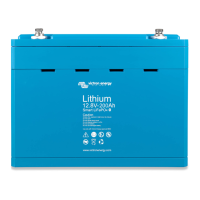

 To Next Page