Need help?
Do you have a question about the Smeg LBW508CIT and is the answer not in the manual?
Essential safety information for appliance installation, usage by vulnerable groups, and general precautions.
Guidelines for proper domestic use, warranty considerations, and user responsibilities.
Important operational advice, including temperature, foreign objects, and initial setup recommendations.
Information on removing packaging materials and proper disposal of old appliances.
Tips for improving machine efficiency and reducing energy and water consumption.
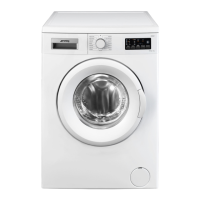
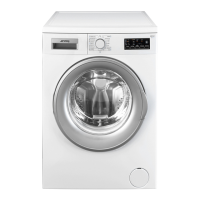
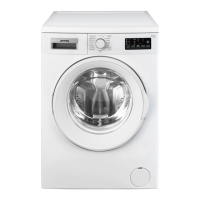
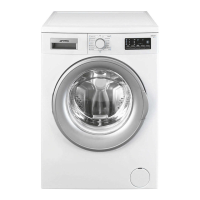
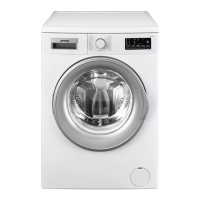
Visual identification and labeling of the washing machine's main components.
Detailed technical data including voltage, power, capacity, dimensions, and spinning speed.
Step-by-step guide on how to remove safety screws before operating the machine.
Instructions for leveling the machine using its adjustable feet for stable operation.
Guidance on safely connecting the washing machine to the power supply.
Procedure for connecting the water supply hoses to the machine.
Instructions for properly connecting the water drain hose for safe water disposal.
Explanation of the different compartments and how to use them for detergent and softener.
Description of the program selection dial and how to choose wash cycles.
Overview of the control panel display, indicators, and function buttons.
Guidance on sorting clothes based on type, color, and care labels before washing.
Instructions on how to load laundry correctly into the washing machine drum.
Advice on the correct amount and type of detergent and softener to use.
Step-by-step guide on starting and running the washing machine.
Explanation of various optional functions like delay timer, spin speed, pre-wash, and extra rinse.
How to activate and deactivate the child lock feature to prevent accidental changes.
Instructions on how to stop or cancel a running washing program.
What happens when a program finishes and post-wash procedures.
Crucial warnings about unplugging the machine and turning off water before maintenance.
How to locate, clean, and maintain the water inlet filters to ensure proper water intake.
Guide on cleaning the pump filter to remove lint and debris for optimal performance.
Steps for removing and cleaning the detergent drawer and its housing.
Instructions for disassembling and cleaning the flush stopper in the detergent drawer.
How to clean the exterior of the washing machine using appropriate cleaning agents.
Advice on preventing and cleaning rust stains in the washing machine drum.
Common causes and solutions for machine start and water intake problems.
Troubleshooting steps for water discharge and excessive vibration problems.
Addressing poor washing results and excessive foam in the detergent drawer.
Troubleshooting for problems with the spin cycle not starting or running late.
Explains the E01 error code indicating the door is not properly closed.
Explains the E02 error code related to low water pressure or level.
Explains the E03 error code indicating a faulty pump or connection.
Explains the E04 error code for when the machine has too much water.
Methods for removing common stains like alcoholic drinks, shoe shine, tea, and coffee.
Techniques for cleaning stains from tomato paste, bouillon-egg, grease, oil, and mustard.
Guidance on removing fruit, grass, oil paint, and burn stains from laundry.
Procedures for treating blood, dairy, mould, and ink stains on garments.
 General
| Capacity | 8 kg |
|---|---|
| Spin Speed | 1400 rpm |
| Dimensions (HxWxD) | 85 x 59.5 x 53.5 cm |
| Spin-drying efficiency class | B |
| Programs | 15 |
| Color | White |

 To Next Page