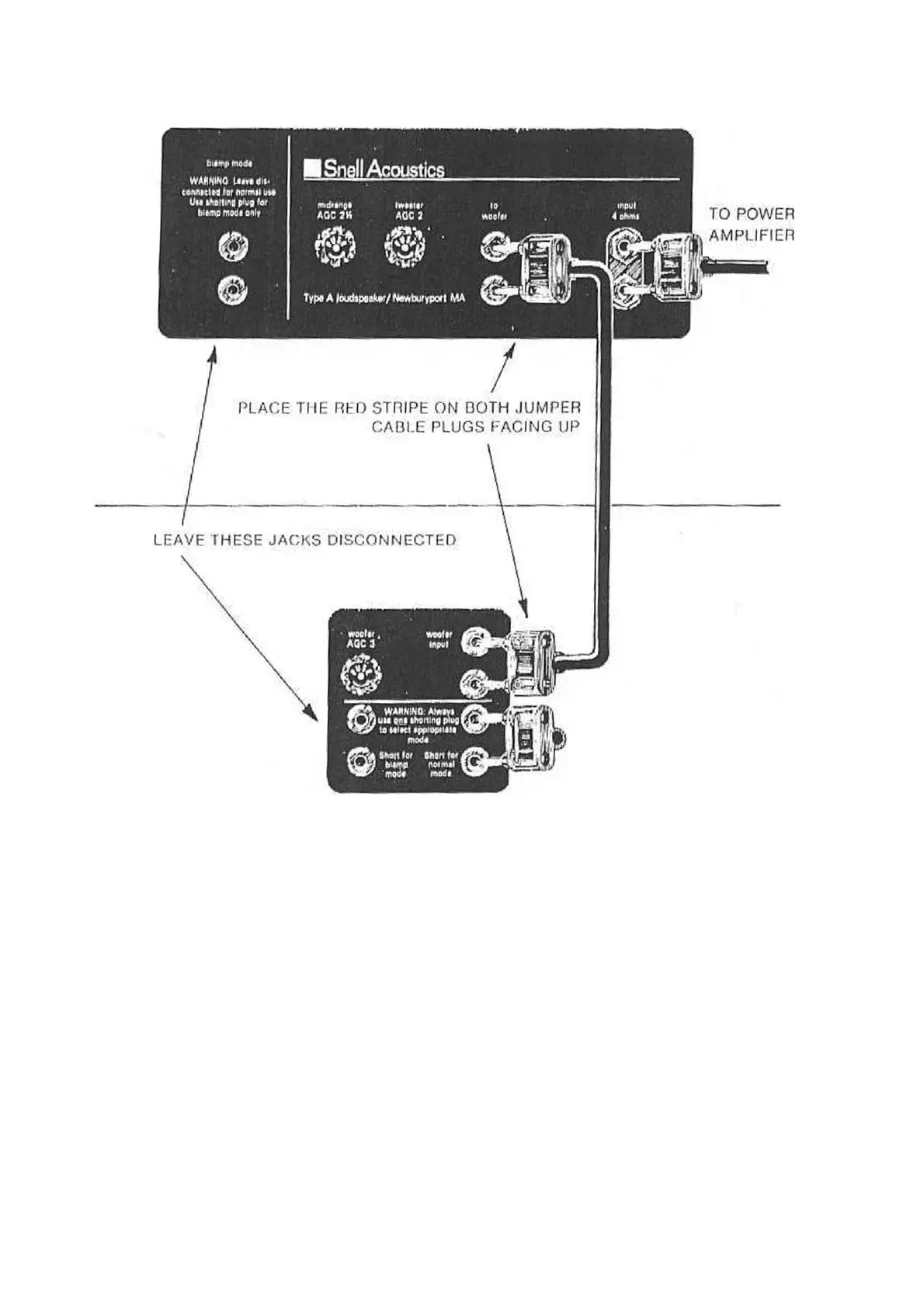
WIRING HOOKUP FOR NORMAL OPERATION
FIG. 3
air or floor lo Ihe turntable, causing feedback.
Feedback can result in deterioration of the sound
long before the familiar "howling" is evidenced. A
good lest to find the susceptibility of your system
to feedback follows: Place the stylus on a record
as if to play it but leave the turntable off. Turn the
volume control up to a position appropi iate to loud
listening Lightly tap shelf on which your turntable
is resting. If no sound is heard through the
speakers, all is well. If a dull tapping is heard
through your speakers, your suspension is not
perfect. If Ihe sound reverberates after the tap for
a fraction of a second or longer, you are on the
threshold of feedback. Consult with your dealer
as to the best way of eliminating feedback in your
system. The best solution is more typically mov
ing the turntable, using a sub-base, and/or sus
pending the turntable from a wall or from the
celling.
The use of tone controls and equalizers
should be tempered with moderation. In general,
the less signal processors in the signal path the
better, but it Is a sad fact that nearly all modern
recordings are mixed down and equalized using
"monitors" less accurate than your Type A's. With
flawed recordings it may be useful to employ an
equalizer or tone controls, l-xcessivu boost of
any frequency may damage your system.
Preamplifiers and moving coil step-up devices
vary widely in sound quality and should be audi
tioned and compared if possible.



 To Next Page