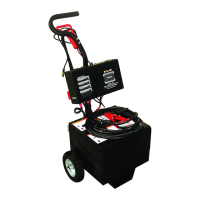
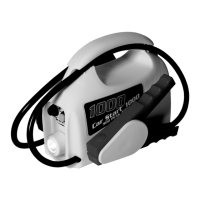
The document describes the SOLAR Commercial Jump Starter/Charger, specifically models HT1224 and FMB1224. These devices are designed for jump starting and charging 12-volt lead-acid batteries in commercial applications, including cars, trucks, and boats. The FMB1224 model is a "Fix Mount" version, suggesting it can be integrated into a vehicle, while the HT1224 is a "Heavy Truck" model, implying a more portable or robust design for heavy-duty use.
Function Description:
The primary function of the SOLAR Jump Starter/Charger is to provide a powerful boost to start vehicles with discharged batteries and to recharge 12-volt lead-acid batteries. The units are designed to maintain their internal batteries and can recharge most lead-acid batteries within 4-8 hours, automatically shutting off when fully charged. They constantly monitor their internal storage battery or the battery being charged. These units are versatile, capable of charging maintenance-free, conventional, deep cycle, gelled electrolyte, and recombination batteries. The HT1224 model is a 12/24 Volt unit, indicating its capability to operate at both voltage levels for jump starting, though charging is specified for 12 Volt systems only. The FMB1224 model also supports 12/24 Volt operation for jump starting and 12 Volt for charging.
Important Technical Specifications:
- Voltage Compatibility: 12 Volt for charging, 12/24 Volt for jump starting (HT1224 and FMB1224 models).
- Charging Time: 4-8 hours for most lead-acid batteries.
- Battery Specifications (Recommended for HT1224): Group 31, 900-1200 CCA (Cold Cranking Amps).
- Battery Type (Recommended for HT1224): Sealed top or with screw-type flush fill caps to prevent acid leakage.
- Battery Terminals (Recommended for HT1224): 3/8" threaded studs.
- AC Power Input: 110 Volt AC outlet.
- Extension Cord (Recommended):
- 25 feet: 16 AWG
- 50 feet: 12 AWG
- 100 feet: 10 AWG
- 150 feet: 8 AWG
- Vehicle Harness (FMB1224 Model Only): Two 25 ft. #4 gauge cables for optional charging from a vehicle's alternator.
Usage Features:
- Ready for Immediate Use: Batteries are pre-installed and units are ready for use upon receipt, though initial charging is recommended.
- Automatic Charging: The charger reads internal battery status and applies the proper charge, indicated by the amp gauge flickering between 0-2 Amps when fully charged.
- Voltage Selection: For 12/24 Volt models, a selector cable must be set to the proper voltage (12 or 24 Volts) of the vehicle being jump-started.
- Safe Jump Starting Procedure:
- Set selector cable to vehicle's voltage.
- For 12 Volt dual battery systems, connect to the battery closest to the starter.
- Position DC jumper cables to avoid damage from hood, door, or moving engine parts.
- Stay clear of fan belts, pulleys, and other moving parts.
- Connect POSITIVE (RED) clamp to the POSITIVE (+) ungrounded post of the battery.
- Connect NEGATIVE (BLACK) clamp to the vehicle chassis or engine block, away from the battery, carburetor, fuel lines, or sheet-metal body parts.
- Start the vehicle. If it doesn't start within 6 seconds, allow the unit to cool for 3 minutes.
- Disconnect NEGATIVE clamp first, then POSITIVE clamp.
- Safe Charging Procedure:
- Position DC jumper cables to avoid damage from hood, door, or moving engine parts.
- Stay clear of fan belts, pulleys, and other moving parts.
- Connect POSITIVE (RED) clamp to the POSITIVE (+) post of the battery.
- Connect NEGATIVE (BLACK) clamp to the vehicle chassis or engine block, away from the battery, carburetor, fuel lines, or sheet-metal body parts.
- Connect AC power cord to a 110 AC outlet.
- When fully charged, the ampere gauge will flicker between 0-2 Amps.
- Disconnect AC power cord first, then NEGATIVE clamp from chassis, then POSITIVE clamp from battery.
- Vehicle Harness Charging (FMB1224 Only): Allows the unit to be charged by the vehicle's alternator when the engine is running. For full charging of all batteries, the FMB1224 must be in 12 Volt mode.
- Safety Warnings:
- Do not tip or lay the unit flat with the battery installed.
- Never hook up a 12 Volt DC power source to a 24 Volt DC vehicle, as this can cause overcharging and generate flammable gases.
- Do not jump start with the AC power cord connected.
- Never jump start a frozen battery.
- Avoid sparks near batteries due to explosive gases.
- Wear eye protection and protective clothing.
- Do not smoke or use open flames near batteries.
- Avoid static electricity when handling batteries.
- Return clamps to proper storage positions to prevent short circuits.
- Avoid touching the air compressor or fittings immediately after use as they can be very hot.
- Exercise extreme care in the engine compartment due to moving parts.
- Battery acid is hazardous if spilled.
- Grounding is required to reduce electric shock risk.
Maintenance Features:
- Battery Fluid Level Check: For flooded acid batteries, fluid levels must be checked every 30-45 days.
- Unit Storage: Keep the unit plugged in when not in use to ensure long, continuous service.
- Battery Replacement (HT1224): Detailed instructions are provided for removing old batteries and installing new ones, including specific screw types, cable disconnections, and reassembly steps.
- Battery Replacement (FMB1224): Detailed instructions are provided for removing old batteries and installing new ones, including cable and wiring connections, and securing the hold-down.
- Troubleshooting Guide: A table lists common problems (Unit won't jump, Unit won't charge), possible causes (e.g., poor connections, low/defective battery, faulty charger), and solutions (e.g., check connections, replace battery, set to 12 Volt position).
- Repair: Do not disassemble the unit yourself; contact a qualified technician for service or repair. Unplug the unit from the outlet before any maintenance or cleaning.
- Technical Support: Available to registered users via phone (800) 328-2921 or online at www.solaronline.com.
- Warranty: Clore Automotive, LLC provides a one-year limited warranty against defects in material and workmanship, excluding batteries and damage caused by misuse, modifications, or faulty batteries. A 30-day replacement policy is in place for initial malfunctions.

 Need help?
 General

 To Next Page