*%9F3),
*%%:
>%=35C'
->J-%X
>3K
,>=>0*,9C-9
34 709C3 - %L8
*431-D%L
:3*3:4>9
4-9
%>9
34>>>4)
75-
* > % *
)37),8.939
'4D0-3*
%=3>D4D
712"
* % 7),8 3 %
70-8:3D39
'('(D>[>9
3P 3: 7- )B
1:B8J'(3:'(K
%-'(93:),39
J'( 3 : '( K %
-'(93:0-3
.%@L33R>
1:'(93:
@ >
0-* 9
3),)>@
8 ,3-
0-*0-
D30-
8 ),30-
>7%,-9
$98
8 ,>3D
%D!3),>
%3
>3)-*,-D
%<,,-9.*
3::P0-C'
3R>]
3%:>,
>>5C5#5C/C
C>3FB#7D>
%=33
3 % %=
3D=3
0-D30->)-
%43 %F (0 -0E'$ .E .* ).9
1'- E001(-Z $..) */0 -.,)'*0
,Z0'0*.,'*0*/0)-7E.,1.
,G08 $$ .'-0 .E$ 0G-0)* JC0K
1J-.*.$K7,8
>=LD
3 %D :
>4%
SOLIDYNE
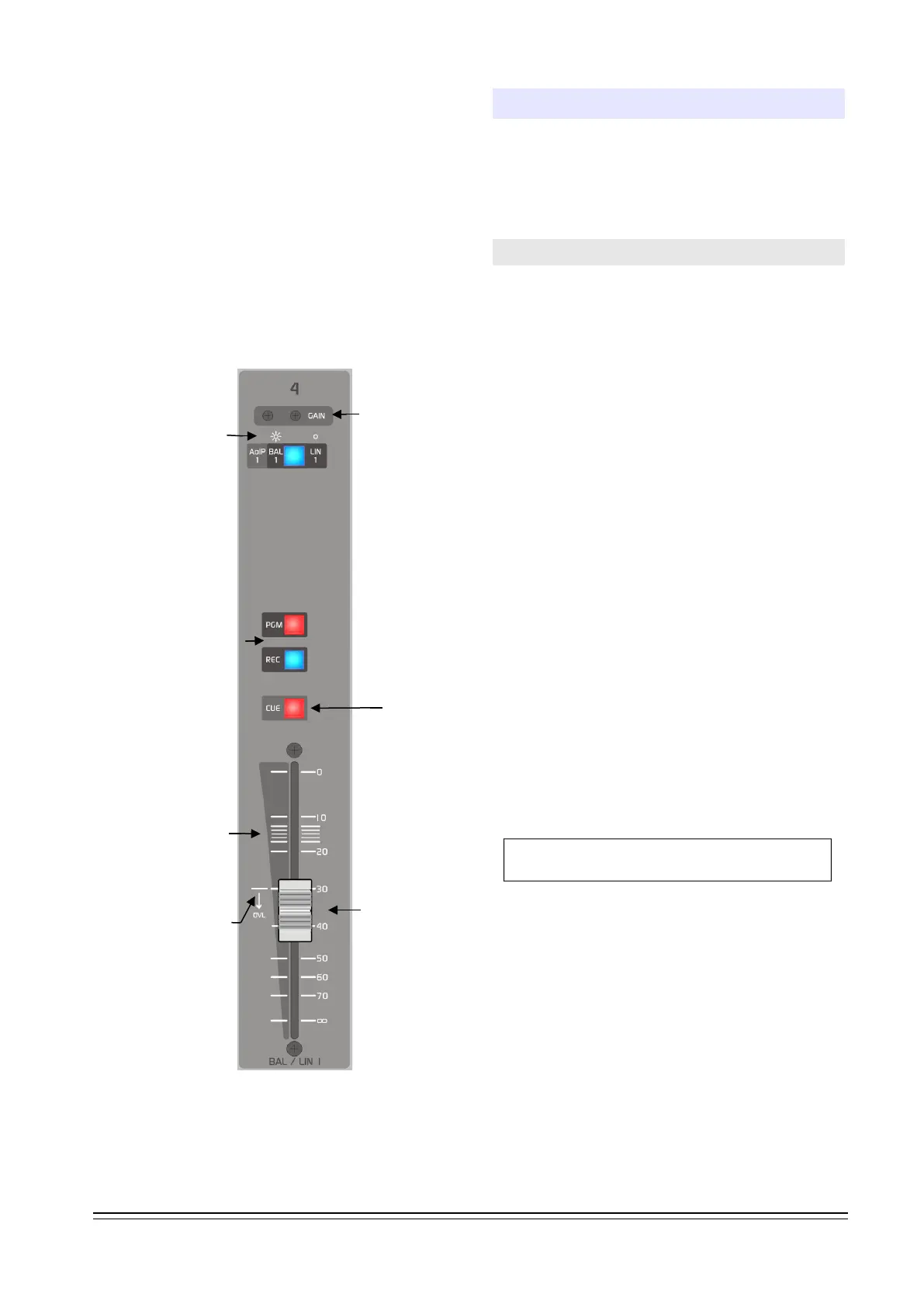
[3]
BUS assignment
[5] Normal work zone
.
The fader around this
zone can produce a
level of 0VU
[1]
Input gain. It
affects both inputs
(BAL and LIN).
[2]
Input selection.
In USB channels
the conmutation
between USB and
aux input take
place when aux
TRS is plugged.
[6]
Main fader
[4]
CUE
[7]
Overload
indicación.
To reach 0VU, the
fader must work over
this zone to avoid
excesive
amplification on
preamp.


 To Next Page