22
Using metallic ware and
allowing it to touch the oven
wall.
Food temperature is too low.
Low AC input voltage.
Troubleshooting
1. Check outlet for proper voltage and grounding before diagnosing.
2. Be careful of the high voltage circuit.
3. REMEMBER: Discharge the high voltage capacitor.
4. When making component tests, remove power, disconnect one lead wire from component and check
continuity; otherwise, electrical shock, false reading, or meter damage may occur.
5. Do not touch any part of the circuit on the PCB since static electric discharge may damage this control
panel. Always touch ground before working on the control panel to discharge any static charge built
up in your body.
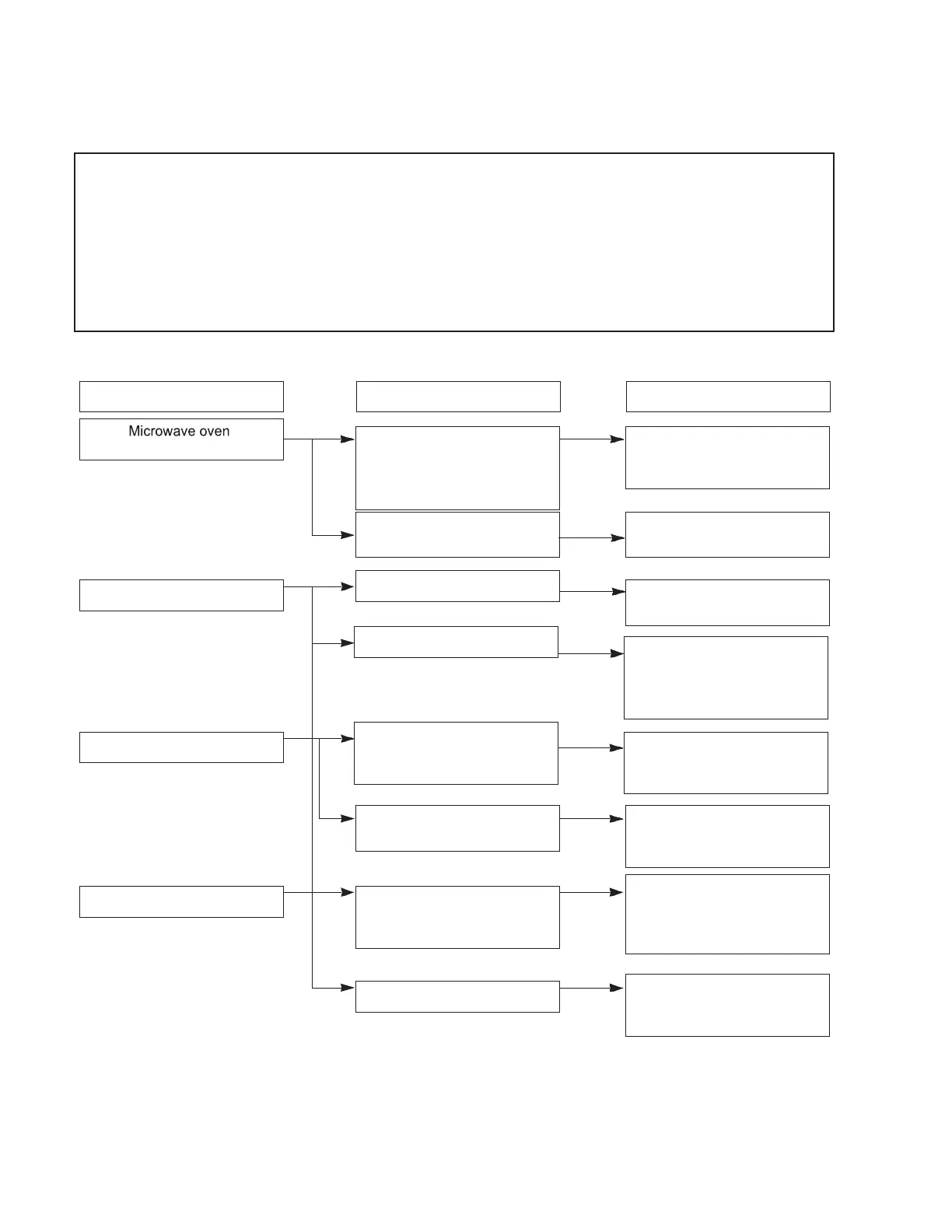
CONDITION
CAUSE
REMEDY
Not on dedicated circuit
(blown fuse or circuit
protection)
Avoid using other electrical
appliances when you use the
microwave oven.
Output power is too low.
Ensure adequate line
voltage.
This may not be a defect.
It is possible that the food
should be cooked for a
longer time.
Sparks occur.
Do not use metallic ware for
cooking except those noted
in the cooking guide.
Ceramic ware trimmed in
gold or silver powder is used.
Do not use any type of
cookware with metallic
trimming.
Uneven cooking.
Inconsistent intensity of
microwave due to food
density/characteristics
Display “CALL SERVICE”
See Service Test Mode to
clear
CALL SERVICE .
does not work.
1.
Use plastic wrap or lid.
2.
Stir once or twice while
cooking soup, cocoa or
milk, etc.
Insert microwave oven plug
securely.
Microwave oven plug is not
inserted tightly.


 To Next Page