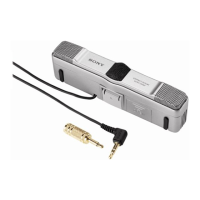
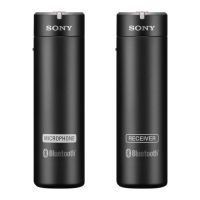
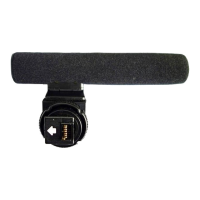
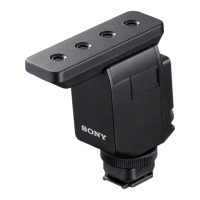
The Sony ECM-Z200 is an electret condenser microphone designed for a variety of audio recording applications. It features a versatile design that allows users to switch between uni-directional and super cardioid characteristics, making it adaptable to different recording environments and sound sources. The microphone is powered by a single AA (R6) battery, offering portability and ease of use without the need for external power supplies.
Function Description:
The ECM-Z200 operates as an electret condenser microphone, utilizing back-electret condenser capsules to capture sound. This type of microphone is known for its high sensitivity and wide frequency response, making it suitable for recording voices, musical instruments, and ambient sounds with clarity. A key feature is its changeable directivity, allowing the user to select between a uni-directional pattern, which is ideal for focusing on a sound source directly in front of the microphone while rejecting sounds from the sides and rear, and a super cardioid pattern, which offers an even tighter focus and greater rejection of off-axis sounds, particularly useful in noisy environments or when precise sound isolation is required. This directivity adjustment is achieved via a control knob on the microphone body. The microphone connects to recording devices via an L-shaped miniplug, a common interface for many portable recorders and cameras.
Important Technical Specifications:
- Type: Electret condenser microphone (with back-electret condenser capsules).
- Microphone Output Plug: L-shaped miniplug.
- Battery: Size AA (IEC designation R6).
- Dimensions:
- Microphone head: 23 mm (0.91 inches) diameter x 125 mm (4.92 inches) length.
- Microphone body: 28 mm (1.10 inches) width x 56.5 mm (2.22 inches) height x 75 mm (2.95 inches) depth.
- Weight: Approximately 111g (3.9 oz).
- Finish: Matte black.
- Frequency Response: 150 Hz – 15,000 Hz. This range is suitable for capturing most human speech and a good portion of musical instrument frequencies.
- Directivity: Changeable (from uni-directional to super cardioid characteristics).
- Output Impedance: Low impedance, unbalanced.
- Output Level (deviation ±3dB):
- Open circuit voltage:
- Uni-directional: -64.0dB (0.63mV) (0dB = 1V/1µbar, 1,000 Hz).
- Super cardioid characteristics: -52.0 dB (2.82mV).
- Effective output level:
- Uni-directional: -44.9 dBm (0dBm = 1mW/10µbar, 1,000 Hz).
- Super cardioid characteristics: -32.9 dBm.
- Recommended load impedance is more than 3 kilohms.
- Power Requirements:
- Normal operating voltage: 1.5 V.
- Minimum operating voltage: Approximately 1V.
- Current drain: Less than 1.5mA (at normal operating voltage).
- Battery life: Approximately 700 hours with Sony SUM-3 (NS) battery.
- Maximum Sound Pressure Input Level (SPL):
- Uni-directional: More than 110dB SPL.
- Super cardioid characteristics: More than 100dB SPL (at 1,000 Hz, 1% distortion, 0dB SPL = 2×10⁻⁴µbar).
- Environmental Temperatures:
- Storage: -20°C to +60°C (-4°F to +140°F).
- Operation: 0°C to +60°C (+32°F to +140°F).
Usage Features:
The ECM-Z200 is designed for user convenience and adaptability. The ability to switch directivity patterns makes it a versatile tool for various recording scenarios. For instance, the uni-directional mode is excellent for interviews or capturing a single speaker, while the super cardioid mode can be employed for stage performances, lectures, or when trying to isolate a specific sound in a complex acoustic environment. The L-shaped miniplug ensures a secure connection and can be less prone to accidental disconnections compared to straight plugs, especially with portable devices. The long battery life of approximately 700 hours minimizes the need for frequent battery changes, making it reliable for extended recording sessions. Its compact size and light weight contribute to its portability, allowing users to carry it easily for on-the-go recording.
Maintenance Features:
The service manual provides detailed instructions for disassembly, reassembly, and directivity adjustment, indicating that the microphone is designed with a degree of serviceability in mind.
- Disassembly: The manual outlines a step-by-step process for disassembling the microphone, including removal of the control board, volume knob, and amp board. This is crucial for internal repairs or component replacement.
- Reassembly Cautions: Specific instructions are given for reassembling the PC board cover, ensuring proper sticking with tape, and correctly positioning the amp board within the microphone case. Attention to the "cutting point" for the amp board and the direction of the "back register (A)" insertion are highlighted to ensure correct functionality and fit.
- Control Knob Setting: Detailed steps are provided for correctly inserting and setting the control knob, including temporary fixing of the control board with a screw, pushing the knob into place, and then tightening the control board. A post-setting check by moving the control knob two or three times is recommended.
- Wiring Diagram: A clear wiring diagram for both the chassis and control board is included, showing connections to the battery spring, terminal board, and various components. This is essential for troubleshooting wiring issues or re-wiring after repairs.
- Directivity Adjustment: This is a critical maintenance feature. The manual specifies that this adjustment should be made when replacing specific parts such as the microphone capsule, FET (Q101, 102), RV101, or other parts on the amp board. The adjustment process involves connecting the microphone to a tape recorder, applying voice at a right angle, and then adjusting RV101 with a non-metallic screwdriver to obtain minimum output from the headphone output. This ensures the directivity patterns function as intended after component replacement.
- Exploded View and Parts List: An exploded view diagram with numbered components and a corresponding parts list (including part numbers, descriptions, and remarks) is provided. This is invaluable for identifying and ordering replacement parts, facilitating repairs and extending the lifespan of the microphone. The list distinguishes between stocked and non-stocked items, helping users anticipate potential delays for certain parts.
- Semiconductor Lead Layouts and Schematic Diagram: These technical diagrams are included for advanced troubleshooting and repair, allowing technicians to understand the circuit design and component placement.
- Capacitors, Resistors, and Semiconductors List: Detailed lists of these components with their specifications (e.g., capacitance, resistance, voltage, tolerance) are provided, which is essential for accurate component replacement.
Overall, the Sony ECM-Z200 is a well-designed electret condenser microphone offering flexibility in directivity, robust technical specifications, and comprehensive maintenance information, making it a reliable choice for various audio recording needs.

 Need help?
 General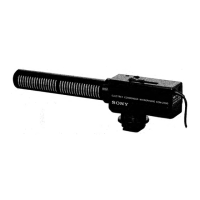

 To Next Page