
 Need help?
Do you have a question about the Specialized BICYCLE and is the answer not in the manual?
Checks for correct bike size, saddle, and handlebar adjustments for proper fit.
Emphasizes helmet use, safety equipment, and secure wheels.
Routine checks for fasteners, tires, wheels, and rims before riding.
Guidance for the initial ride, focusing on controls and bike handling.
General safety rules, helmet use, and body part awareness.
Rules for riding on roads, sharing with others, and obeying traffic laws.
Guidelines for riding off-road, including terrain, gear, and trail etiquette.
Precautions and adjustments for riding in wet conditions.
Safety advice for riding in low light conditions, including reflectors and lights.
Warnings and advice for high-risk riding styles.
Risks and considerations when altering the bike with new parts.
How to measure and check standover height for proper bicycle fit.
Adjusting saddle height, fore/aft position, and angle for comfort.
Adjusting handlebar height and angle for optimal rider position.
Positioning brake and shift levers for comfortable reach.
Adjusting brake lever reach for riders with smaller hands.
Explains wheel security, removal, and installation.
Detailed procedures for removing and installing front and rear wheels.
Step-by-step guide for installing front wheels with disc or rim brakes.
Procedures for correctly removing rear wheels with disc or rim brakes.
Procedures for correctly installing rear wheels with disc or rim brakes.
Using the seat post cam action binder for secure adjustment.
Overview of brake types, controls, and features for safe operation.
Explains braking action, modulation, and weight transfer.
Explains gear systems and shifting techniques.
Details components and operation of internal gear hub systems.
Discusses toe overlap, pedal types, and safe use of toeclips/clipless pedals.
Maintenance, adjustment, and safe use of suspension systems.
Covers tire types, pressure, valve types, and puncture repair.
Recommended maintenance schedules for break-in, pre-ride, and post-ride checks.
Procedures for checking and inspecting the bike after a crash.
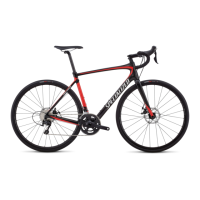
Intended use and limitations of high-performance road bikes.
Bikes for paved roads, gravel, and improved trails.
Use cases for cyclo-cross bikes, including terrain and racing.
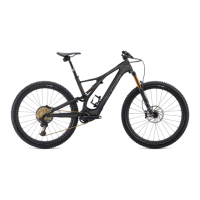
Bikes for rough trails, technical areas, and small jumps.
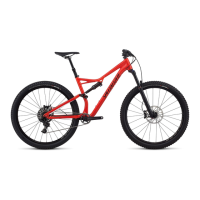
All-mountain bikes for rough terrain, obstacles, and moderate jumps.
Bikes for extreme riding, high speeds, and aggressive terrain.
Dirt jump bikes for jumps, ramps, and skate parks.
Bikes for children, emphasizing supervision and safe areas.
Explains that all parts have a finite life and continued use can be hazardous.
Importance of frequent inspection and service for high-performance bikes.
Properties of steel, aluminum, titanium, and their use in frames.
Discusses metal characteristics like corrosion resistance, ductility, and density.
Explains metal fatigue as accumulated damage leading to failure.
Identifies signs of potential failure like cracks, corrosion, and noises.
Explains composite materials, their properties, and advantages.
Guides on inspecting composite parts for cracks and delamination.
Identifies creaking noises as potential warnings of cracks or delamination.
Describes how coaster brakes are activated by reversing pedal rotation.
Emphasizes coaster brake adjustment requires special tools and dealer service.
 General
| Brand | Specialized |
|---|---|
| Model | BICYCLE |
| Category | Bicycle |
| Language | English |


 To Next Page