6
could pitch you over the handlebars. Applying brakes too hard can lock up a
wheel, which could cause you to lose control and fall. Skidding is an example of
what can happen when a wheel locks up.
If your bicycle has toeclips or clipless pedals, practice getting in and out of the
pedals. See paragraph B.4 above and Section 4.E.4.
If your bike has suspension, familiarize yourself with how the suspension
responds to brake application and rider weight shifts. See paragraph B.6 above
and Section 4.F.
Practice shifting the gears (see Section 4.D). Remember to never move the
shifter while pedaling backward, nor pedal backwards immediately after having
moved the shifter. This could jam the chain and cause serious damage to the
bicycle.
Check out the handling and response of the bike; and check the comfort.
If you have any questions, or if you feel anything about the bike is not as it
should be, consult your dealer before you ride again.
2. Safety
A. The Basics
devices. It is your responsibility to familiarize yourself with the laws
of the area where you ride and to comply with all applicable laws,
including properly equipping yourself and your bike as the law requires.
Observe all local bicycle laws and regulations. Observe regulations
about bicycle lighting, licensing of bicycles, riding on sidewalks, laws
regulating bike path and trail use, helmet laws, child carrier laws, special
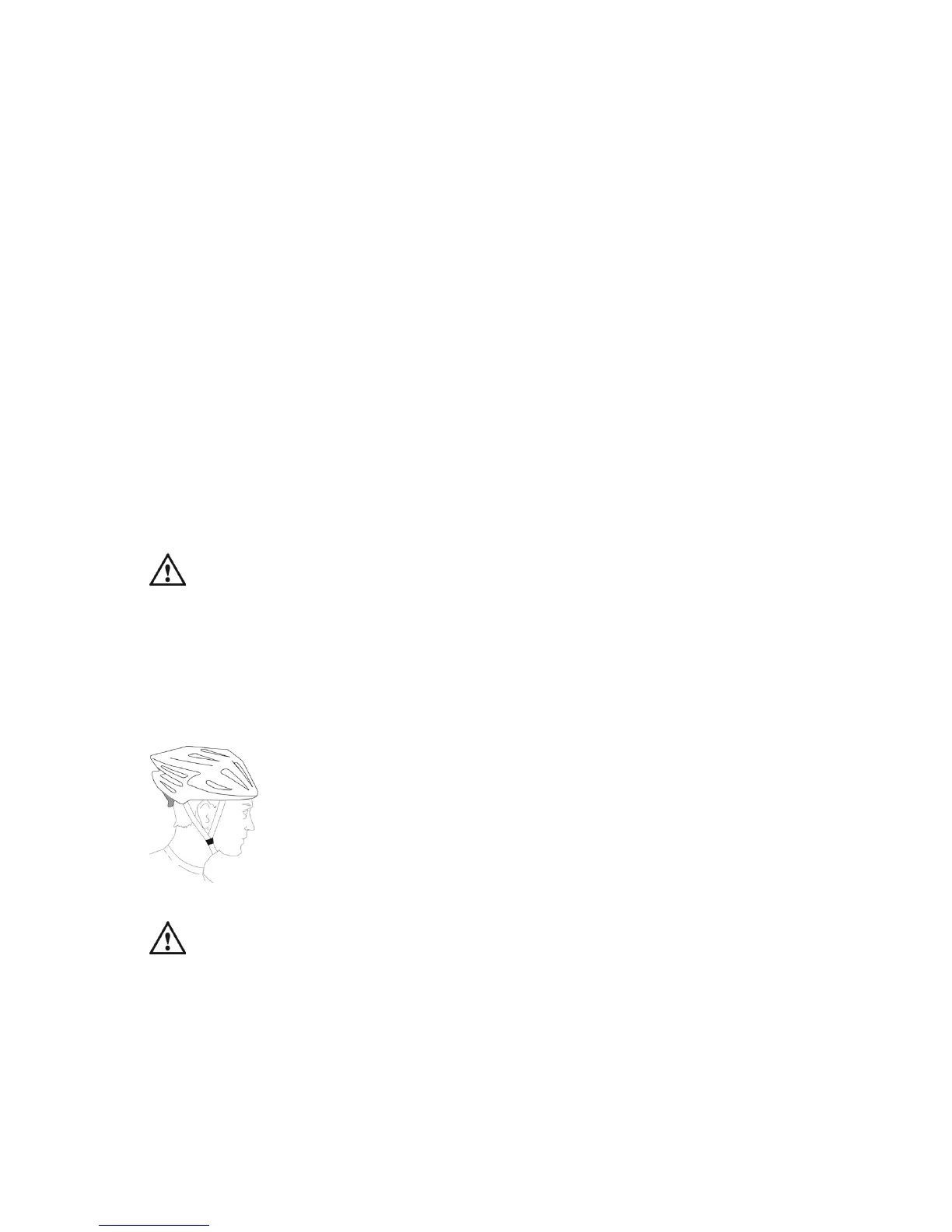
1. Always wear a cycling helmet which meets the latest
certication standards and is appropriate for the type of riding you
do. Always follow the helmet manufacturer’s instructions for t,
use and care of your helmet. Most serious bicycle injuries involve
head injuries which might have been avoided if the rider had worn
an appropriate helmet.
WARNING: Failure to wear a helmet when riding may result in serious
injury or death.
2. Always do the Mechanical Safety Check (Section 1.C) before you get on a
bike.
3. Be thoroughly familiar with the controls of your bicycle: brakes (Section
4.C.); pedals (Section 4.E.); shifting (Section 4.D.)
4. Be careful to keep body parts and other objects away from the sharp teeth
of chainrings, the moving chain, the turning pedals and cranks, and the spinning
wheels of your bicycle.
5. Always wear:





 To Next Page