INSTALLATION, OPERATION and MAINTENANCE MANUAL | 21
Plate Construction
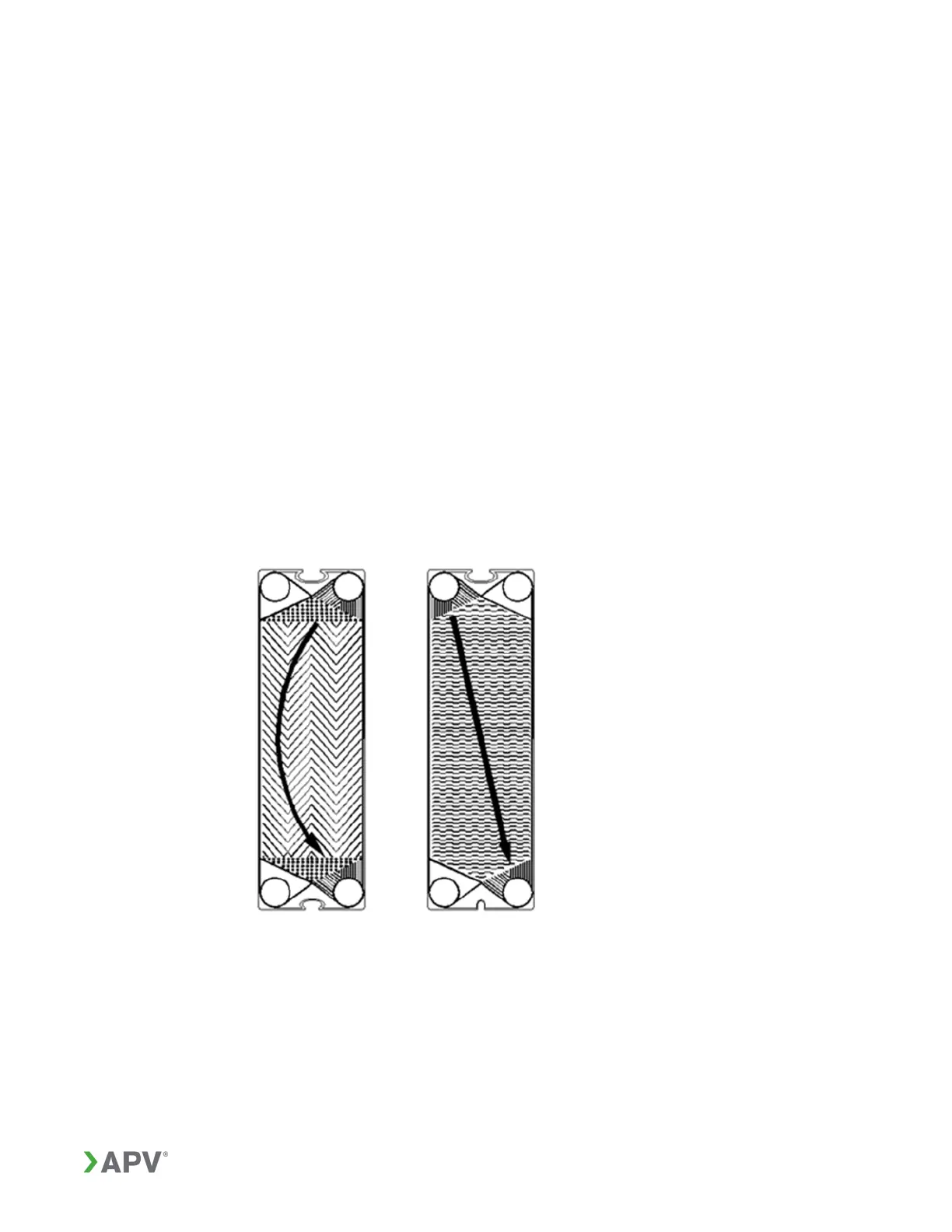
All plates are designated as either diagonal flow or vertical flow (Figure 9) based on
their flow pattern. Vertical flow plates have both flow inlet and outlet ports on the
same side, e.g., left side for the hot medium and right side for the cold medium. For
diagonal flow plates, the fluid enters in one corner and exits in the diametrically
opposite corner. Plate packs consisting of vertical flow plates require only one type of
plate, while packs using diagonal flow plates require a left hand and a right hand
plate to form a flow channel.
Plates are pressed in thicknesses between 0.35mm – 0.9mm (0.014 in. and 0.035 in.) in
a variety of materials (Plate Material section). The plate corrugation pattern alternates
from plate to plate to provide support at the points of contact. One type of corrugation
pattern looks like a washboard. It provides a wide gap between plates with contact
points about every 1 to 3 square inch of heat transfer surface area.
Another design is the chevron pattern of relatively shallow corrugations with support
provided at peak/peak contact. Alternate plates are arranged so that corrugations cross
to provide contact points for every 0.2 to 1 square inch of surface. This greater density
of contact points in the chevron pattern allows a higher differential operating pressure
for a given plate thickness than the washboard pattern.
Figure 9: Vertical flow Diagonal flow



 To Next Page