Important Points About Taking Measurements
Grounding
If the user's body retains an electrical charge, or highly accurate measurements are
required, ground the earth terminal of this device. Also, if the charged object is expected to
have a large charge, be sure to ground the device to avoid breakdown due to discharge.
Adjusting the Measurement Distance
The strength of the electrical field of a charged object changes with the distance between
the charged object and the sensor portion of the measuring instrument. This device has
been calibrated with a distance of 30mm between a test charged object (200mm
2
metal
plate) and the meter. Consequently, when measuring it is necessary to conform to a
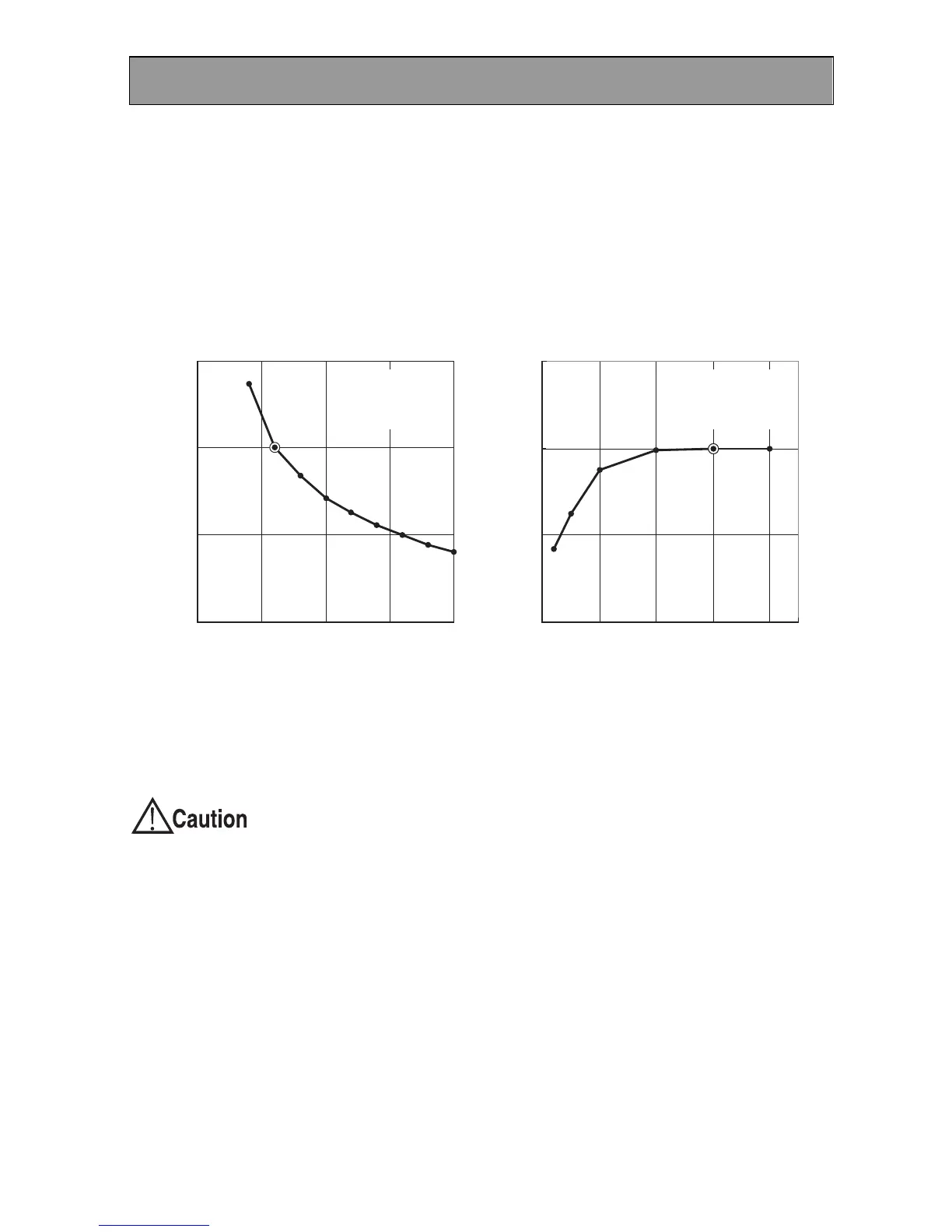
measuring distance of 30mm. Move the meter so that the illuminated point on the charged
object emitted by the pointer (red LED) is sharpest. If such a distance cannot be attained,
correct the potential reading according to Figure 1.
If the distance is more than the recommended measuring distance of 30mm, and the
displayed potential exceeds 19.99kV, do not move the meter any closer to the charge
object.
If the meter is too close to the charged body, there is the danger of an
electrical discharge. This may cause a breakdown of the device.
Influence of the size of the charged object
The measured potential changes according to the field strength concentrated in the
electrode of the sensor portion of the meter and the size of the charged object. In particular,
if the charged object is smaller than the test charged object used during calibration
(200mm
2
), there is a large discrepancy in the measured value and an error can occur in the
resulting value. if this is the case, you can roughly correct the value according to Fig. 2.
Influence of other objects
If there are other objects near or behind the charged object, the displayed measurement is
smaller than the actual potential. If this is the case, correct the measurement in light of the
shape of the electrical field, or put as much distance as possible between the charged
object being measured and other objects.
Influence of charged particles etc.
Powerfully charged objects impose a charge on particles and create an ionic space. If
charged particles etc. adhere directly to the electrode of the meter, measurement errors will
occur. This phenomenon occurs when a large amount of fluff adheres to the charged object
or large amounts of dust are in the vicinity.


 To Next Page
 Loading...