Page 7
CONNECTION TO LIQUID NITROGEN SUPPLY
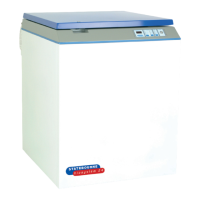
The Biosystem Series refrigerators should be supplied with liquid nitrogen ONLY, from a liquid cylinder or bulk
tank operating at between 10psiG and 20psiG maximum.
Operating pressures in excess of this will increase transfer losses and could cause the liquid level in the sensor
tube to fluctuate and send false signals to the controller, thus causing the refrigerator to underfill.
If the supply pressure were to exceed the lifting pressure of the Biosystem’s own relief devices the entire
contents of the supply vessel could be discharged, causing a hazard in the area of the refrigerator and
dramatically increasing operating costs.
The liquid fill connection on the refrigerator is ½”BSPP female and incorporates a filter and in-line relief valve
which should not be removed or by-passed while in service.
Before connecting to the Biosystem refrigerator the supply hose and, where applicable the super insulated
vacuum line should be thoroughly purged with warm nitrogen gas to remove any moisture which may
contaminate the seats of the solenoid valves or sensor probes with ice particles. Connections should be free
from grease and dirt and checked for leaks.
To minimise transfer losses, supply lines should be kept as short as possible and insulated with a suitable
material.
A shut off valve from the supply vessel should be located close to the Biosystem refrigerator for use in
emergencies and for maintenance purposes. Care should be taken to include a suitable pressure relief device
between any two shut off valves as any liquid trapped in the line will expand by more than 800 times as it
warms up and could burst the pipe or fracture one of the couplings.
INITIAL FILL
Important:-
The initial fill must be carried out with the lid open in order to avoid possible permanent
damage to the lid assembly.
When filling a warm vessel to operate in liquid phase, the fill should be carried out in stages due to the massive
amounts of cold gas formed which could cause ice build ups around the venting area at the rear of the vessel
which is in the proximity of the thermocouple. Ice build up in this area could cause damage to the thermocouple
when the lid is opened and so is to be avoided.
The initial liquid phase fill on a Biosystem 24 for example will take about 3 hours if allowed to fill continuously. It
is strongly recommended that the refrigerator is allowed to fill in cycles of about one hour with intervals of one
hour in between to allow the vessel to settle.



 To Next Page