• 7 •
7. For a positive-ground vehicle, connect the charger’s NEGATIVE (BLACK)
clamp to the NEGATIVE (NEG, N, -) battery post. Next, connect the
charger’s POSITIVE (RED) clamp to the vehicle chassis or engine block
away from the battery. NEVER connect any clamps to the carburetor, fuel
lines or sheet-metal body parts.
8. Connect the charger to an electrical outlet.
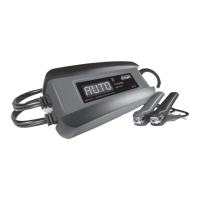
9. When the charger starts, the GREEN LED will be solid, and the display
will show ANALYZING BATTERY while the charger determines that the
battery is properly connected, the condition of the battery, and whether
the battery is 6V or 12V.
10. Monitor the progress of the charge by pressing the display button on the front
of the unit. When the battery is fully charged, the GREEN LED will pulse.
11. When charging is complete, disconnect the charger from the AC power,
remove the clamps from the vehicle’s chassis, and then remove the clamp
from the battery terminal.
CHARGING A BATTERY OUTSIDE OF THE VEHICLE
1. Place battery in a well-ventilated area.
2. Clean the battery terminals.
3. Connect a 24-inch long, 6-gauge (AWG) insulated battery cable to the
NEGATIVE (NEG, N, -) battery post (i.e., jumper cable) (not provided).
4. Connect the POSITIVE (RED) clamp to the POSITIVE (POS, P, +)
battery post.
5. Position yourself and the “negative post extension” cable as far away
from the battery as possible, and connect the NEGATIVE (BLACK) clamp
to the cable’s free end.
6. Connect the charger to the electrical outlet.
7. When the charger starts, the GREEN LED will be solid, and the display
will show ANALYZING BATTERY while the charger determines if the
battery is properly connected, the condition of the battery, and whether
the battery is 6V or 12V.
8. Monitor the progress of the charge by pressing the display button on
the front of the unit. When the battery is fully charged, the GREEN LED
will pulse.
9. When charging is complete, disconnect the charger from the AC power,
disconnect the negative clamp, and nally the positive clamp.
10. A marine (boat) battery must be removed and charged on shore.



 To Next Page