EasyManua.ls Logo

Superior IO-360 SERIES - User Manual

Superior IO-360 SERIES
114 pages
Print Icon
To Next Page IconTo Next Page
Loading...
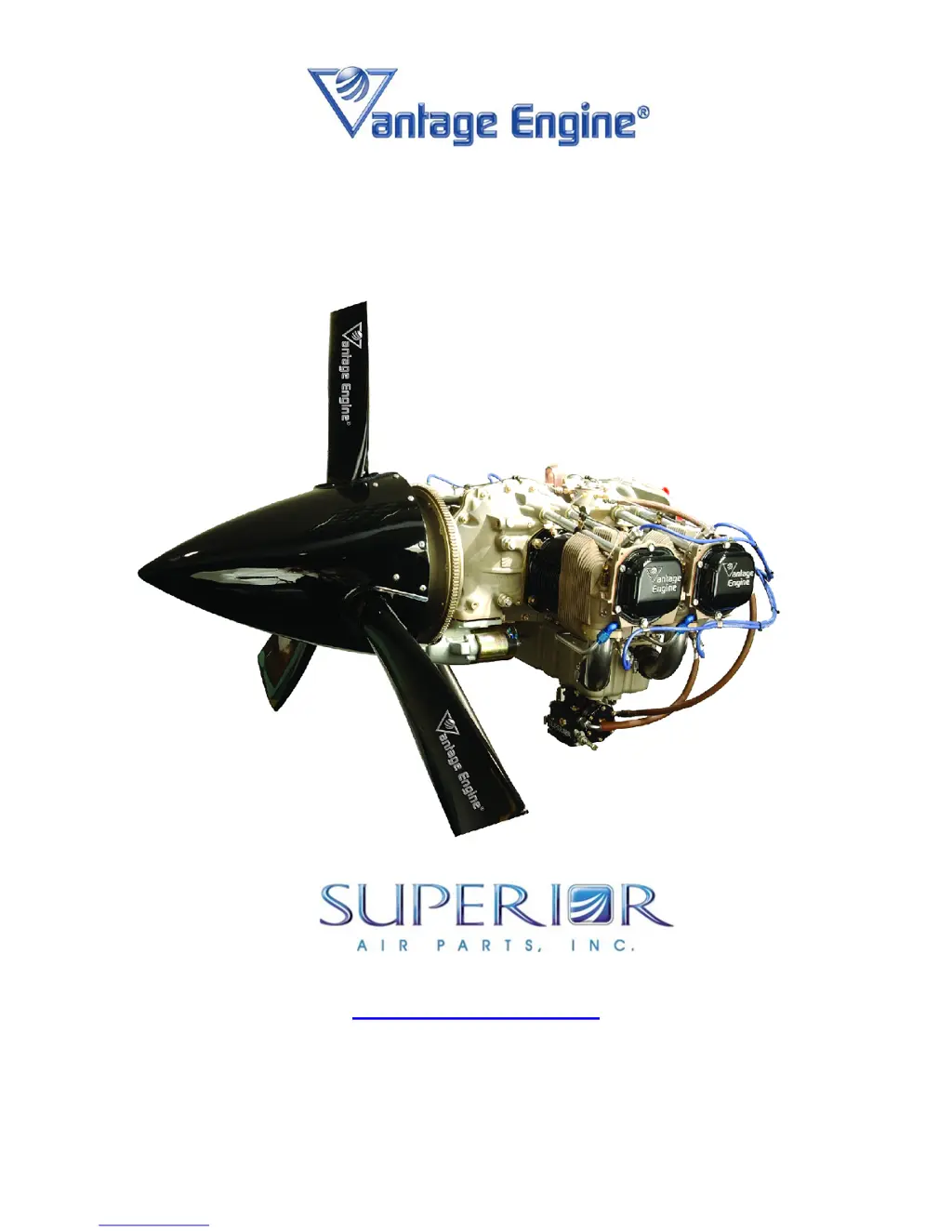
O-360 & IO-360 SERIES ENGINES
INSTALLATION & OPERATION MANUAL
621 South Royal Lane, Suite 100 / Coppell, TX 75019 / 800-277-5168
www.superior-air-parts.com
P/N SVIOM01 Revision A, March, 2004
FAA Approved

Table of Contents

Other manuals for Superior IO-360 SERIES

Questions and Answers

Summary

Disclaimer of Warranties and Limitations of Liability

Revision History

Introduction

About This Manual

Provides guidance for installation and operation of Superior Vantage Engines.

Related Publications

Lists other engine and accessory publications for reference.

Installation Approval Requirements

Details warranty conditions and technical approval for engine installation.

Obtaining Service Information

Provides resources for downloading or purchasing engine manuals and service info.

Chapter 1 Engine Description

1. GENERAL DESCRIPTION

Describes the O-360 and IO-360 series engines and their components.

2. CONTINUED AIRWORTHINESS

Outlines installation, operation, and maintenance requirements for continued airworthiness.

3. MODEL DESIGNATIONS

Explains how model numbers identify engine configuration using Figure 1-1.

Fuel System Type

Defines fuel system types (IO and O) based on engine configuration.

Cylinder Type

Details the cylinder type and displacement for the engine series.

Model Suffix

Explains how model suffixes denote detailed engine configuration.

4. ENGINE COMPONENTS GENERAL DESCRIPTION

Lists components and assemblies of the O-360 and IO-360 engines.

B. Specifications

Refers to tables for manufacturer's physical specifications.

5. FEATURES AND OPERATING MECHANISMS

Details features and operating mechanisms like crankshaft, connecting rods, etc.

Chapter 2 Airworthiness Limitations

1. MANDATORY REPLACEMENT TIME

States no mandatory replacement times for type certification without service bulletins.

2. MANDATORY INSPECTION INTERVALS

States no mandatory inspection intervals for type certification without service bulletins.

3. OTHER MANDATORY INTERVALS OR PROCEDURES

States no other mandatory inspection/replacement procedures for type certification without service bulletins.

4. DISTRIBUTION OF CHANGES TO AIRWORTHINESS

Explains how changes to this chapter require FAA approval and are published in service bulletins.

Chapter 3 Aircraft; Engine Integration Considerations

1. GENERAL

Discusses design practices for engine integration with airframe and propeller.

2. INDUCTION SYSTEM

Details the importance and design of induction systems for performance and longevity.

A. General Induction System Design

Emphasizes clean, cool intake air and pressure for optimal performance and avoiding detonation.

B. Intake Air Requirements and Filtration

Covers filtration needs, particle size, and airflow velocity for intake systems.

C. Carburetor Heat

Explains the need for carburetor heat to prevent icing and its design considerations.

D. Alternate Air Source

Discusses providing an alternate air source for fuel injected engines.

E. Backfire Tolerance

Requires induction systems to withstand backfire events without structural failure or fire.

3. FUEL SYSTEM

Highlights the impact of fuel system design on performance and longevity.

A. Fuel System Requirements and Filtration

Details fuel pump requirements, filtration, and vapor formation prevention.

B. General Fuel System Design

Discusses designing fuel systems to avoid restrictions and vapor lock.

C. Carburetors

Describes carburetor systems, controls, and maintenance.

D. Fuel Injection Systems, Port Type

Explains fuel injection systems, servos, controls, and priming.

E. Fuels

Specifies certified fuel grades and octane requirements.

4. ENGINE COOLING

Details the significance of engine cooling for performance and longevity.

A. General Cooling System Design

Explains air-cooled design, baffles, and cowl airflow for cooling.

B. Airside Heat Rejection

Covers heat rejection from cylinders and crankcase via cooling air.

C. Oil Heat Rejection

Discusses oil cooling via air-to-fluid heat exchangers and sizing considerations.

D. Accessory Cooling

Addresses cooling requirements for engine accessories.

5. EXHAUST SYSTEM

Outlines the role and design of exhaust systems for safety and performance.

A. Health and Safety Issues

Covers carbon monoxide risks, airtightness, and fire hazards from exhaust systems.

B. Exhaust System Design and Sizing

Discusses various exhaust system styles and their performance implications.

(1.) Exhaust Pipe Exits

Specifies positioning of exhaust exits for safety and to prevent re-entry.

(2.) Limit Backpressure

Advises on limiting backpressure through piping design for engine performance.

(3.) Shrouds and Thermal Protection

Covers shielding thermally sensitive components from exhaust heat.

(4.) Exhaust System Support

Details support requirements for exhaust systems to prevent vibration stress.

(5.) Joint Design

Discusses joint design for installation ease and thermal growth.

(6.) EGT Probes

Explains the addition and location of EGT probes for engine management.

C. Exhaust System Materials

Recommends corrosion-resistant materials for exhaust pipes.

D. Exhaust Gaskets

Recommends metal gaskets for exhaust systems for better sealing and thermal conductivity.

6. LUBRICATION SYSTEM

Explains the role of the lubrication system for engine operation and longevity.

A. Lubricating Oil Requirements

Specifies oil grades, usage during break-in, and filter maintenance.

B. Lubricating System Components

Details components like oil sump, oil cooler circuit, and pressure control.

(1.) Oil Sump

Describes the wet sump design and capacity.

(2.) Oil Pump and Pressure Control Valve

Explains the gear pump and pressure control valve for oil distribution.

(3.) Vernatherm and Oil Cooler

Discusses automatic oil temperature control valves and oil cooler circuits.

C. Crankcase Ventilation

Covers crankcase breather circuits for pressure control and overboard venting.

7. PROPELLER ATTACHMENT

Details propeller attachment to the crankshaft using a modified flange.

8. ELECTRICAL SYSTEM

Outlines the engine's electrical system duties: ignition, starting, and power supply.

A. Ignition System

Describes the dual ignition system with impulse magnetos and spark plugs.

B. Engine Starting System

Details the standard 12-volt starter and its connection.

C. Electrical System

Discusses alternator installation responsibility and mounting pads.

9. ENGINE CONTROLS

Covers required controls for operating the engine, including mechanical and fuel controls.

A. Throttle and Mixture Control

Specifies requirements for mechanical throttle and mixture control systems.

B. Propeller Control

Details mechanical control requirements for propeller governors on constant speed props.

C. Ignition and Starter Switch

Outlines requirements for ignition and starter switches.

D. Engine Primer

Explains priming methods for fuel injected and carbureted engines.

E. Carburetor Heat Control

Describes the mechanical control for carburetor heat.

F. Alternate Air Control

Details the mechanical control for alternate induction air systems.

10. ENGINE ACCESSORIES

Lists provided and optional accessories for the engines.

A. Supplied Accessories

Lists standard accessories included with the Vantage Engines.

B. Accessory Drive Data

Refers to Table 3-1 for accessory drive data.

C. Accessory; Vacuum Pump

Describes the drive pad for vacuum pumps or alternators.

D. Alternator

Details alternator mounting, drive pulley, and cooling considerations.

E. Propeller Governor

Describes the drive pad for propeller governors and lubrication.

11. ENGINE MOUNTING

Discusses engine mounting styles and considerations for airframe integration.

A. Mount Design and Construction

Covers engine mount design for conventional rear ring mounts, including vibration isolation.

B. Engine CG and Moment of Inertia

Specifies engine weight, CG location, and moments of inertia.

C. Engine Mount Design Loads

Details load factors and limits for engine mounts per FAR 23.

D. Engine Mount Vibration

Discusses vibratory loads, isolators, and ensuring airframe natural frequencies don't match engine forcing functions.

Chapter 4 Engine Installation

1. GENERAL INSTRUCTIONS

Provides general guidance for engine installation practices.

2. PREPARING ENGINE FOR SERVICE

Details steps for preparing engines preserved for storage for service.

3. INSTALLATION OF ENGINE

Covers engine installation per airframe manufacturer's instructions.

4. INSTRUMENTATION CONNECTIONS

Describes accommodations for engine monitoring instrumentation.

Chapter 5 Special Procedures

1. GENERAL BREAK-IN PROCEDURES

Outlines procedures for satisfactory ring seating and long cylinder life.

2. SPECIAL TOOLS AND EQUIPMENT

Lists standard aviation shop tools and suitability of aircraft as test stands.

3. BREAK-IN PROCEDURES

Details crucial steps before, during, and after engine break-in.

A. Prior to Break-In Start-Up

Steps for pre-oiling, checking instruments, and oil sump preparation.

B. Break-In Ground Run

Procedures for ground runs, RPM limits, and checking for leaks.

C. Break-In Flight Operation

Guidelines for flight operation during break-in, including power settings and mixture.

D. Post Break-In Procedures

Steps after break-in, including oil change and inspection.

4. GENERAL INSPECTION CHECK

Outlines periodic inspection procedures for the engine only.

5. DAILY PRE-FLIGHT INSPECTION

Describes the pre-flight check of the aircraft's general condition before the first flight.

Chapter 6 Normal Operating Procedures

1. GENERAL

States procedures optimize engine life, economy, and operation.

2. ENGINE OPERATION AND LIMITS

Lists operational limits and parameters found in Model Specification Data.

3. OPERATION INSTRUCTIONS

Provides instructions for operating the engines after initial break-in.

A. Preflight

Refers to daily pre-flight inspection procedures.

B. Starting Procedures

Provides recommended procedures for starting the engine.

C. Cold Weather Starting

Details procedures for starting the engine in cold weather conditions.

D. Ground Run and Warm-Up

Outlines precautions for ground runs and warm-up to prevent overheating.

E. Pre-Takeoff Ground Check

Details the pre-takeoff ground check procedures for fixed-wing aircraft.

F. Operation In Flight

Provides guidance for in-flight operation and control movements.

G. Use of Carburetor Heat Control

Explains the use of carburetor heat control under various conditions.

Chapter 7 Abnormal Operating Procedures

1. GENERAL

Provides fault isolation procedures for troubleshooting engine issues.

2. ENGINE WILL NOT START

Lists probable causes and corrections for engine starting failures.

3. ROUGH IDLING

Details probable causes and corrections for rough idling issues.

4. ENGINE NOT ABLE TO DEVELOP FULL POWER

Lists probable causes and corrections for insufficient power output.

5. ROUGH ENGINE OPERATION

Covers probable causes and corrections for general rough engine operation.

6. LOW POWER & ENGINE RUNS ROUGH

Lists causes and corrections for low power and rough running conditions.

7. LOW OIL PRESSURE ON ENGINE GAGE

Lists probable causes and corrections for low oil pressure indications.

8. HIGH OIL TEMPERATURE

Details probable causes and corrections for high oil temperature.

9. EXCESSIVE OIL CONSUMPTION

Lists probable causes and corrections for excessive oil consumption.

Chapter 8 Servicing Requirements

1. GENERAL

Specifies fuel and lubricant requirements for operating Vantage engines.

2. LUBRICANTS

Lists oil grades and sump capacity for the engines.

3. FUELS

Specifies certified fuel grades and octane requirements.

4. CONSUMABLES

Lists spark plugs and oil filters with part numbers.

Chapter 9 Engine Preservation And Storage

1. TEMPORARY STORAGE

Details procedures for preparing engines for temporary storage.

A. Preparation for Storage

Covers oil draining, filter replacement, and cylinder preservation.

2. INDEFINITE STORAGE

Outlines procedures for preserving engines for indefinite storage.

A. Preparation for Storage

Details steps for indefinite storage preparation, including dehydrators.

3. INSPECTION PROCEDURES

Describes inspection requirements for engines in indefinite storage.

4. RETURNING AN ENGINE TO SERVICE AFTER STORAGE

Provides steps for returning a stored engine to flyable status.

Summary

Disclaimer of Warranties and Limitations of Liability

Revision History

Introduction

About This Manual

Provides guidance for installation and operation of Superior Vantage Engines.

Related Publications

Lists other engine and accessory publications for reference.

Installation Approval Requirements

Details warranty conditions and technical approval for engine installation.

Obtaining Service Information

Provides resources for downloading or purchasing engine manuals and service info.

Chapter 1 Engine Description

1. GENERAL DESCRIPTION

Describes the O-360 and IO-360 series engines and their components.

2. CONTINUED AIRWORTHINESS

Outlines installation, operation, and maintenance requirements for continued airworthiness.

3. MODEL DESIGNATIONS

Explains how model numbers identify engine configuration using Figure 1-1.

Fuel System Type

Defines fuel system types (IO and O) based on engine configuration.

Cylinder Type

Details the cylinder type and displacement for the engine series.

Model Suffix

Explains how model suffixes denote detailed engine configuration.

4. ENGINE COMPONENTS GENERAL DESCRIPTION

Lists components and assemblies of the O-360 and IO-360 engines.

B. Specifications

Refers to tables for manufacturer's physical specifications.

5. FEATURES AND OPERATING MECHANISMS

Details features and operating mechanisms like crankshaft, connecting rods, etc.

Chapter 2 Airworthiness Limitations

1. MANDATORY REPLACEMENT TIME

States no mandatory replacement times for type certification without service bulletins.

2. MANDATORY INSPECTION INTERVALS

States no mandatory inspection intervals for type certification without service bulletins.

3. OTHER MANDATORY INTERVALS OR PROCEDURES

States no other mandatory inspection/replacement procedures for type certification without service bulletins.

4. DISTRIBUTION OF CHANGES TO AIRWORTHINESS

Explains how changes to this chapter require FAA approval and are published in service bulletins.

Chapter 3 Aircraft; Engine Integration Considerations

1. GENERAL

Discusses design practices for engine integration with airframe and propeller.

2. INDUCTION SYSTEM

Details the importance and design of induction systems for performance and longevity.

A. General Induction System Design

Emphasizes clean, cool intake air and pressure for optimal performance and avoiding detonation.

B. Intake Air Requirements and Filtration

Covers filtration needs, particle size, and airflow velocity for intake systems.

C. Carburetor Heat

Explains the need for carburetor heat to prevent icing and its design considerations.

D. Alternate Air Source

Discusses providing an alternate air source for fuel injected engines.

E. Backfire Tolerance

Requires induction systems to withstand backfire events without structural failure or fire.

3. FUEL SYSTEM

Highlights the impact of fuel system design on performance and longevity.

A. Fuel System Requirements and Filtration

Details fuel pump requirements, filtration, and vapor formation prevention.

B. General Fuel System Design

Discusses designing fuel systems to avoid restrictions and vapor lock.

C. Carburetors

Describes carburetor systems, controls, and maintenance.

D. Fuel Injection Systems, Port Type

Explains fuel injection systems, servos, controls, and priming.

E. Fuels

Specifies certified fuel grades and octane requirements.

4. ENGINE COOLING

Details the significance of engine cooling for performance and longevity.

A. General Cooling System Design

Explains air-cooled design, baffles, and cowl airflow for cooling.

B. Airside Heat Rejection

Covers heat rejection from cylinders and crankcase via cooling air.

C. Oil Heat Rejection

Discusses oil cooling via air-to-fluid heat exchangers and sizing considerations.

D. Accessory Cooling

Addresses cooling requirements for engine accessories.

5. EXHAUST SYSTEM

Outlines the role and design of exhaust systems for safety and performance.

A. Health and Safety Issues

Covers carbon monoxide risks, airtightness, and fire hazards from exhaust systems.

B. Exhaust System Design and Sizing

Discusses various exhaust system styles and their performance implications.

(1.) Exhaust Pipe Exits

Specifies positioning of exhaust exits for safety and to prevent re-entry.

(2.) Limit Backpressure

Advises on limiting backpressure through piping design for engine performance.

(3.) Shrouds and Thermal Protection

Covers shielding thermally sensitive components from exhaust heat.

(4.) Exhaust System Support

Details support requirements for exhaust systems to prevent vibration stress.

(5.) Joint Design

Discusses joint design for installation ease and thermal growth.

(6.) EGT Probes

Explains the addition and location of EGT probes for engine management.

C. Exhaust System Materials

Recommends corrosion-resistant materials for exhaust pipes.

D. Exhaust Gaskets

Recommends metal gaskets for exhaust systems for better sealing and thermal conductivity.

6. LUBRICATION SYSTEM

Explains the role of the lubrication system for engine operation and longevity.

A. Lubricating Oil Requirements

Specifies oil grades, usage during break-in, and filter maintenance.

B. Lubricating System Components

Details components like oil sump, oil cooler circuit, and pressure control.

(1.) Oil Sump

Describes the wet sump design and capacity.

(2.) Oil Pump and Pressure Control Valve

Explains the gear pump and pressure control valve for oil distribution.

(3.) Vernatherm and Oil Cooler

Discusses automatic oil temperature control valves and oil cooler circuits.

C. Crankcase Ventilation

Covers crankcase breather circuits for pressure control and overboard venting.

7. PROPELLER ATTACHMENT

Details propeller attachment to the crankshaft using a modified flange.

8. ELECTRICAL SYSTEM

Outlines the engine's electrical system duties: ignition, starting, and power supply.

A. Ignition System

Describes the dual ignition system with impulse magnetos and spark plugs.

B. Engine Starting System

Details the standard 12-volt starter and its connection.

C. Electrical System

Discusses alternator installation responsibility and mounting pads.

9. ENGINE CONTROLS

Covers required controls for operating the engine, including mechanical and fuel controls.

A. Throttle and Mixture Control

Specifies requirements for mechanical throttle and mixture control systems.

B. Propeller Control

Details mechanical control requirements for propeller governors on constant speed props.

C. Ignition and Starter Switch

Outlines requirements for ignition and starter switches.

D. Engine Primer

Explains priming methods for fuel injected and carbureted engines.

E. Carburetor Heat Control

Describes the mechanical control for carburetor heat.

F. Alternate Air Control

Details the mechanical control for alternate induction air systems.

10. ENGINE ACCESSORIES

Lists provided and optional accessories for the engines.

A. Supplied Accessories

Lists standard accessories included with the Vantage Engines.

B. Accessory Drive Data

Refers to Table 3-1 for accessory drive data.

C. Accessory; Vacuum Pump

Describes the drive pad for vacuum pumps or alternators.

D. Alternator

Details alternator mounting, drive pulley, and cooling considerations.

E. Propeller Governor

Describes the drive pad for propeller governors and lubrication.

11. ENGINE MOUNTING

Discusses engine mounting styles and considerations for airframe integration.

A. Mount Design and Construction

Covers engine mount design for conventional rear ring mounts, including vibration isolation.

B. Engine CG and Moment of Inertia

Specifies engine weight, CG location, and moments of inertia.

C. Engine Mount Design Loads

Details load factors and limits for engine mounts per FAR 23.

D. Engine Mount Vibration

Discusses vibratory loads, isolators, and ensuring airframe natural frequencies don't match engine forcing functions.

Chapter 4 Engine Installation

1. GENERAL INSTRUCTIONS

Provides general guidance for engine installation practices.

2. PREPARING ENGINE FOR SERVICE

Details steps for preparing engines preserved for storage for service.

3. INSTALLATION OF ENGINE

Covers engine installation per airframe manufacturer's instructions.

4. INSTRUMENTATION CONNECTIONS

Describes accommodations for engine monitoring instrumentation.

Chapter 5 Special Procedures

1. GENERAL BREAK-IN PROCEDURES

Outlines procedures for satisfactory ring seating and long cylinder life.

2. SPECIAL TOOLS AND EQUIPMENT

Lists standard aviation shop tools and suitability of aircraft as test stands.

3. BREAK-IN PROCEDURES

Details crucial steps before, during, and after engine break-in.

A. Prior to Break-In Start-Up

Steps for pre-oiling, checking instruments, and oil sump preparation.

B. Break-In Ground Run

Procedures for ground runs, RPM limits, and checking for leaks.

C. Break-In Flight Operation

Guidelines for flight operation during break-in, including power settings and mixture.

D. Post Break-In Procedures

Steps after break-in, including oil change and inspection.

4. GENERAL INSPECTION CHECK

Outlines periodic inspection procedures for the engine only.

5. DAILY PRE-FLIGHT INSPECTION

Describes the pre-flight check of the aircraft's general condition before the first flight.

Chapter 6 Normal Operating Procedures

1. GENERAL

States procedures optimize engine life, economy, and operation.

2. ENGINE OPERATION AND LIMITS

Lists operational limits and parameters found in Model Specification Data.

3. OPERATION INSTRUCTIONS

Provides instructions for operating the engines after initial break-in.

A. Preflight

Refers to daily pre-flight inspection procedures.

B. Starting Procedures

Provides recommended procedures for starting the engine.

C. Cold Weather Starting

Details procedures for starting the engine in cold weather conditions.

D. Ground Run and Warm-Up

Outlines precautions for ground runs and warm-up to prevent overheating.

E. Pre-Takeoff Ground Check

Details the pre-takeoff ground check procedures for fixed-wing aircraft.

F. Operation In Flight

Provides guidance for in-flight operation and control movements.

G. Use of Carburetor Heat Control

Explains the use of carburetor heat control under various conditions.

Chapter 7 Abnormal Operating Procedures

1. GENERAL

Provides fault isolation procedures for troubleshooting engine issues.

2. ENGINE WILL NOT START

Lists probable causes and corrections for engine starting failures.

3. ROUGH IDLING

Details probable causes and corrections for rough idling issues.

4. ENGINE NOT ABLE TO DEVELOP FULL POWER

Lists probable causes and corrections for insufficient power output.

5. ROUGH ENGINE OPERATION

Covers probable causes and corrections for general rough engine operation.

6. LOW POWER & ENGINE RUNS ROUGH

Lists causes and corrections for low power and rough running conditions.

7. LOW OIL PRESSURE ON ENGINE GAGE

Lists probable causes and corrections for low oil pressure indications.

8. HIGH OIL TEMPERATURE

Details probable causes and corrections for high oil temperature.

9. EXCESSIVE OIL CONSUMPTION

Lists probable causes and corrections for excessive oil consumption.

Chapter 8 Servicing Requirements

1. GENERAL

Specifies fuel and lubricant requirements for operating Vantage engines.

2. LUBRICANTS

Lists oil grades and sump capacity for the engines.

3. FUELS

Specifies certified fuel grades and octane requirements.

4. CONSUMABLES

Lists spark plugs and oil filters with part numbers.

Chapter 9 Engine Preservation And Storage

1. TEMPORARY STORAGE

Details procedures for preparing engines for temporary storage.

A. Preparation for Storage

Covers oil draining, filter replacement, and cylinder preservation.

2. INDEFINITE STORAGE

Outlines procedures for preserving engines for indefinite storage.

A. Preparation for Storage

Details steps for indefinite storage preparation, including dehydrators.

3. INSPECTION PROCEDURES

Describes inspection requirements for engines in indefinite storage.

4. RETURNING AN ENGINE TO SERVICE AFTER STORAGE

Provides steps for returning a stored engine to flyable status.

Superior IO-360 SERIES Specifications

General IconGeneral
ConfigurationHorizontally Opposed
Number of Cylinders4
Horsepower180-200 hp
Displacement360 cu. in.
Bore5.125 in
Stroke4.375 in
Compression Ratio8.5:1
FuelAvgas 100LL
Cooling TypeAir Cooled
Oil Capacity8 US quarts (7.6 liters)

Related product manuals