EasyManua.ls Logo

Sure Electronics TDA7498 - User Manual

Sure Electronics TDA7498
16 pages
Print Icon
To Next Page IconTo Next Page
Loading...
© 2004-2011 Sure Electronics Inc. AA-AB33184_Ver1.0
4 X 100Watt Class D Audio
Amplifier Board - TDA7498
Users Guide
Question and Answer IconNeed help?

Do you have a question about the Sure Electronics TDA7498 and is the answer not in the manual?

Summary

Chapter 1. Overview

1.1 Overview

Provides a general introduction to the 4*100W audio amplifier board and its class-D architecture.

1.2 Features

Details the key technical specifications and capabilities of the amplifier board.

1.3 Applications

Lists various use cases and scenarios where the amplifier board is suitable.

1.4 Benefits

Highlights the advantages and design merits of the audio amplifier board.

1.5 Quick Start

Guides users through the initial setup and connection procedures for the amplifier.

Chapter 2. Hardware Detail

2.1 Power Connection

Explains how to correctly connect the power supply to the amplifier board.

2.2 Input Connections

Describes the methods for connecting audio input signals to the amplifier.

2.3 Output Connections

Details how to connect speakers or other audio outputs to the amplifier.

2.4 LED Indicators

Explains the function and meaning of the power indicator LED on the board.

2.5 Volume Control

Details how to adjust the volume and describes gain settings for optimal performance.

2.6 Mode Selection

Explains how to set the amplifier's operating mode using DIP switches.

2.7 Notes & Warnings

Provides important notes, safety warnings, and operational precautions for the amplifier.

Chapter 3. Electrical Characteristics

Chapter 4. Mechanical Drawing

Chapter 5. Contact Us

Overview

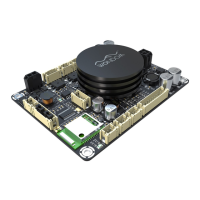
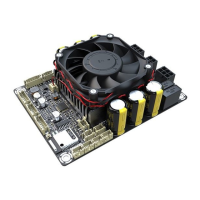
The Sure Electronics 4 x 100W Class D Audio Amplifier Board, model TDA7498, is a self-made audio amplifier designed for various applications requiring high-efficiency sound amplification. This board utilizes a Class D architecture with an integrated TDA7498 chip, enabling a single-channel 100W power output. Its high efficiency makes it particularly suitable for outdoor venues where power supply considerations are crucial.

The amplifier board is engineered with high-quality resistance and capacity components, including X7R ceramic capacitors and lower ESR electrolytic capacitors. These components are selected to achieve superior sound quality, characterized by a high signal-to-noise (S/N) ratio, low total harmonic distortion plus noise (THD+N), and a wide frequency response range. The design focuses on delivering excellent timber and overall audio performance.

Function Description:

The primary function of this device is to amplify audio signals. It operates as a 4 x 100W Class D audio amplifier, meaning it can drive four separate audio channels, each delivering up to 100 watts of power. The Class D architecture ensures high efficiency, minimizing power loss as heat and maximizing the power delivered to the speakers. This makes it an energy-efficient solution for audio amplification.

The board supports single-ended audio signal input, allowing for straightforward connection to various audio sources. It offers four selectable, fixed gain settings: nominally 25.6 dB, 31.6 dB, 35.1 dB, and 37.6 dB. These gain settings provide flexibility in matching the amplifier's output to the input signal level, optimizing performance and preventing signal clipping or distortion.

The amplifier board includes a power LED indicator, marked as "Power Indicator (D1)," which illuminates green when the device is powered up, providing a visual confirmation of its operational status.

Usage Features:

The amplifier board is designed for ease of use and flexible integration into various audio systems.

  • Power Connection: The board can be powered using either a jack (J12) or optional terminal blocks (J13). Users must pay close attention to polarity when connecting the power supply. Only one power connection method should be used at a time. The maximum supply voltage should be observed to prevent damage.
  • Input Connections: Audio signals can be input via RCA connectors (J6, J7, J10, J11 for channels 1, 2, 5, and 6 respectively) or optional terminal blocks (J1, J2, J4, J5). The board is designed to accept one group (dual channel) of audio signal at a time. It is crucial not to plug in or unplug RCA connectors while the amplifier is powered, as this can permanently damage the device.
  • Output Connections: Audio output to speakers can be made through either banana connectors (J21, J22, J23, J24 for channels 1 and 2; J29, J30, J31, J32 for channels 5 and 6) or optional terminal blocks (J15, J16, J19, J20). It is important not to connect more than one group of speakers to the audio output and to avoid connecting negative outputs of different channels together, as they belong to different NETs.
  • Gain Control: The amplifier features DIP switches (SW1, SW2, SW3) for setting the gain. The factory preset for K1 and K2 of SW1, SW2, and SW3 is ON, which corresponds to a "Weak" gain setting. This default setting helps prevent permanent chip damage from overheating if the input signal amplitude is over range. Users can adjust these switches to select different gain levels (Weak, Low, Medium, High) based on their specific application and input signal characteristics.
  • Mode Selection: The board offers three operational modes—Standby, Mute, and Play—which are controlled by the DIP switch SW4.
    • Standby mode: All circuits are turned off, resulting in very low current consumption. This mode is ideal for power saving when the amplifier is not in active use.
    • Mute mode: Inputs are connected to ground, and the positive and negative PWM outputs are at a 50% duty cycle. This mode silences the audio output without fully powering down the amplifier.
    • Play mode: The amplifiers are active, allowing for normal audio amplification.
  • Mounting: The board includes mounting holes, facilitating easy installation and secure fixing within an enclosure or system.

Maintenance Features:

Proper maintenance and adherence to safety precautions are essential for ensuring the longevity and optimal performance of the amplifier board.

  • Heat Dissipation: The product outputs high power, and adequate space for heat dissipation is necessary. Users should avoid touching the heat sink with their hands during operation, as it can become hot. The excellent heat dissipation design of the board aims to eliminate the need for an extra heat sink in most applications.
  • Power Supply Stability: To achieve better sound quality and prevent damage, using a stable power supply is recommended. An unstable power supply can worsen sound quality or even cripple the amplifier board.
  • Input Signal Management: Users should avoid equipping a pre-amplifier to the audio input, as the amplifier itself has powerful amplification capabilities. A high signal input from a pre-amplifier can burn out the amplifier chip.
  • Volume Control: When hooking up the amplifier, it is crucial to turn the volume output to the minimum. The volume can be readjusted once the user is sure that the amplifier is functioning properly. This practice helps protect both the amplifier and the speakers from sudden high-volume outputs.
  • Environmental Protection: The device should never be immersed in rain or any other humid environment to prevent fire or electric shock. It should also be protected from metal objects.
  • Physical Inspection: Before use, users should carefully read the manual and inspect the product to ensure it is intact, with no missing or damaged components or deformation.
  • Warranty: The warranty lapses if the product is damaged due to incorrect use or negligence. Adhering to the instructions in the manual is critical for maintaining warranty coverage.
  • Operational Conditions: The product should not be used in extreme conditions. The power supply range and heat sink performance are key distinguishing factors, and users should choose the appropriate product to meet their application needs.

Sure Electronics TDA7498 Specifications

General IconGeneral
ChipTDA7498
Channels2
Output Power100W
Power SupplyDC
Frequency Response20Hz - 20kHz
Total Harmonic Distortion (THD)< 0.1%
Efficiency> 90%
TypeClass D
Input Voltage14V to 39V DC
Output Impedance4-8 Ohm
Operating Voltage14V - 39V DC
Protection FeaturesOver-temperature, Over-current

Related product manuals