
 Need help?
Do you have a question about the SUREHATCH SH2000 COMBO and is the answer not in the manual?
Visual guide to selecting good quality eggs for incubation, avoiding malformed or dirty eggs.
Lists eggs with low hatch potential or those to be scrapped due to defects like cracks or soiled shells.
Guidelines for storing eggs up to 7 days, cleaning them properly, and handling with care before incubation.
Incubator must be indoors; maintain room temperature between 68-82°F, not exceeding 86°F.
Requires reliable 110V AC electricity; ensure a level floor and good room ventilation for air exchange.
Maintain 50-60% room humidity; use water pans or extractors as needed for optimal conditions.
Keep hatched chicks separate from incubators; maintain hygiene and restrict unauthorized access.
Chicken eggs require 21 days; transfer to hatcher on Day 18, with hatching typically on Day 21/22.
Maintain ideal temperature at 99.5°F; humidity 50-60% (Days 1-18) and 60-65% (Days 18-21).
Eggs must lose 12% weight; only fertile eggs hatch; check fertility after 10 days.
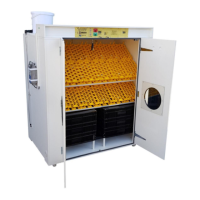
Details the water bucket, connection pipe, and the sensitive temperature/humidity sensor.
Describes the incubator control panel, auto ON/OFF switch, and humidity control air vents.
Identifies plastic egg trays for initial incubation and black hatching crates for later stages.
Explains the egg turning motor and the self-filling water pan for maintaining humidity.
Plug in the incubator and connect/fill the water bucket for automatic water supply.
Allow the incubator to heat up to the factory preset of 99.5°F (approximately 1 hour).
Explains the functions of the control panel buttons: Light, Temperature, and Humidity indicators.
Adjust humidity using air vents, water pans, or room controls to achieve the ideal 50-65% range.
Place eggs sharp end down; spread evenly across trays to ensure the automatic turner functions correctly.
Pre-warm eggs for 6-12 hours at 75-80°F for optimal temperature acclimatization before setting.
Incubator automatically turns eggs hourly; manual disengagement explained for loading eggs.
Internal light for viewing eggs or chicks; switch off after use to avoid affecting incubator function.
Emphasizes sanitation, sensor care, and disconnecting power before cleaning the incubator.
Check electricity, temperature, humidity, fan, and egg turner status daily for optimal performance.
Verify room conditions, ventilation, sunlight exposure, and the quality of eggs being incubated.
Maintain cleanliness, wash hands, disinfect equipment, and discard any smelly or rotten eggs.
Lists common symptoms of incubation failures like clear eggs, blood rings, dead embryos, and malformed chicks.
Addresses causes of infertile eggs such as male undernourishment, too few males, or diseased breeder flocks.
Covers issues like improper storage, temperature, humidity, ventilation, and breeder diseases affecting embryo survival.
Addresses causes of malformed chicks including humidity, ventilation, heredity, nutrition, and fumigation.
Focuses on issues like temperature, humidity, ventilation, and breeder flock health affecting chick development.
Identifies improper or excessive fumigation in the hatcher unit as a likely cause for abnormal down color.
Check power connection, auto-off switch, and diagnose faulty heating elements or temperature controller.
Address temperature controller/sensor faults and egg turner engagement or loading issues.
Diagnose humidity sensor faults due to water spills or incorrect readings from the sensor.
Provides contact details, website, email, and details warranty limitations and terms.
 General
| Brand | SUREHATCH |
|---|---|
| Model | SH2000 COMBO |
| Category | Accessories |
| Language | English |

 To Next Page