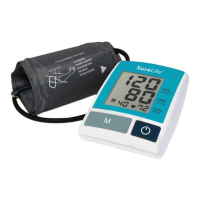
The SureLife® Arm Blood Pressure Monitor is a medical device designed for self-measurement of blood pressure and pulse rate. It is intended for use by individuals who wish to monitor their blood pressure at home. The device operates on an oscillometric measurement method, which detects the pressure oscillations caused by the arterial pulse.
Function Description
The primary function of the SureLife® Arm Blood Pressure Monitor is to measure systolic and diastolic blood pressure, as well as pulse rate. The device features a clear digital display that shows these values in mmHg for blood pressure and beats per minute for pulse rate. It also includes a memory function that stores past readings, allowing users to track their blood pressure trends over time. A unique feature of this monitor is its ability to detect irregular heartbeats, alerting the user to potential cardiac rhythm abnormalities. Additionally, it provides alerts for pulse rates that are either below normal (bradycardia) or above normal (tachycardia), offering a more comprehensive overview of cardiovascular health.
Usage Features
The SureLife® Arm Blood Pressure Monitor is designed for ease of use, featuring one-touch operation. To begin a measurement, the user simply presses the "Power/Start" button, and the cuff automatically inflates. The measurement process is fully automated, and once complete, the cuff deflates, and the results are displayed on the screen.
Proper preparation and positioning are crucial for accurate readings. Users are advised to avoid smoking, eating, drinking caffeinated beverages, or exercising for 30 minutes before taking a measurement. It is recommended to sit upright in a chair with both feet on the floor, relax, and avoid moving or talking during the measurement. Tight-fitting or thick clothing should be removed from the upper arm. The arm cuff should be securely wrapped around the upper left arm, with the elbow placed on a table and the palm facing upward. The cuff should be positioned so that it is at the same level as the heart, with 1-2 cm (or 1/2 inch) between the bottom of the cuff and the elbow joint.
The device includes a memory function that can store up to 99 sets of past readings. Users can view these readings by pressing the "M" button, which cycles through the stored data from the most recent to the oldest. This allows for convenient tracking of blood pressure over time. The memory function also allows for the deletion of all stored readings, providing flexibility for users who wish to clear their data.
The monitor is equipped with several indicators to enhance user experience. A low battery indicator alerts users when it's time to replace the batteries, ensuring the device remains operational. The display also shows a memory number, indicating which stored reading is currently being viewed.
Maintenance Features
To ensure the longevity and accurate performance of the SureLife® Arm Blood Pressure Monitor, several maintenance guidelines should be followed. The device should be stored away from direct sunlight, extreme temperatures, high humidity, and moisture.
Cleaning the unit is straightforward: a dry, soft cloth can be used, or a cloth lightly dampened with water if desired. It is important to avoid using alcohol, benzene, thinner, or other volatile liquids, as these can damage the unit. The arm cuff should not be washed or exposed to liquid.
For periods of extended non-use (more than 3 months), it is recommended to remove the batteries from the unit. This prevents potential battery leakage, which could damage the device. If the battery indicator shows low voltage, the batteries should be replaced promptly. When replacing batteries, ensure that the polarities are correctly aligned and that old and new batteries are not mixed.
In case of troubleshooting, the manual provides solutions for common issues such as no display, failure to inflate, rapid deflation, movement during measurement, signal interference, and incorrect results. If problems persist, users are advised to consult their store of purchase and refrain from disassembling the unit.


 To Next Page
 General
