SUTPHEN TOWERS, INC. 2012
Manual-2012
_SL75-SA75-SP70.docx
Page 28 of 55
8/31/2012
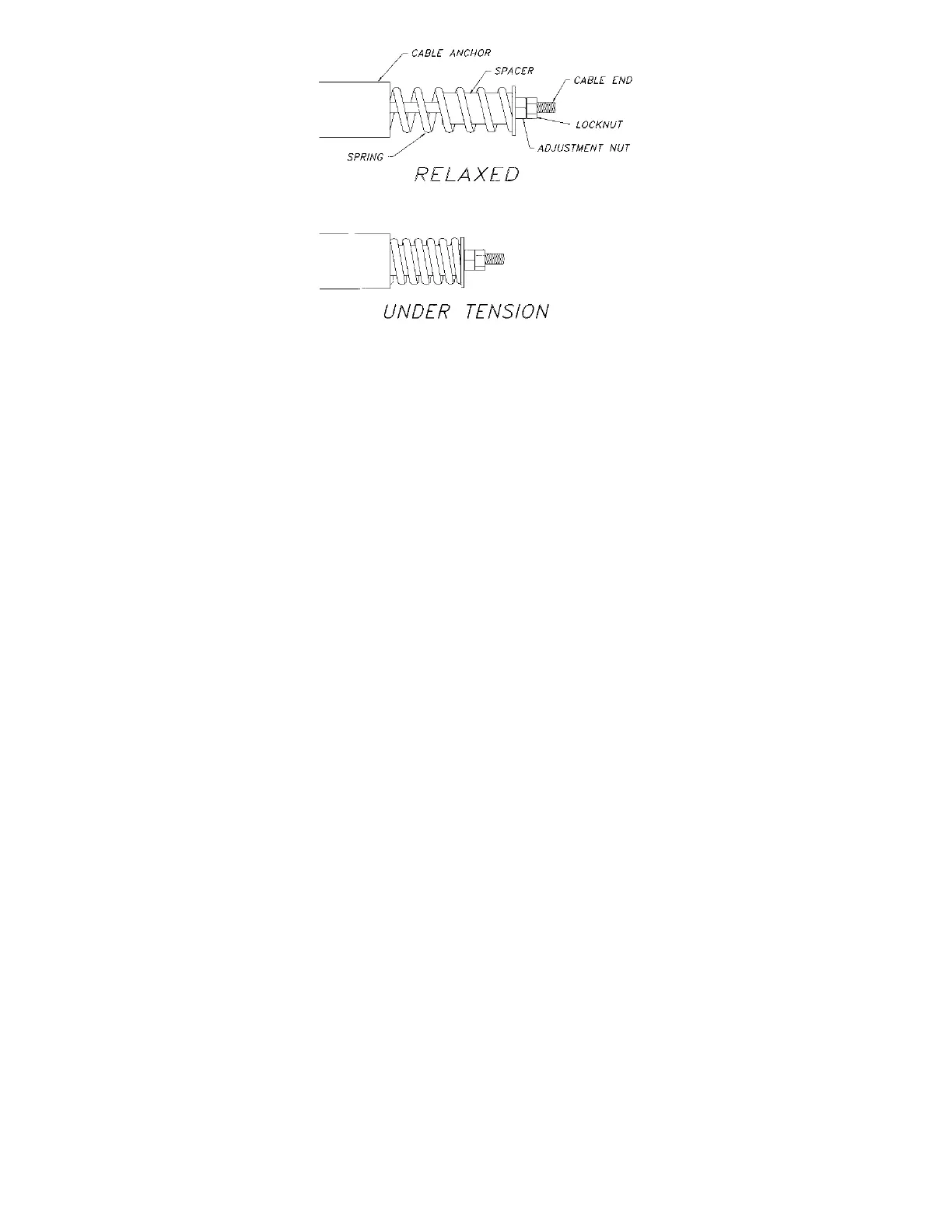
Figure 5
6. Extend and retract the ladder a few times; then with the ladder extended at least 2/3 of full
extension, retract the ladder and stop on retract stroke when the rung alignment lights.
7. Adjust the extend cables as outlined in step 5 above. Remember there will always be some
slack in the cables not doing the work of the function performed. (i.e., there will be slack in
the retract cables when extending the ladder.)
8. Note the rung alignment indicator is mounted on the first ladder section and senses the
position of the second section rungs. When the rung alignment indicator is illuminated,
these rungs will always be aligned. Higher aerial sections, however, rely on proper cable
adjustment to maintain alignment. Note the position of the rungs on the third section
before beginning cable adjustment on this section. If the rungs are running behind the
second section rungs, the extend cables need more tightening. If the rungs are ahead of the
second section rungs, the retract cables need tightening. If the cables have already been
adjusted for slack, one set or the other may need to be loosened to put the ladder section
into proper position. Be sure to check the cables for binding; at no time should both the
extend and retract cable spacers be against the anchors.
9. Operate the ladder throughout the extend and retract strokes. Stop the ladder when the
rung alignment indicator illuminates. Recheck the cable adjustment; then check the position
of the third ladder section rungs. Readjust as necessary. Be sure the cable tension and rung
position is satisfactory before moving on to the fourth ladder section. If the third section
cables are readjusted after the fourth section cables are adjusted, the rung position of the
fourth section will be affected.
10. When adjustment is complete, operate the ladder throughout the extend and retract
strokes at different angles of elevation. The ladder sections should move smoothly, with all
sections moving simultaneously. Sections should not drift back when the ladder is elevated.
At no time should the sections collide while retracting. Stop the ladder at the rung
alignment point and recheck adjustment.
11. It is important to remember there will always be a certain amount of slack in the cables not
pulling the ladder sections. At high angles of elevation, however, the extend cables will have
always have tension, even while retracting the ladder. This is due to the fact that the weight



 To Next Page