Sutron Corporation 8310 & 7310 Users Manual 8800-1125Rev. 2.7 (BETA) 4/16/2014 pg. 203
at DCP sites are Marine deep cycle or the standard type used in most cars. When the
manufacturers of these batteries designed them, they relied on the assumption that they would
always be located in a car, boat, or other moving object which would be constantly vibrating
somehow. This constant vibration keeps particles in the electrolyte suspended not allowing
them to fall to the bottom and bridge between the plates thus shorting the battery internally.
Therefore, each time the site is visited, it is good practice to pick up and shake the battery for a
couple of minutes thus extending the life of it considerably.
To test the battery to make sure it is good, you must measure the battery voltage while under a
load. If you have an 8310 with a GOES transmitter, you can measure the voltage during a
transmission. For other systems, you will want to at a minimum turn on the 8310 displays and
set the brightness to full. If the battery is charged, the voltage should not drop any more than
0.5 volts when current is being drawn by the system. If the drop is more than this, the battery is
not fully charged and may be defective.
Antenna and Cable
Check the antenna cable making sure the ends are securely fastened. Since the ends are
handled most frequently, they are the main source of problems with the cable. Make sure there
is sufficient weather proof tape coating the ends not allowing water to find it's way to the
connections.
Inspect the positioning of the GOES antenna and reposition if necessary. Sometimes high winds
or large birds roosting can cause them to be moved thus lowering the signal level going to the
satellite. Make sure there is no corrosion or other foreign material on the outside of the
antenna since any material on it could cause reflected power and further signal loss.
8310 Errors and Status
A very useful feature of the 8310 is that it displays errors at the top of the main menu. Refer to
the section Errors for more details. In addition, the many features of the diagnostics menu
provide a means to assess how well the system is operating and if there are any issues that need
to be resolved. Refer to the diagnostics section of the manual for more details.
Disassembly/Reassembly 8310-N
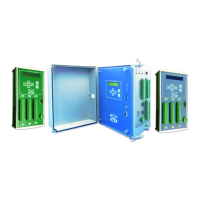
The 8310 package requires no disassembly to examine internal components. To access the
inside of the 8310, simply loosen the thumb screws on the right of the front panel. The front
panel will then swing clear, providing access to internal boards and cables.
CAUTION: Use ESD precautions when the unit is opened up.


 To Next Page
 Loading...