Need help?
Do you have a question about the Symbol MC9090 and is the answer not in the manual?
Recommendations for maintaining distance between devices and pacemakers.
Compliance with SAR standards for human exposure to RF fields.
Class 1 lasers are not hazardous for intended use; follow usage cautions.
Class 2 scanners use low power; avoid staring into the beam.
Declaration of compliance with EU directives; DoC available online.
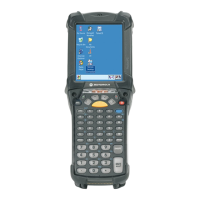
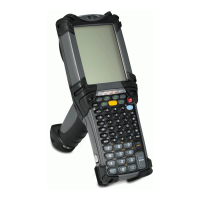
This document provides regulatory information and safety recommendations for the Symbol MC9090 device, a wireless mobile computer designed for various applications. It covers aspects from general regulatory compliance and radio module details to health and safety guidelines, laser safety, power supply, battery disposal, and country-specific wireless device regulations.
The Symbol MC9090 is designed to be compliant with rules and regulations in the locations where it is sold, and it is labeled accordingly. Regulatory information is available in multiple languages, including French, Italian, German, Spanish (Spain), Portuguese, Japanese, Korean, Russian, and simplified Chinese, accessible via the Symbol website. Users are cautioned that any unauthorized changes or modifications to the equipment could void their authority to operate it.
For safety and optimal performance, users are advised to use only Symbol-approved and UL Listed accessories, battery packs, and battery chargers. It is crucial not to attempt to charge damp or wet mobile computers or batteries; all components must be dry before connecting to an external power source to prevent damage or hazards.
The device incorporates approved radio modules, specifically a Symbol Modular RLAN radio card (Type: 21-21160) and a Symbol MC9090 Bluetooth radio (Type: MC9090). It is equipped with Bluetooth® Wireless Technology, which includes Bluetooth Complimentary Subsystems. The device has received regulatory markings for use in several countries, including the United States, Canada, Australia, Japan, and Europe. The Symbol Declaration of Conformity (DoC) provides further details on country-specific markings. For 2.4GHz products, Europe includes a wide range of countries, and specific restrictions apply to 5GHz RLANs, which are detailed in the DoC. Operating the device without regulatory approval is illegal.
The document emphasizes health and safety recommendations, particularly ergonomic considerations. To minimize the risk of ergonomic injury, users should follow recommendations such as reducing or eliminating repetitive motion, maintaining a natural position, reducing excessive force, keeping frequently used objects within easy reach, performing tasks at correct heights, reducing vibration and direct pressure, providing adjustable workstations, ensuring adequate clearance, providing a suitable working environment, and improving work procedures. Users are encouraged to consult their local Health & Safety Manager to ensure adherence to company safety programs.
Regarding vehicle installation, users are warned that RF signals may affect improperly installed or inadequately shielded electronic systems in motor vehicles, including safety systems. It is recommended to check with the vehicle manufacturer or its representative, as well as any equipment added to the vehicle. A critical safety warning is issued against placing objects, including wireless equipment, in the area over or in the deployment area of an air bag, as improper installation could lead to serious injury if the air bag inflates. The device should be positioned within easy reach, allowing access without diverting attention from the road. Connecting to an alert device that causes a vehicle horn to sound or lights to flash upon receiving a call on public roads is not permitted.
For safety on the road, users are strictly advised not to take notes or use the device while driving. Driving safely is the primary responsibility, and full attention must be given to driving. Users should check and obey local laws and regulations concerning the use of wireless devices while driving.
The document also includes warnings for the use of wireless devices in potentially hazardous atmospheres. Users must observe restrictions on radio devices in fuel depots, chemical plants, and areas where the air contains chemicals, particles (such as grain, dust, or metal powders), or any other area where one would normally be advised to turn off a vehicle engine. In aircraft, wireless devices must be switched off when instructed by airport or airline staff. If the device has a 'flight mode,' airline staff should be consulted regarding its use.
For individuals with pacemakers, manufacturers recommend maintaining a minimum distance of 15cm (6 inches) between a handheld wireless device and a pacemaker to avoid potential interference. These recommendations align with independent research. Persons with pacemakers should always keep the device more than 15cm (6 inches) from their pacemaker when turned ON, should not carry the device in a breast pocket, and should use the ear furthest from the pacemaker to minimize interference. If interference is suspected, the device should be turned OFF. For other medical devices, users should consult their physician or the medical device manufacturer to determine if the wireless product may interfere.
The device complies with internationally recognized standards covering Specific Absorption Rate (SAR) related to human exposure to electromagnetic fields from radio devices. To reduce RF exposure, it is advisable to use the device only in the normal operating position. For handheld devices, the MC9090 was tested for typical body-worn operation. Only Symbol-tested and approved belt-clips, holsters, and similar accessories should be used to ensure FCC Compliance. Third-party accessories may not comply with RF exposure requirements and should be avoided. A minimum separation distance of 2.5 cm or more from a person's body should be maintained.
The Symbol MC9090 also incorporates laser devices. It complies with 21CFR1040.10 and 1040.11, with deviations pursuant to Laser Notice No. 50, dated July 26, 2001, and international standards EN60825-1:1994+ A1:2002 +A2:2001 and IEC60825-1:1993+A1:1997+A2:2001. The laser classification is marked on the device labels. Class 1 Laser devices are not considered hazardous when used for their intended purpose. However, users are cautioned that using controls, adjustments, or performing procedures other than those specified may result in hazardous laser light exposure. Class 2 laser scanners use a low-power, visible light diode. As with any bright light source, users should avoid staring directly into the light beam, although momentary exposure to a Class 2 laser is not known to be harmful. The device includes a warning label indicating "LASER LIGHT, DO NOT STARE INTO BEAM, CLASS 2 LASER PRODUCT" in multiple languages.
For power supply, only a Symbol-approved power supply (50-14000-148, output rated 12 Vdc and minimum 3.33 A) should be used. This power supply is certified to EN60950-1 with SELV outputs. Using an alternative power supply will invalidate any approval and may be dangerous. When disposing of rechargeable batteries, users must follow local regulations. For Taiwan, the EPA requires dry battery producing or importing firms to indicate recycling marks on batteries, and users should contact a qualified Taiwanese recycler for proper disposal.
The device includes wireless features with country roaming (IEEE802.11d) to ensure operation on correct channels for the specific country of use. Ad-Hoc operation is limited to Channels 36-48 (5150-5250 MHz) and is restricted to Indoor Use Only; any other use will make the operation illegal.
The device complies with Part 15 of the FCC Rules, meaning it may not cause harmful interference and must accept any interference received. It also complies with RSS 210 of Industry & Science Canada, with similar conditions regarding interference. The label marking "IC:" signifies that Industry Canada technical specifications were met.
For the European Economic Area (EEA), the use of 2.4GHz RLANs has specific restrictions: maximum radiated transmit power of 100 mW EIRP, restricted outside usage in France (2.4 – 2.454 GHz), and a user license required for outside usage in Italy. For 5GHz RLANs, varying restrictions apply within the EEA, detailed in the Symbol Declaration of Conformity. Bluetooth® Wireless Technology in the EEA also has restrictions: maximum radiated transmit power of 100mW EIRP, restricted outside usage in France (10mW EIRP), and a user license required for outside usage in Italy. Symbol Technologies, Inc. declares that the device complies with essential requirements and relevant provisions of Directives 1999/5/EC, 89/336/EEC, and 73/23/EEC. Declarations of Conformity are available online.
For other countries, specific frequency range restrictions apply: Mexico restricts the frequency range to 2.450 - 2.4835 GHz, and Sri Lanka restricts it to 2.400 - 2.430 GHz.
 General
| Category | Touch terminals |
|---|---|
| Model | MC9090 |
| ROM | 128 MB |
| Operating System | Windows Mobile 5.0 |
| Processor | Intel XScale PXA270 624 MHz |
| RAM | 128 MB |
| Storage | SD Card Slot |
| Display Type | Color TFT |
| Display Resolution | 240 x 320 pixels |
| Input Method | Touchscreen |
| Connectivity | USB, Serial, Bluetooth |
| Scanning | 1D/2D Barcode Scanner |
| Battery | Removable Li-ion battery |
| Camera | Optional |
| Durability | IP54 |
| Wireless Connectivity | Bluetooth |

 To Next Page