628
14
Audio Processing Basics Chapter 4
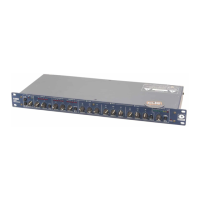
The Symetrix 628 combines digital audio processing algorithms with a three-band digital parametric
equalizer. This chapter offers a tutorial on the basics of dynamic range processing (compression)
and equalization. This combination of processing serves as the mainstay of the vocal signal
processing chain used in recording studios. The tutorial information is intended to provide a
background for the operation instruction found in this manual.
Dynamic Range Processing
Dynamic range processors fit wide-range signals into narrow-range transmission or storage
channels. The dynamic range of acoustical signals found in real life far exceeds our capacity to
store or transmit them. Confronted with this dilemma, audio engineers usually reach for a compres-
sor/limiter or downward expander as the means to fit two-pound signals into one-pound bags.
Compressor/limiters respond quickly to transients, and gently to normal speech level changes,
which keeps overall levels in check. The downward expanders operation is the inverse of the
compressor/limiter. The expander can prevent pumping and breathing, even during high ratio
compression. Because the compressor/limiter and the downward expander interact, avoid cross-
ing their thresholds by setting the downward expanders threshold higher than that of the compressor.
Strictly speaking, the terms compressor and limiter refer to different devices. Often, manufacturers
combine both into a single device called a compressor/limiter. Functionally, a compressor/limiter
lets the user define the maximum level of an audio signal. Compressor/limiters perform as either a
compressor or a limiter, but not both at once.
Expanders and gates perform the opposite function of compressors and limiters. Compressors
continuously reduce (compress) the dynamic range of signals above a set threshold, while expand-
ers continuously increase (expand) the dynamic range of signals below a threshold. Limiters can
be thought of as very high ratio compressors, and gates can be thought of as very high ratio expanders.
In addition to their roles as remedial signal processors, compressors serve a creative role. You can
use a compressor to improve the consistency of the voice by removing or reducing level changes
and adding power or punch. Generally speaking, the fluctuations of some voices may be extreme,
so experimentation is the name of the game. One combination of operating parameters will not
suffice for all voices.
Defining Dynamic Range
To begin a discussion of dynamic range processors its necessary to have a working definition of
dynamic range. The term is really self-descriptive, but has two distinct uses: To describe the actual
range of signal fluctuations that can pass through a piece of equipment. To define the maximum
allowable natural range of signal fluctuations. The unit of measure for audio signals is the decibel (dB).
Dynamic Range as a Specification
The maximum usable range of operation for a particular piece of gear is the difference in dB
between the noise floor and the maximum output level before clipping. In this context, dynamic
range becomes an equipment specification.
The noise floor definition is the lower limit of a circuits operating level, a function of its self-
generated electrical noise. Very noisy circuits have a high noise floor, quiet circuits have a low
noise floor. All circuits, even very quiet ones, have measurable noise.
The maximum output level of a circuit becomes the upper limit of usable operation. Clipping of the
audio waveform begins at this point because the signal level exceeds the capacity of the power
supply. To put levels in perspective they must be referenced to some nominal operating level, like
0 dBm (1 milliwatt across 600 ohms). Thats why noise specifications are stated as negative
numbers. Since maximum output level is usually greater than 0 dBm (+4 dBu), its stated as a
positive value (above 0 dBm). The difference between the noise floor and the onset of clipping
defines the dynamic range.


 To Next Page