The Synology Expansion Unit RX418 is a hardware device designed to expand the storage capacity of a compatible Synology RackStation. It functions as an external storage enclosure, allowing users to add more hard drives to their existing Synology NAS setup, thereby increasing the total available storage space. This unit is specifically designed to integrate seamlessly with Synology RackStations, providing a straightforward way to manage and expand storage volumes.
Function Description
The primary function of the RX418 is to provide additional drive bays for a Synology RackStation. It connects to the main RackStation unit via an eSATA port, acting as a direct extension of the host device's storage capabilities. Once connected, the drives installed in the RX418 can be managed through the DiskStation Manager (DSM) interface of the linked RackStation. This allows for the creation of new storage volumes, expansion of existing RAID groups, and overall management of the expanded storage pool. The unit supports both 3.5" and 2.5" SATA drives, offering flexibility in drive selection. It is designed to power on and off automatically in synchronization with the connected RackStation, simplifying operation.
Usage Features
The RX418 offers several features that enhance its usability and integration with Synology's ecosystem:
- Easy Drive Installation: The unit features front-loading drive trays that can be easily removed and reinserted, facilitating quick and tool-less (for some steps) installation of hard drives. Users simply pull a handle to release a drive tray, load the drive, secure it with screws, and then slide the tray back into the bay. A drive tray key is provided to lock the trays in place, preventing accidental removal.
- Seamless RackStation Integration: The RX418 is designed for tight integration with Synology RackStations. It connects via a single eSATA cable, and its power state is synchronized with the host RackStation. This means that when the RackStation powers on or off, the expansion unit does the same, eliminating the need for separate power management.
- Storage Management via DSM: All storage management tasks, such as creating new RAID groups, expanding existing volumes, and monitoring drive health, are performed through the familiar DiskStation Manager (DSM) interface of the connected RackStation. This centralized management simplifies the process of handling expanded storage.
- Hot-Swappable Drives: The RX418 supports hot-swappable drives, meaning that drives can be replaced or added without powering down the entire unit or the connected RackStation, provided the system is configured to allow it. This feature is crucial for maintaining continuous service and minimizing downtime during drive maintenance or upgrades.
- LED Indicators for Status Monitoring: The front panel of the RX418 includes several LED indicators that provide immediate visual feedback on the unit's operational status. These include a POWER indicator, ALERT indicator, eSATA indicator, Drive Status indicators for each bay, and a STATUS indicator. These LEDs help users quickly assess the unit's health, drive activity, and connection status without needing to log into DSM. For example, the ALERT indicator can signal fan or temperature issues, while the Drive Status LEDs show if a drive is ready, idle, accessing data, or experiencing an error. The eSATA indicator confirms the connection to the RackStation.
- Rack-Mountable Design: The unit is designed to be rack-mounted, making it suitable for integration into existing server rack environments. It comes with rack mount kits and screws to secure it properly within a rack, ensuring a stable and organized setup.
- Scalability for Storage Expansion: The RX418 provides a direct and efficient way to scale up storage capacity as data needs grow. By simply adding more drives to the expansion unit and configuring them through DSM, users can significantly increase their total storage pool without having to replace their primary RackStation.
- RAID Volume Creation and Expansion: Users can create new RAID volumes using the drives in the RX418 or expand existing RAID groups from the host RackStation onto the expansion unit. This flexibility allows for tailored storage configurations to meet specific performance and redundancy requirements.
Maintenance Features
The RX418 incorporates features that aid in its maintenance and longevity:
- Fan System for Heat Dissipation: The unit includes multiple fans located at the back to dispose of excess heat and keep the internal components cool. This is essential for the stable operation and lifespan of the hard drives and the unit itself, especially under continuous load.
- Accessible Drive Trays: The front-loading, removable drive trays simplify the process of replacing faulty drives or upgrading existing ones. This design minimizes the effort and time required for drive-related maintenance.
- Clear LED Diagnostics: The comprehensive set of LED indicators serves as a primary diagnostic tool. By observing the patterns and colors of the LEDs, users can quickly identify issues such as drive errors, fan malfunctions, or connection problems, guiding them towards appropriate troubleshooting steps.
- Power Recovery Functionality: The RX418 is synchronized with the RackStation for power recovery, meaning it will resume its previous state after a power interruption, provided the RackStation also recovers. This helps in maintaining system uptime and reducing manual intervention after power events.
- Safety Instructions: The manual provides clear safety instructions, including guidelines on environmental conditions (avoiding direct sunlight, extreme temperature/humidity changes), proper handling (right side up, away from liquids), and cleaning procedures (unplugging power, using damp paper towels). These instructions are crucial for preventing damage to the unit and ensuring safe operation.
- Firmware Updates via RackStation: As an expansion unit, its operational software (firmware) is typically managed and updated through the connected Synology RackStation's DSM, ensuring that the unit benefits from the latest features, bug fixes, and security enhancements without requiring separate maintenance procedures.
- Disposal Guidelines: The safety instructions also include a warning regarding battery replacement and disposal, emphasizing the importance of replacing batteries with the correct type and disposing of used batteries appropriately to prevent explosion risks.

 Need help?
 General
 Weight and Dimensions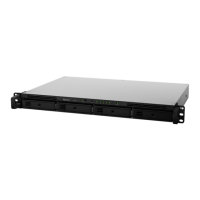

 To Next Page