F1 F2
1 2
Emergency Call Numbers
PTT
Press PTT to talk.
Release PTT to listen.
Function Keys
Use a short press or a long press
to operate the function keys 1, 2,
and 3. See Radio Configuration.
Function Key 1
Function Key 2
Handset
Mode
Making Calls
Press PTT to talk.
Release PTT to listen.
External
Function
Keys 1 and 2
16-way Selector
100% Synthetic Paper: Waterproof, Strong,
Chemical Resistant, Recyclable. Solvent based ink.
Inactivity
seconds
=
Use a standard pencil or ballpoint pen. No solvent based pens. To erase pencil use a rubber eraser. To erase ballpoint pen, use a water moistened cloth.
Radio Configuration
Your Tait Orca radio has been configured for your requirements
by your authorised Tait Dealer or your company administrator.
Therefore, some functions will vary in operation or will not be
available. The configuration information can be written onto this
User Guide. For more information on trunking call functions,
contact your Network Operator.
Parts
If any parts are damaged
or missing, report this to
your authorised Tait dealer
immediately.
Disabled
Tones – Beep on / off
Dynamic Power Control on / off
Preset Call #1
Preset Call #2
Clear
Do Not Disturb (DND) on / off
Handset Mode on / off
Transmit at Low Power on / off
Monitor on / off
External
Note: Function keys use a toggle action e.g. on/off
Short press is less than 1 second
Long press is more than 1 second
Volume
Install the
Antenna.
Install the
Battery.
Getting Started
Handset mode
Illustration shows
the recommended
method for use in
handset mode.
Use the lower
microphone to speak.
Standard Operation
Illustration shows the
recommended method
for standard operation.
Use the upper
microphone to speak.
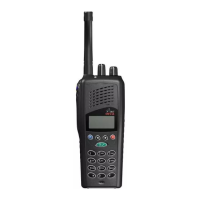
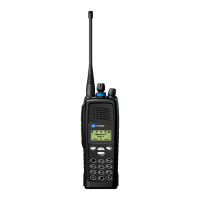
Antenna
Function
Key 1
Press to Talk (PTT),
Toggle (on/off) or
Send (make call)
Standard
Microphone
Function
Key 2
Handset
Microphone
16-way Selector
On/Off and
Volume
Speaker
LED
Printed in New Zealand
Dynamic Power Control MPT1327
Automatically reduces the transmit
power in high signal strength areas.
Modes
Radio to radio
Conventional Mode
Group Types
u User Selectable Group
u Scan Group
u User Selectable plus Scan Group
u Permanent Group
u Dynamic Group
u Manual Group Select
Group Calls
Broadcast Call – Group members can listen
but not respond.
Conference Call – Group members can
listen and respond.
A user can be assigned to some groups,
all groups or no groups.
Trunked – Permanent groups are set by
the trunking system. Persons are assigned
when the radio is configured.
Temporary Groups
A user can become a member of a group
temporarily by selecting the group or when
the despatcher assigns the user to a group.
Group Call Limitations
Sender has no indication of how many
group members have received the call.
No connection acknowledgment. Need the
recipient to acknowledge by voice.
Radios that are off, out of range, or engaged
will not receive.
Group Numbering Scheme
User’s have an individual ID plus
membership in none, some or all of the
Group IDs.
Groups
Handset mode
Speaker volume is reduced so that
radio can be held near to the ear.
Use the handset microphone.
Monitor mode
In conventional mode, listen to all traffic
and all groups on a channel.
Manual Group Select
Users can select the groups that they want
to be assigned to using the 16-way selector.
Group Select
The despatcher controls which groups the
user is assigned to. This feature can be
dependent or independent of the position
of the 16-way selector, so that group control
from the despatcher can be ignored or
accepted.
Radio Configuration
Write your settings
The selector
uses the
presets
numbered
1 to 16.
Turn the selector to Cancel the call
16-way
Selector
The selector uses the presets
numbered 1 to 16
To make
the call,
short
press PTT.
Short
Press
Long
Press
Short
Press
Long
Press
Main Items
Notes
Radio Identification
Group Information
Prefix #
Fleet # Radio ID #
Indicators
You have just turned on the radio.
The power-up sequence is complete.
Medium pitch beep,
short duration, twice.
Flash medium
Flash slow
Medium pitch beep,
short duration.
Low pitch beep,
short duration.
Basic Operation
The radio is transmitting.
The radio is transmitting at
low power.
Handset mode is active.
A function has been turned on.
A function has been turned off.
The channel is busy.
Conventional Mode
Medium pitch beep,
short duration,
three times.
Low pitch beep,
long duration.
Flash medium
The transmit timer is about to expire.
In 10 seconds, the radio will stop
transmitting. Release the PTT key
before transmitting again.
You cannot transmit because the
channel is busy. Wait until it is free to
transmit or use a channel that is clear.
Monitor is active.
The radio has access to a network
and is ready to make or accept calls.
Trunking Mode
Flash slow
Flash medium
Low pitch beep,
short duration,
five times.
High pitch beep,
long duration,
every 1.5 seconds.
Medium pitch
warble, long
duration.
Medium pitch
beep, short
duration.
OR
Flash fast
Medium pitch
warble, long
duration,
repeating.
The radio does not currently have
access to a network. It is attempting
to find a site it is authorised to use,
or is out of range of a network signal.
A traffic channel has been allocated
for a call you have made or received.
You can proceed with the call.
The current operation has been
cancelled at your request.
The system is setting up an incoming
call. Give a brief press of the PTT to
accept the call.
The radio is operating on a
traffic channel.
A call has been received but not
answered. You can return the call
by giving a brief press of the PTT.
Trunking Mode
Indicators Indicators
Phonetic
Alphabet
Alpha A
Bravo B
Charlie C
Delta D
Echo E
Foxtrot F
Golf G
Hotel H
India I
Juliet J
Kilo K
Lima L
Mike M
November N
Oscar O
Papa P
Quebec Q
Romeo R
Sierra S
Tango T
Uniform U
Victor V
Whisky W
X-ray X
Yankee Y
Zulu Z
IMPORTANT
Long condition the battery. Refer
to the Battery Charger User Guide.
First Use of Radio
Slow flash = every 2 seconds
Medium flash = every 1 second
Fast flash = four per second
Slow flash = every 2 seconds
Medium flash = every 1 second
Fast flash = four per second
Slow flash = every 2 seconds
Medium flash = every 1 second
Fast flash = four per second
Medium pitch
beep, short
duration, three
times.
Your call time is almost up. In 10
seconds, you will be disconnected and
the network will clear down the call.
Medium pitch
beep, long
duration,
repeating.
The network has queued the call you
are attempting to make and your call
will be connected as soon as possible.
Low pitch beep,
for 2 seconds.
The network is busy and is unable to
handle your call request.
Try again later.
Low pitch beep,
long duration,
repeating.
The system cannot contact the party
you are attempting to call because
they are busy. Try again later.
High pitch beep,
for 2 seconds.
Your status call or network service
request has been accepted.
High pitch beep,
short duration,
four times.
The call you are attempting to make
is not valid for your radio. Consult
your company administrator.
Steady
Steady
Steady
Steady
Steady
Flash slow
Trunked
Portable Radio
User Guide
M5030-405-00-053
M5030-405-00-053
Turn,on radio, adjust speaker
volume, make a call.
Press PTT to
Talk. Release
to Listen.
Short Condition the
battery every week.
Tait Orca 5030
Trunked
Portable Radio
User Guide

 Need help?
 General

 To Next Page