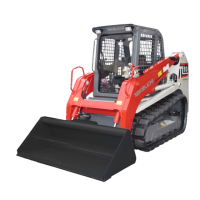
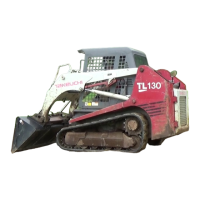
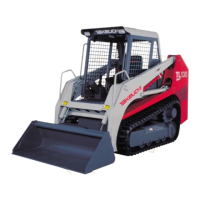
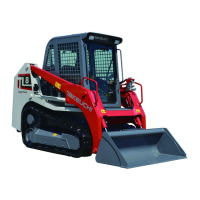
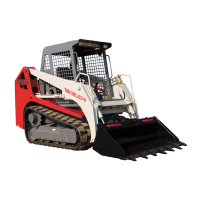
The device described in the manual is a Crawler Loader, specifically the Takeuchi TL120, TL130, TL140, and TL150 models. This machine is primarily designed for operations such as carrying, leveling, and loading.
Function Description:
The crawler loader is a heavy-duty construction machine that combines the capabilities of a crawler (tracked vehicle) with a loader (front-end bucket). It utilizes a hydrostatic drive system for power transmission and features rubber crawlers, which offer advantages over traditional wheeled loaders in certain terrains. The machine is controlled by pilot-operated joysticks, providing precise and responsive operation. It is equipped with a front-end bucket for scooping, lifting, and moving materials. The lift arms, which support the bucket, can be raised, lowered, and put into a "Float" position for specific tasks like leveling.
Important Technical Specifications (from the cover and general description):
- Models: TL120, TL130, TL140, TL150
- Serial Numbers:
- TL120: 21200008~
- TL130: 21305001~
- TL140: 21402001~
- TL150: 21502001~
- Drive System: Hydrostatic drive system
- Undercarriage: Rubber crawlers
- Operator Protection: Roll Over / Falling Object Protective Structure (ROPS/FOPS) tilt-up Canopy.
- Hydraulics: Two-way auxiliary hydraulics.
- Controls: Pilot operated joystick controls.
- Safety Features: Engine emergency stop system.
- Environmental: Low engine noise and exhaust emissions.
Usage Features:
General Operation:
- Designated Operations: Primarily used for carrying, leveling, and loading.
- Visibility: Operators must ensure good visibility, especially in dark conditions (using working lights and headlights) or poor weather (stopping operation if visibility is too low).
- Operator Position: The machine must only be operated from the operator's seat, with the seat adjusted, secured, and latched, and the seat belt fastened. The safety bar must be in the lock position.
- Body Position: Operators must keep their body inside the operator's cab at all times during operation, never extending arms, feet, or legs beyond the compartment.
- No Riders: No one is permitted to ride on any part of the machine while traveling or operating.
- Starting: Before starting, the operator must clear the area of all persons, check for "DO NOT OPERATE" tags, sound the horn, and ensure all controls are in neutral and the parking device is applied. The engine should only be started from the operator's seat.
- Break-in Period (First 100 hours): During the initial 100 hours of operation, specific precautions must be taken to ensure the machine's longevity and performance. These include sufficient warm-up of the engine and hydraulic oil, avoiding heavy loads and rapid operations (operating with about 80% of maximum load), and refraining from abrupt starts, accelerations, direction changes, or stops.
- Cold Weather Operation: Special care is needed in cold weather due to slippery conditions. Operators should avoid touching metal parts with exposed flesh to prevent freezing and should not use ether or starting fluids, which can cause explosions. The engine and hydraulic fluid must be warmed up sufficiently.
- Jumper Cables: Jumper cables should only be used as recommended to avoid battery explosions or unexpected machine movement.
Traveling and Turning:
- Bucket Position: When traveling and turning, the bucket cylinder should be fully retracted, and the bucket should be approximately 30 cm (12 inches) from the ground.
- Smooth Movements: Avoid sudden stops, starts, or turns.
- Safety Bar: Do not raise the safety bar while traveling, as this will engage the parking brake abruptly and is dangerous.
- Starter Switch: Do not switch off the starter switch while traveling, as this will cause sudden braking.
- Reversing: Always visually check the rear for safety before backing up.
- Obstacles: Try to avoid crossing obstacles. If unavoidable, maintain the bucket close to the ground and travel slowly. The machine should not cross obstacles on an extreme slant (15 degrees or more).
- Rough Terrain/Loads: When traveling on rough terrain or carrying a load, lower the load and travel slowly.
Operating on Slopes:
- Avoid Work on Slopes: Work should generally not be performed on slopes due to the risk of losing balance and tipping over.
- Heavy End Uphill: When traveling on a slope, the heavier end of the machine (front or back) should point uphill.
- Gradient (15 degrees or more): When going up or down slopes with a gradient of 15 degrees or more, travel up and down the slope with the heavy end of the machine pointed uphill.
- Bucket Position on Slopes: When traveling on a slope, lower the bucket to a height of 20 to 30 cm (8 to 12 inches) from the ground. In an emergency, lower the bucket to the ground and stop.
- Slow Speed: Travel at slow speeds on slopes, especially when going down. Reduce engine speed and set the left control lever to half or less to prevent loss of control.
- Straight Up/Down: Avoid traveling across an inclined surface at an angle or straight across, as this can cause slipping or tipping. Always travel straight up and down the slope.
- Slippery Surfaces: Be cautious on grass, fallen leaves, wet iron plates, or frozen surfaces, as the machine can slide sideways.
Floating the Lift Arms:
- Bucket on Ground: Ensure the bucket is lowered on the ground before floating the lift arms. Floating raised lift arms is extremely dangerous as the bucket will fall.
- No Forward Drive: Do not drive the loader forward with the lift arms in the Float position.
Maintenance Features:
Daily Inspection and Maintenance:
- Regular Checks: Perform daily inspections and maintenance. Failure to notice or repair irregularities can lead to accidents.
- Immediate Repairs: Any irregularities found during inspection must be repaired immediately.
- Malfunction Procedure: If a malfunction causing loss of control (e.g., steering, brakes, engine) occurs, stop the machine, follow shutdown procedures, and securely park it until the malfunction is corrected.
- Post-Start Checks: After starting the engine, in a safe area, warm up the engine and hydraulics, observe all gauges and warning instruments, listen for unusual noises, test engine speed control, and operate each control to ensure proper function.
General Maintenance Precautions:
- Cleanliness: Keep the machine clean. Clean windows, mirrors, and lights for good visibility. Wipe off oil, grease, mud, snow, or ice to prevent slipping. Remove all loose objects from the machine and any dirt, oil, or grease from the engine area to prevent fires. Clean the operator's seat area.
- Fire and Explosion Hazards: Keep flames away from fuel, hydraulic fluid, oil, grease, and antifreeze. Do not smoke or permit open flames near fueling operations. Never refuel with the engine running or hot. Clean up spills immediately. Check for and stop all leaks. Do not cut or weld on pipes containing flammable fluids without thorough cleaning. Remove trash and oily rags from the machine. Handle solvents and chemicals in well-ventilated areas. Never use fuel for cleaning. Store flammable fluids safely.
- Asbestos Dust: Take precautions when handling materials that may contain asbestos: never use compressed air for cleaning, avoid brushing or grinding, use wet methods or HEPA-filtered vacuums for cleanup, and wear an approved respirator if necessary.
- Safety Equipment: Never remove safety equipment (guards, canopies, doors). Repair or replace damaged components. Ensure the safety bar, seat belt, and other safety equipment are in good operating condition.
- Unauthorized Modifications: Never make unauthorized modifications to any part of the machine, as this can cause injury or death.
- Optional Products: Consult a Takeuchi dealer before installing optional attachments. Only use approved attachments to avoid compromising safety, operation, or service life. Takeuchi is not responsible for injuries or damage caused by non-approved attachments.
Safety Alert System:
The manual emphasizes safety through "SAFETY ALERT SYMBOLS" and "SIGNAL WORDS" (DANGER, WARNING, CAUTION) to highlight potential hazards and prevent personal injury or death. "IMPORTANT" is used for situations that can cause damage to the machine. Graphical symbols are used for prohibition, lock, and unlock.

 Need help?
 General

 To Next Page